October 24, 2026
If your child has started quoting chess YouTubers at dinner, you are not imagining it. Chess has become genuinely cool with kids and teens, and the reasons are easy to understand.


Months of games, the same losses, a rating that will not move. Here is what is usually going on, and what actually helps.
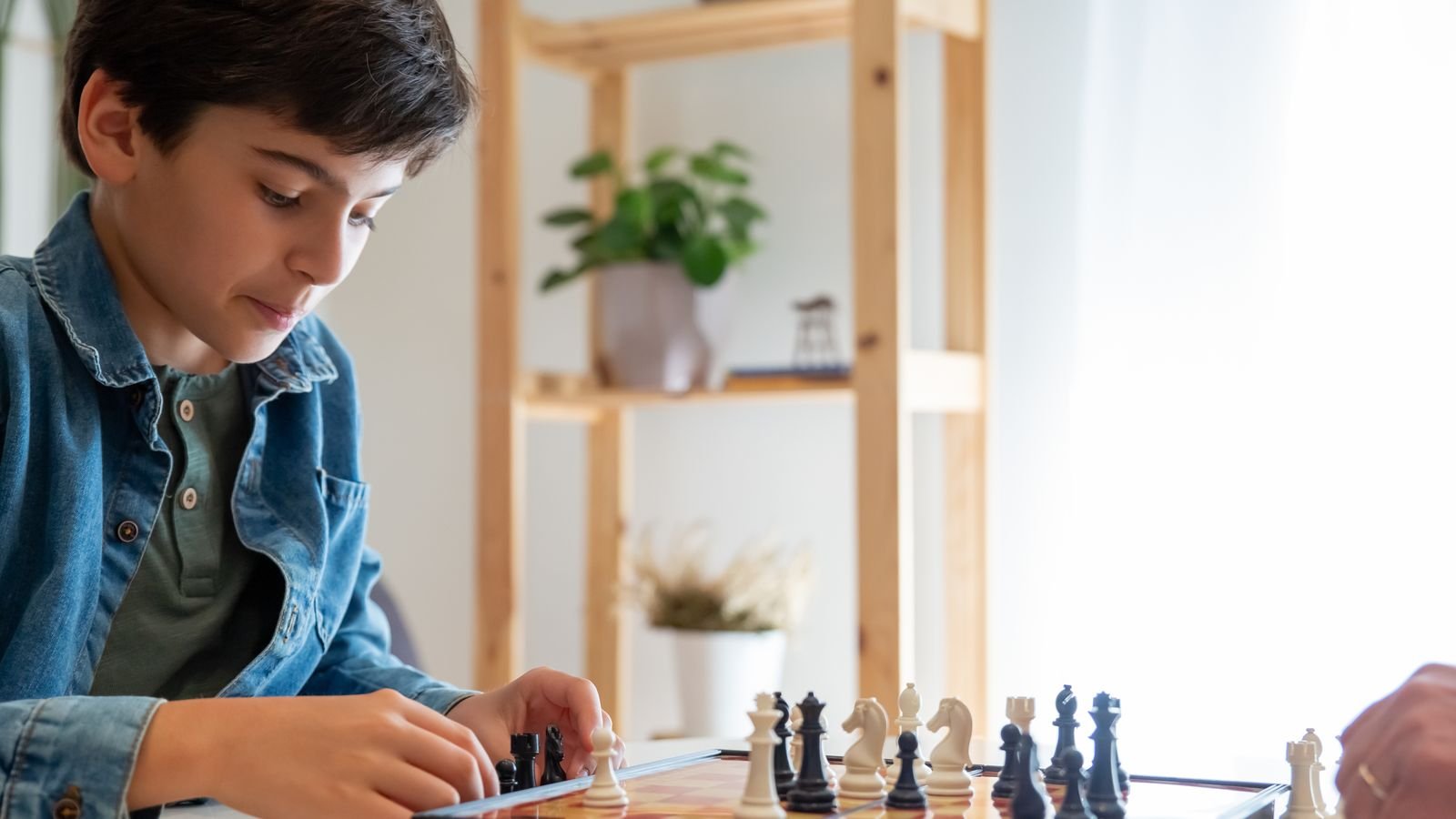
If your child is not improving at chess, the cause is almost always the way they practise, not a lack of ability. Daily games can keep a child stuck if each one repeats the same habits.
You may recognise the signs: a flat rating, the same kind of loss every time, and lately the word “boring”, which usually means “frustrating”. Each pattern has a clear cause and a practical fix. Here are the seven we see most often.
Playing only blitz or bullet games is one of the most common reasons a child stops improving, because there is no time to think. In a three or five minute game, a child plays on instinct. That mostly rehearses existing habits, including the bad ones.
The fix: make slower games the main course and fast games the dessert. Aim for most practice games to be at least 15 minutes per side, so your child has time to ask “what is my opponent threatening?” before every move.
A child who never looks back at their games will keep making the same mistakes, because nobody has shown them where the game was really lost. Losing hurts, so most children click “new game” straight away, and the lesson disappears.
The fix: review at least one game a week, ideally a loss. Ask your child to find the moment things went wrong before switching on the computer. Lichess has a free “Learn from your mistakes” feature that turns errors from your own games into puzzles to solve.
Without regular tactics practice, a child will keep missing forks, pins and simple captures, and at beginner and junior level these slips decide most games. Strong players spot these patterns instantly because they have seen them so often.
The fix: ten minutes of puzzles a day, chosen at the right level. Easy enough to solve most of them, hard enough to need a little thought. Quality matters more than racing through hundreds.
Surprising facts about how chess players really improve
In Gobet’s research, the hours players needed to reach a 2200 rating ranged from about 3,000 to over 23,000.
Strong players recognise a huge library of chess patterns at a glance. Psychologists call these mental snapshots “chunks”.
Some free chess sites can turn the mistakes from your own games into personal puzzles to solve.
The fastest possible checkmate, called Fool’s Mate, takes just two moves by White and two by Black.
The Elo rating used across chess is named after Arpad Elo, a physics professor.
The number of possible chess games is estimated to be far larger than the number of atoms in the observable universe.
Group classes and video courses often stall a child because they teach the same topic to everyone, whatever each child is actually getting wrong. A video on the Sicilian will not help a child who keeps losing their queen to a fork.
Interestingly, a 2019 reanalysis of a large chess study by Burgoyne, Charness, Hambrick and colleagues found that serious, focused chess activity was a far stronger predictor of rating than the amount of formal instruction a player had received.
The fix: make sure some part of your child’s learning starts from their own games. Someone should be asking “why did this game go wrong?” and choosing the next lesson from the answer.
Learning long opening lines too early rarely helps a young player, because their games are usually decided by tactics long before the memorised moves pay off. And when the opponent plays something unexpected, the memorised line is useless.
The fix: teach opening principles instead of opening lines. Control the centre with pawns, develop knights and bishops, castle early and avoid moving the same piece twice without a reason. These rules work in every opening.
Emotions hold back many young chess players, either through “tilt” after a loss or a fear of losing that makes them play too safely. A child on tilt plays game after game in a frustrated rush, and each defeat makes the next one more likely. A child afraid of losing rating points may avoid harder opponents altogether.
The fix: set a gentle rule such as “two losses in a row means a break”. Praise effort and good decisions, not results.

Patchy practice slows progress because chess skills fade quickly when a child goes weeks without playing, then tries to catch up in one long session.
The fix: short and regular beats long and rare. Fifteen to twenty minutes on most days beats a three hour marathon once a fortnight.
Normal chess progress comes in steps with flat patches in between, so plateaus are completely normal and nearly every player goes through several. Progress in chess tends to come in steps rather than a smooth line.
Research backs this up. Psychologist Fernand Gobet’s studies of club and titled players, summarised in this overview of the cognitive psychology of chess, found that the hours needed to reach a strong level varied enormously from player to player. Some kept improving year after year while others levelled off.
A few flat weeks is nothing to worry about. A plateau of several months, with the same repeated losses, means the routine needs to change. For typical timelines, see our guide to how long it takes a child to get good at chess, linked below.
A good 1 on 1 coach finds out why your child is stuck by studying their own games, then builds lessons around the patterns that cost them the most points.
The coach reviews recent wins and losses and notes where each one turned.
Usually one or two habits explain most losses, such as ignoring threats, leaving pieces undefended or not knowing how to finish a won endgame.
Lessons and puzzles focus on that weakness. A few weeks later, new games show whether the habit has changed.
Because the plan comes from the child’s own play, they stop losing “the same way”, which is what makes chess fun again.
Simple things you can try at home this week
Ask the magic question. Before each move, your child asks “What is my opponent threatening?”
Swap one blitz session for a slow game. Pick one game this week at 15 minutes or more per side.
Hold a “loss detective” session. Choose one recent loss and ask your child to find the move where it went wrong before checking with the computer.
Do ten puzzles a day. Keep them at a level where your child solves most of them.
Use the two-loss rule. After two losses in a row, take a break.
Praise the process. Say “I loved how carefully you checked that move” rather than “Well done for winning”.
A puzzle to try with your child: which move lost the game?
Black has been losing in a very similar way, so let us look at the game. It went: 1. e4 e5 2. Bc4 Nc6 3. Qh5 Nf6 4. Qxf7 checkmate. One of Black’s moves was a big mistake. Which one, and what should Black have played instead?
Tap a question to reveal the answer
The best next step is to change one thing at a time and give it a few weeks. Start with whichever reason above sounded most familiar.
If you would like a second pair of eyes, a free trial class with a 1 on 1 coach is a simple way to find out what is really holding your child back. A stuck phase is not a dead end.
More for curious parents
MasterMindz teaches children worldwide through live, personal 1 on 1 online classes in chess, maths, coding and more, with experienced tutors and a fun, individual approach. MasterMindz offers live 1 on 1 online chess classes for children and has taught 750+ students across 11+ countries.