October 13, 2026
Chess makes kids better students mainly through the habits it trains: pausing before acting, checking for problems, planning ahead, reviewing mistakes and staying focused to the end. Those...


The claim is everywhere. The evidence is more interesting, and more useful, than the marketing.
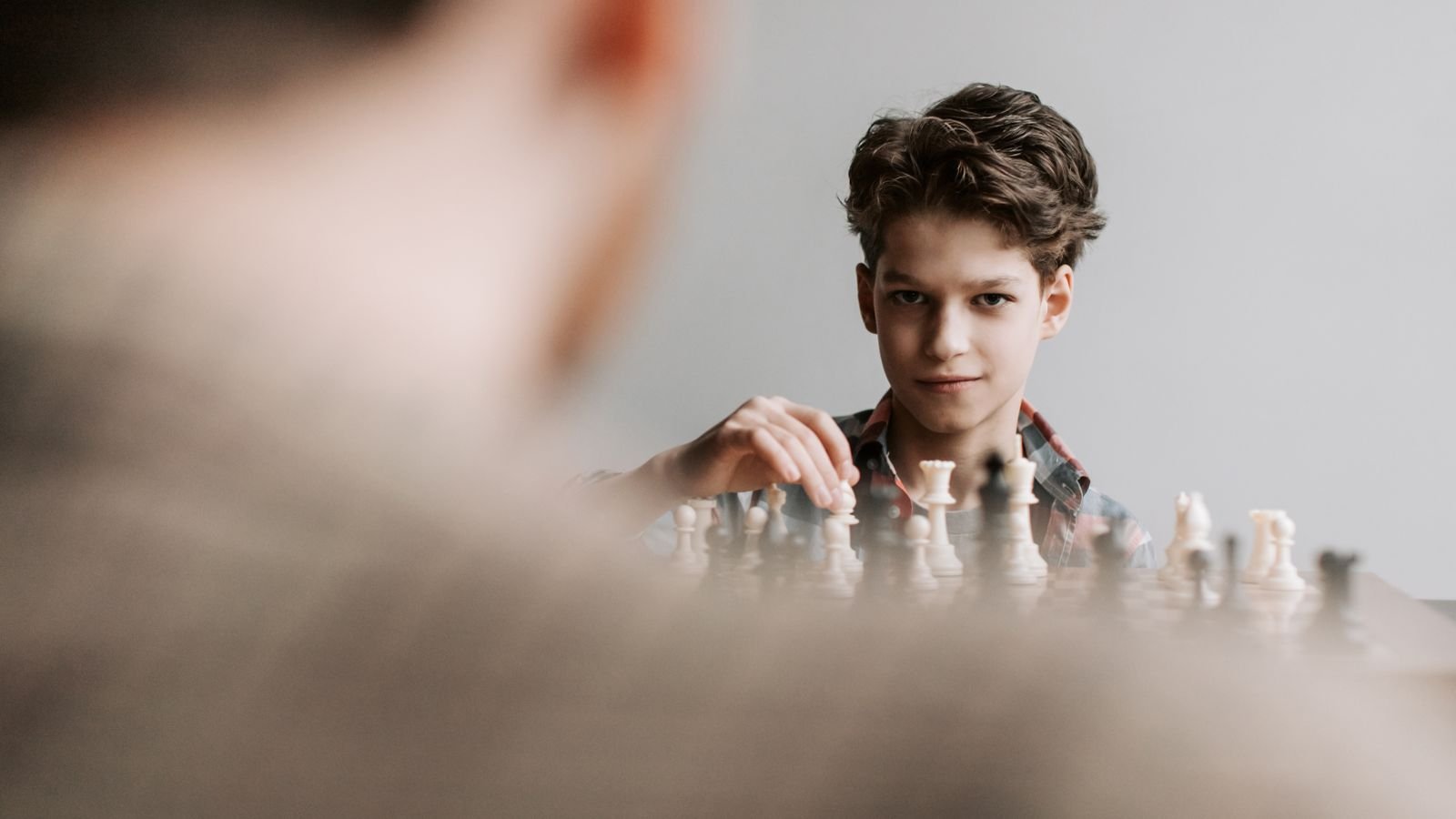
Search for chess and children and within two clicks somebody will tell you it raises maths scores, boosts IQ and rewires the brain. Some of that is true. Some of it is marketing that got repeated until it sounded like fact. As a company that teaches chess, we think parents are better served by the real picture, because the real picture is still a good reason to start.
So here is what researchers have actually measured, what they found, where they disagree, and what it means for your child specifically.
Yes, chess appears to help children’s maths, but the effect is moderate rather than transformative, and it is strongest for children who were disengaged to begin with. If you are hoping chess will turn a child who dislikes maths into one who tolerates it, the evidence is on your side. If you are hoping it will turn an average student into a top of the class mathematician, that is not what the studies show.
The more surprising finding is where the benefit seems to come from. It is less about the arithmetic hidden in the game and more about attention, patience and the willingness to sit with a hard problem. Those transfer to maths lessons. They also transfer to almost everything else.
The single most quoted result comes from a meta analysis that pooled 24 studies and 40 effect sizes. It reported that chess instruction improved maths achievement in primary and middle school pupils with an average effect size of 0.38, alongside a similar gain in overall cognitive ability and a smaller one in literacy. In education research, an effect of that size is meaningful. It is roughly the difference a decent intervention makes over a school year.
That same review noted something practical for parents. The size of the effect rose with the amount of training, and the authors suggested that 25 to 30 hours, about one lesson a week across a school year, is probably the minimum threshold before benefits appear. A term of casual play is unlikely to move anything.
A separate large trial in Denmark took a different route, replacing some ordinary maths lessons with chess instruction. The researchers found the benefit was concentrated among children who had been bored and unhappy, with no measurable effect for children who were already happy and engaged. That is a striking result. It suggests chess worked partly by making school feel less tedious.
The weakness in most chess research is the comparison group, and once you fix it the effect shrinks. Many early studies compared children who played chess against children who did nothing special. That is not a fair test, because any novel, enjoyable activity with an enthusiastic adult tends to produce gains.
Researchers eventually ran the harder version of the experiment. In two studies using an active control group, where the comparison children did another engaging activity rather than nothing, the authors concluded that the effects of chess instruction, when tested rigorously, are modest and should not replace the ordinary maths curriculum. Another study used a three group design with a placebo condition, comparing chess against Go, and again found the picture more complicated than the headlines suggest.
So treat two claims with caution. First, that chess raises IQ. The evidence for durable general intelligence gains is weak. Second, that chess can substitute for maths teaching. Researchers who study this explicitly warn against that. Chess is a complement, not a replacement.
None of this means chess is not worth your child’s time. It means the reason to start is broader and more sensible than a test score.
Six facts about chess and the thinking brain
After each player has made just four moves, there are over 288 billion possible positions on the board. No child memorises that. They learn to ignore almost all of it, which is what good problem solving looks like.
Every square has a letter and a number, exactly like the coordinate plane children meet later in geometry. Chess players read grid references fluently years before they are taught them.
A pawn is 1, a knight and bishop are 3, a rook is 5, a queen is 9. Children run constant mental arithmetic just to decide whether a trade is worth it.
Chess has been introduced into school curricula in several countries, and the European Parliament has formally expressed support for chess as an educational tool in schools.
Researchers note that unlike games with identical pieces, chess uses varied pieces with different powers, which helps hold younger children’s attention. Variety is a feature, not decoration.
In the Danish study, the maths improvement showed up in children who reported being bored and unhappy at school, and not in those who were already content.
Chess and maths share the same underlying habits of mind, which is the most plausible explanation for any transfer between them. Researchers point to three abilities in particular: working memory, concentration and problem solving, all of which independently predict how well children do in maths.
You can see the overlap in specifics. A child calculating whether to trade a bishop for a knight is doing exactly what they do in a word problem: holding several quantities in mind, comparing them, and choosing. A child who spots a familiar mating pattern is doing pattern recognition, the same skill that later lets them see that an equation is a difference of two squares. A child who thinks three moves ahead is doing conditional reasoning, which is if this then that, over and over.
There is also a direct overlap that is easy to miss. Chess is played on a grid, involves counting material, uses geometry of movement, and is full of small combinatorial decisions. A child does not experience any of that as maths, which is precisely why it works on a child who has decided maths is not for them.
The children who gain most from chess are the ones currently getting least from maths lessons. Across the literature, the strongest results tend to appear for pupils who were bored, disengaged, at risk of academic failure, or working below their year level. For children already thriving in maths, the measured academic gain is much smaller.
This has a practical implication that runs against most parents’ instincts. Chess is often marketed to the parents of already high achieving children, when the child most likely to see a genuine academic shift is the one who currently sighs when the maths book comes out.
A few profiles worth recognising. The distracted child often does unexpectedly well, because chess demands attention while feeling like play. The shy child benefits socially, because a chess game is a structured interaction that does not require small talk. The perfectionist child benefits emotionally, because chess forces them to lose regularly and survive it, which is one of the most valuable things a nine year old can practise.
Aim for about one structured lesson a week sustained across a school year, which lands in the 25 to 30 hour range the research points to as a threshold. Below that, do not expect academic effects, though your child may still love the game, which is a perfectly good reason on its own.
What matters as much as the total is the shape of the practice. Structured instruction beats unstructured play. A child who plays 200 fast online games without review will plateau. A child who plays fewer games but goes over their mistakes with a coach will keep climbing, and it is the reviewing, not the playing, that builds the thinking habits that transfer.
A sensible weekly pattern for a beginner aged 7 to 11: one lesson, two or three slow games where the child is allowed to think, and ten minutes of puzzles most days. That is well under an hour a day and it is enough.
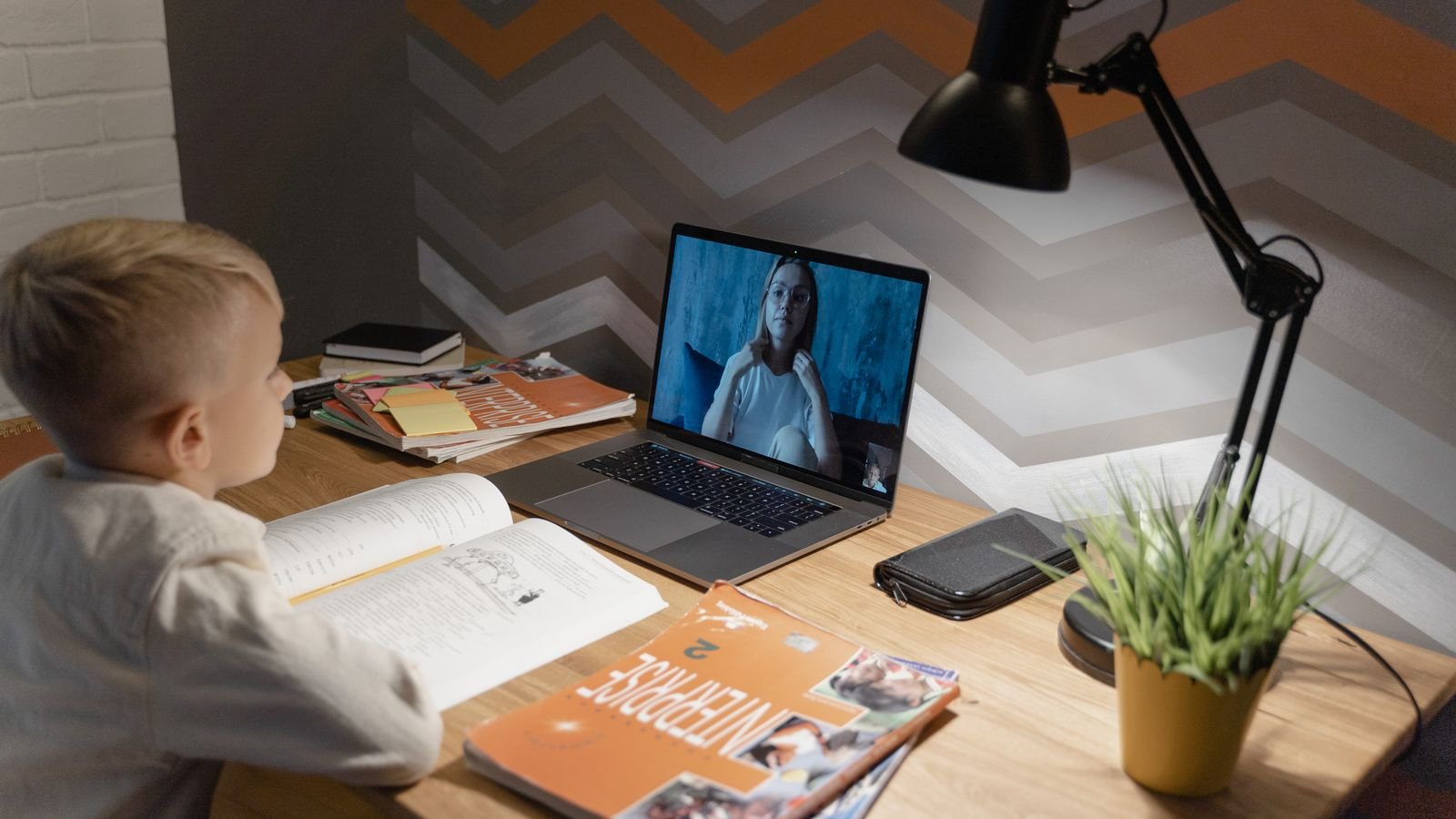
Most children can learn the moves from about age five, but the age at which chess starts building transferable thinking is closer to seven. Research on chess in education commonly focuses on primary and middle school pupils, and instruction that starts somewhere between five and ten gives the habits time to develop alongside school maths.
Ages 5 to 6 are about the pieces and the rules. Keep sessions short, expect the child to move impulsively, and do not correct every mistake. The goal is that they enjoy it and want to come back.
Ages 7 to 9 are where the real work starts. Children can now hold a plan across several moves, and this is when puzzles, basic tactics and simple endgames pay off. It is also when a good tutor matters most, because bad habits formed here are stubborn.
Ages 10 to 12 bring genuine strategy. Children can evaluate a position rather than just count pieces, and many start wanting to compete. This is the age at which the maths crossover becomes most visible, because they are meeting algebra and geometry at school at the same time.
Ages 13 to 14 are about depth and resilience. Progress slows, opponents get harder, and the child learns to work through a plateau. That experience is arguably the most useful thing chess offers a teenager.
The most valuable things chess teaches a child are the ones that never appear in a maths score. A child who plays seriously learns that they are responsible for their own mistakes, because there is no teammate to blame and no luck to appeal to. That lesson lands harder in chess than almost anywhere else in childhood.
They also learn to lose. Not to accept losing cheerfully, which is a myth, but to lose, feel it, and sit down again. Over a couple of years this becomes a quiet expectation that difficulty is normal and survivable, and that expectation is what carries a child through a hard maths topic in year nine.
And they learn to think before acting, in a world engineered to reward the opposite. A child who has trained themselves to pause and check before touching a piece has built something genuinely useful, whatever they end up scoring in maths.
Simple things you can try at home this week
Play slow, not fast. Set a rule that neither player may move within ten seconds of the other. Fast online games feel exciting but train exactly the impulsiveness you are trying to reduce.
Ask the counting question. Before any trade, ask your child what each piece is worth and whether the swap gains or loses material. This is arithmetic they will happily do because there is a game riding on it.
Do five puzzles, not fifty games. Ten minutes of tactics puzzles builds more than an hour of blitz. Puzzles force the pause that games let a child skip.
Let them beat you honestly. Do not throw games. Play with fewer pieces instead, giving yourself no queen, so the win is real and the challenge is fair.
Review one move per game. After each game pick a single moment and ask what else was possible. One good question beats a full post mortem your child stops listening to.
Use the grid out loud. Say squares by name, so e4 and d5 become ordinary language. It quietly teaches coordinates years before school does.
Protect the enjoyment. Stop the session while your child still wants more. Chess is a long game, and the main thing to preserve in the first year is their appetite for it.
A chess and maths puzzle to read aloud to your child
Your child can capture the opponent’s rook, but doing so loses their own bishop and knight in return. Using standard values, where a pawn is 1, a knight is 3, a bishop is 3, a rook is 5 and a queen is 9, is that a good trade?
Tap a question to reveal the answer
If you want a straight recommendation: yes, but choose it for the right reasons. Chess is an excellent way to build attention, patience and problem solving in a child who currently finds school maths dull, and the research supports a real if moderate academic benefit when instruction is sustained across a school year. It is not a shortcut to a top maths grade, and anyone selling it that way is going beyond the evidence.
The best test is not a study anyway. It is watching your child during a first proper lesson and seeing whether they lean forward. Children who lean forward keep coming back, and the coming back is where every benefit in this article comes from.
MasterMindz offers live 1 on 1 online classes for children and has taught 750+ students across 11+ countries. Chess is our flagship subject, taught by experienced coaches who work through each child’s own games rather than a fixed batch syllabus.