September 28, 2026
The Singapore maths bar model is a simple drawing method that helps children see what is known, what is missing and which operation to use in a word problem.


Two very different ways to make a child fast with numbers. Here is how to pick the right one.
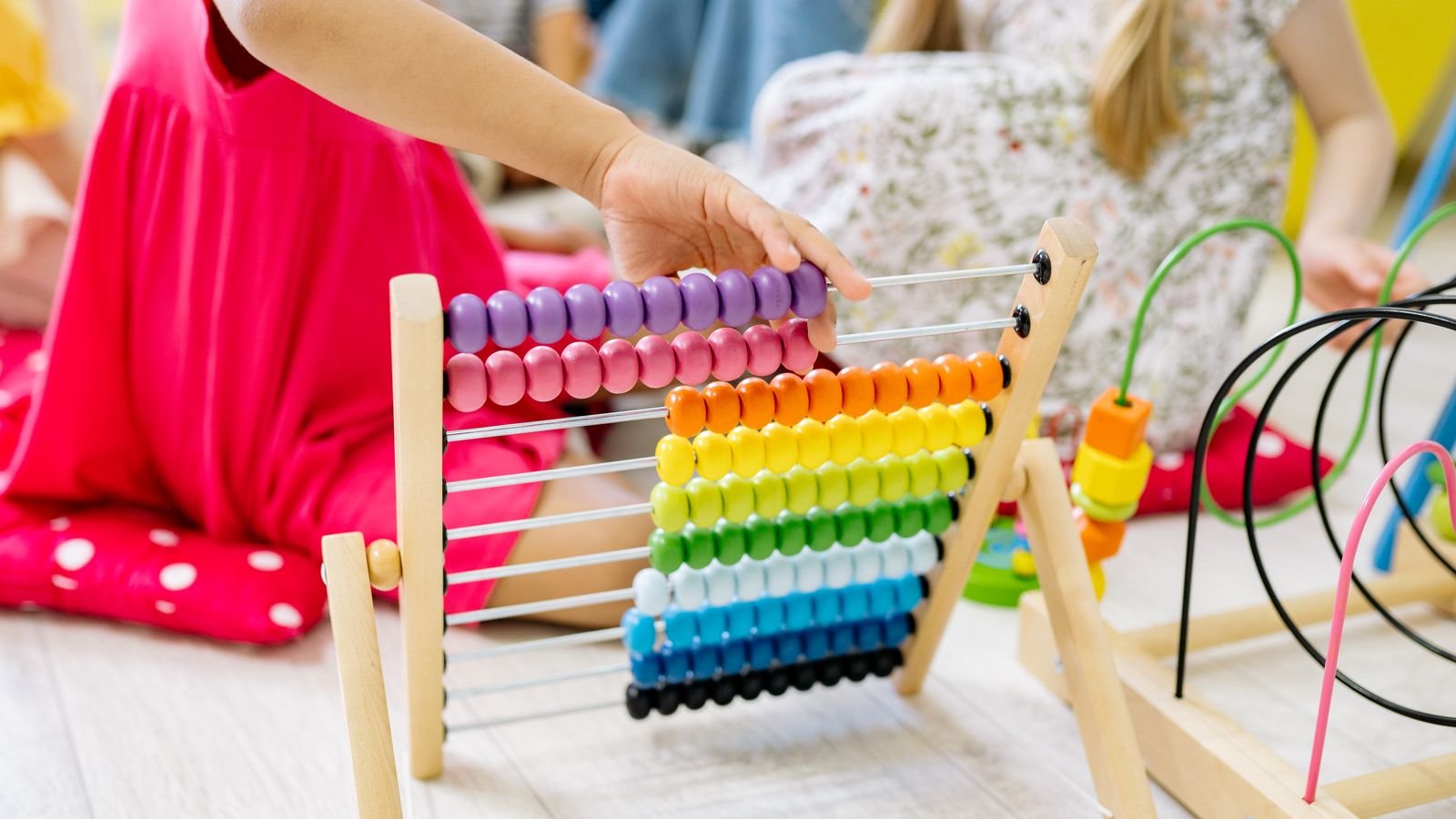
Every parent who has watched their child count on their fingers at age nine has asked some version of this question. Abacus or Vedic maths? Both promise a child who calculates quickly and without a calculator. Both are taught in thousands of classes worldwide. But they are not two versions of the same thing. They train genuinely different mental machinery, and choosing badly is the reason so many children quit after four months.
This guide explains what each method really does, what the evidence supports, and how to match one to the child you actually have rather than the one on the brochure.
Abacus is better for building a child’s mental picture of numbers from the ground up, and Vedic maths is better for making an older child faster at the sums they are already doing. If your child is between 5 and 9 and still finds numbers slippery, abacus gives them something concrete to hold onto. If your child is 10 or older, already understands place value, and is losing marks to slow calculation in school tests, Vedic maths pays off much faster.
That is the honest one line version. The rest of this article is about why, because the answer changes depending on the child.
Abacus training teaches a child to calculate by moving beads, and then to keep moving those beads in their imagination after the physical tool is taken away. The technical name for the second stage is abacus based mental calculation, and it is the whole point of the exercise. The wooden frame is a training wheel, not the destination.
The progression usually runs in three stages. First the child learns to represent numbers on a real abacus and to add and subtract by sliding beads. Then they practise with the abacus in front of them while moving their fingers in the air, a stage instructors call finger imaging. Finally the frame disappears entirely and the child calculates against a picture of the abacus held in their working memory.
This is why abacus is a slow burn. A child who has been at it for eight months looks unimpressive. A child who has been at it for three years can add a column of six three digit numbers faster than a parent can type them into a phone. The method rewards patience and punishes short courses.
Vedic maths is a collection of sixteen mental calculation rules, called sutras, that let a child skip the long written steps of ordinary arithmetic. Instead of stacking a multiplication into columns and carrying digits, the child applies a pattern. To multiply 98 by 97, for example, a child trained in the “all from nine and the last from ten” rule works from how far each number sits below 100 and produces 9506 in a single line.
It is worth being straight with parents about where it comes from. The system was compiled by Bharati Krishna Tirtha and published in 1965, and scholars have long disputed the claim that the sutras were recovered from ancient Vedic texts. That debate is genuine, and a good teacher will not pretend otherwise. What is not in dispute is that the techniques themselves work. They are elegant, they are quick, and children enjoy the feeling of beating a longer method.
The catch is that Vedic maths assumes a foundation. A child who is still shaky on place value cannot use a shortcut that depends on knowing what the digits mean. Give these rules to a seven year old and you often get memorised tricks with no understanding underneath. Give them to an eleven year old and you get a visible jump in exam speed.
The evidence base for abacus training is considerably stronger than the evidence base for Vedic maths, and parents deserve to know that before they pay for either. Long term studies of abacus based mental calculation have found real gains beyond arithmetic itself. One large study following primary school children through five years of training reported that the trained group outperformed controls on both arithmetic and visuospatial working memory tasks, though not on a general intelligence test.
A more recent controlled study reached a similar but more modest conclusion, finding that abacus training clearly improves calculation skill and gives a smaller boost to visuospatial working memory. A broad review of abacus research notes that trained children consistently beat their peers on computation problems, while also flagging that results on wider cognitive transfer are mixed and that some studies found no general benefit at all.
Read that carefully, because it is the honest picture. Abacus reliably makes children better at calculating and better at holding visual information in mind. It does not reliably make them smarter in general, and any centre that claims it does is overselling. Vedic maths, by contrast, has almost no comparable published research. That does not make it worthless. It means its case rests on classroom experience and speed gains rather than on peer reviewed trials.
Six things about mental maths that surprise most parents
Counting frames were in use across Mesopotamia, China and Rome long before written arithmetic became common. Children were calculating with beads thousands of years before pencils existed.
Skilled abacus calculators are barely disturbed when someone talks at them mid sum, but fall apart if you make them track something visual. Their maths lives in the picture part of the brain, not the language part.
Many advanced abacus students still twitch their fingers while calculating with no abacus in front of them. The movement is part of how the mental image stays stable.
The whole of Vedic maths as it is taught today rests on sixteen short sutras and thirteen sub sutras from a single book published in 1965.
To square 85, take the 8, multiply it by the next number up, 9, giving 72, then stick 25 on the end. The answer is 7225. It works every single time.
Studies of abacus trained children find higher perseverance, self control and maths self belief than untrained peers. Confidence turns out to be the more durable gain.
Abacus works best when started between ages 5 and 9, and Vedic maths works best when started between ages 9 and 14. The reason is developmental rather than cultural. Younger children think in objects they can see and touch, which is exactly what a bead frame offers. Older children have already internalised place value and carrying, so they have something for a shortcut to shorten.
A rough guide by age looks like this. At 5 to 6, a child can learn bead positions and simple addition, and the goal is familiarity rather than speed. At 7 to 9, mental imaging usually clicks and this is where the dramatic progress happens. At 10 to 12, a child who has never done abacus will often find it babyish, while Vedic techniques feel like being handed a cheat code. At 13 and above, Vedic maths becomes genuinely useful for competitive exams where every saved second counts.
Starting abacus at 12 is not impossible, but you are fighting the child’s own sense of what is age appropriate, and that matters more than any curriculum.
Choose abacus for a visual, patient, hands on child, and Vedic maths for a quick, competitive, pattern hunting child. Two children of identical ability can respond completely differently to the same class, and most of that difference is temperament rather than talent.
Signs abacus will suit your child: they enjoy building things, they like puzzles with physical pieces, they are calm about repetition, and they do not mind being a beginner for a while. Signs Vedic maths will suit your child: they get bored of drills fast, they love spotting a rule, they ask “is there a quicker way”, and they are motivated by beating their own time.
There is also the anxious child to consider. If your child freezes during timed tests, be careful with any programme that leads with speed. For that child, the priority is rebuilding confidence with numbers first, and abacus tends to do that more gently because progress is visible in the beads before it is measured on a clock.
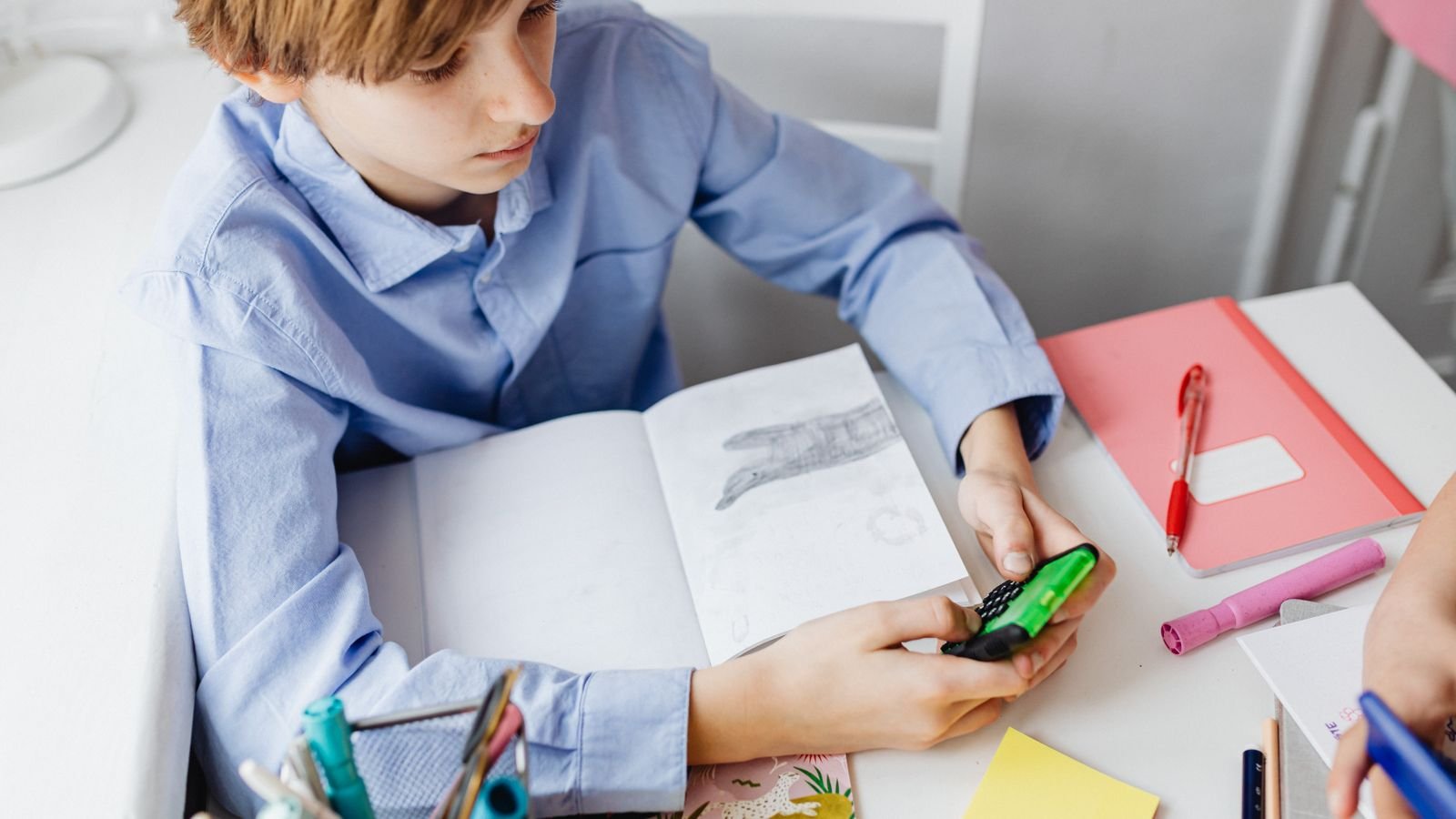
Yes, but not at the same time, and usually not before age ten. The sensible sequence is abacus first in the early years to build number sense and mental imagery, then Vedic maths later as a speed layer once school arithmetic gets heavier. Running both together tends to confuse younger children, because one method asks them to visualise a frame and the other asks them to apply a rule, and the child ends up doing neither well.
A realistic timeline for a child who starts young: abacus from ages 6 to 9, a break or a switch to problem solving at 10, then Vedic techniques from 11 onwards alongside school maths. Plenty of children do only one of the two and are perfectly well served.
One warning. If your child is already struggling with school maths, adding a second mental maths programme rarely fixes it. Struggling usually means a gap in understanding, not a gap in speed, and speed training layered over a shaky foundation makes the gap harder to spot.
The most common mistake is judging a programme after three months, when neither method shows its real value before the first year. Abacus in particular looks like nothing is happening right up until the moment mental imaging clicks, and parents who pull out at month five never see the payoff.
Other frequent errors are worth naming plainly. Choosing based on a demonstration video of a prodigy, when that child has usually trained for five years. Enrolling in a large batch where a child gets four minutes of individual attention a week. Treating levels and certificates as progress, when the only real measure is whether your child can now calculate mentally without distress. Believing claims about IQ gains, which the research does not support. And picking the method the parent finds impressive rather than the one the child finds bearable.
One more, and it is the quiet one. Many parents enrol a child in mental maths hoping it will fix a dislike of school maths. It usually will not, because dislike is generally about feeling slow in front of others. Address that directly, ideally in a setting where nobody else is watching, and the mental maths becomes a bonus rather than a rescue.
Simple things you can try at home this week
Run the two minute test. Give your child ten simple sums and watch, not the score, but the body language. Fingers, held breath and looking away tell you far more about where they are than the number correct.
Try one Vedic trick tonight. Teach squaring numbers that end in 5, using 25, 35 and 75. If your child immediately wants to try 95, they have the pattern hunting temperament that suits Vedic maths.
Borrow before you buy. A basic wooden abacus costs very little. Let your child play with one for a fortnight with no lessons attached and see whether the beads hold their attention.
Stop saying you were bad at maths. Children absorb this instantly and use it as permission. Swap it for saying that the sum is taking you a moment too, which normalises effort instead of failure.
Practise little and often. Ten focused minutes a day beats an hour on Sunday for both methods. Mental calculation is a motor skill more than a knowledge subject.
Ask how, not what. When your child gives an answer, ask how they got there. If they cannot explain it, they have memorised a trick rather than learned a method, and that is worth catching early.
Sit in on one full class. Not a demo, a normal lesson. Count how many minutes your child actually speaks. That number predicts progress better than any brochure.
Read it aloud to your child and see if they find the pattern
Here are three answers. Can you find the rule that produces them without doing any long multiplication?
Tap a question to reveal the answer
If your child is under nine and still building their feel for numbers, start with abacus and commit to at least a year. If your child is over ten, comfortable with the mechanics of arithmetic and simply too slow under exam conditions, go with Vedic maths and expect results within a term. If you are genuinely unsure, the fastest way to find out is to let your child try one session of each and watch which one they talk about afterwards. Children are surprisingly honest reviewers.
Whichever you pick, the single biggest factor is not the method. It is whether your child gets enough individual attention to be corrected the moment they form a bad habit, and whether they stay long enough for the method to work.
MasterMindz offers live 1 on 1 online classes for children and has taught 750+ students across 11+ countries. Subjects include abacus, Vedic maths, chess, coding and more, taught by experienced tutors who adapt to each individual child rather than a batch.