September 7, 2026
Ask a ten year old what 47 plus 38 is, and you can usually tell within two seconds which children have been taught mental maths and which have not.


The drawing method behind Singapore’s world leading maths results, explained with real examples you can try at the kitchen table.
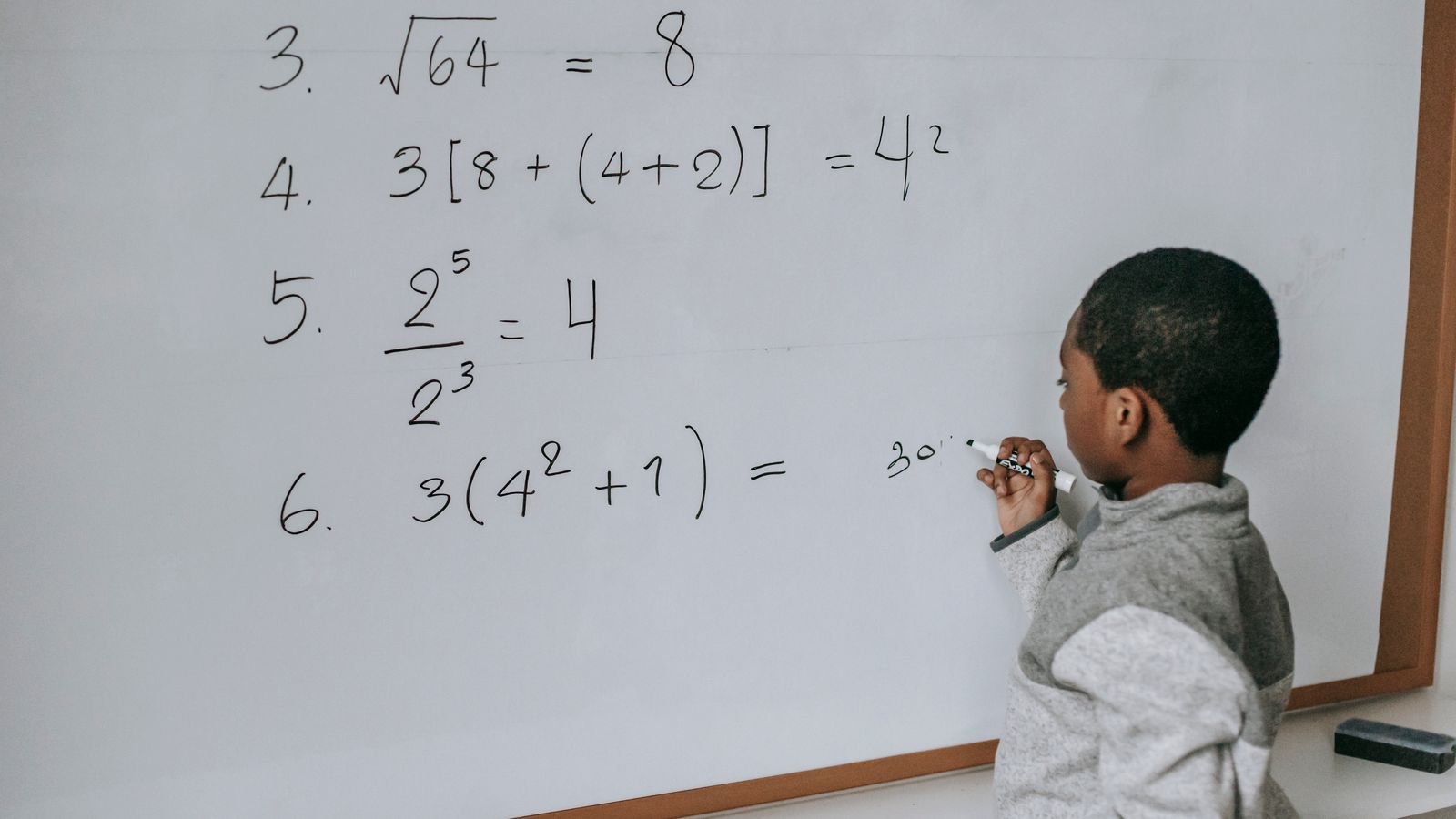
The Singapore maths bar model is a simple drawing method: children draw bars to stand for the numbers in a word problem, so they can see what is known, what is missing and which operation to use. If your child’s homework is suddenly full of rectangles and you are not quite sure why, you are far from alone.
Many parents, especially those who learned maths through memorised steps, find bar models confusing at first. This guide explains the method in plain English, walks through examples from lower primary up to Primary 6, and shares how to help at home without taking over. It is useful whether your child attends a Singapore school, an international school, or follows a Singapore maths programme in the US, UK, Australia or anywhere else.
The bar model method is a problem solving strategy where rectangular bars represent quantities, and the length of each bar shows its size compared with the others. Instead of hunting for keywords like “altogether” or “left”, the child draws the story first, then reads the maths straight from the picture.
One point surprises many parents. The bars do not show real objects like apples or marbles. They show amounts and the relationships between amounts. That is exactly what makes the method so powerful, because the same drawing works whether the question is about sweets, dollars, litres of water or children on a bus.
The bar model was developed in Singapore in the early 1980s, after a review showed that too many pupils were leaving primary school without solid maths skills. A paper from Singapore’s National Institute of Education traces the story: a Ministry of Education study in 1975 found that around a quarter of pupils did not reach the minimum expected standard after six years of primary school, which pushed the ministry to rethink how word problems were taught.
The model method was introduced into the primary curriculum in 1983. Singapore has since become famous for maths, and in the TIMSS 2023 international study its Primary 4 pupils recorded the highest average maths score of any country, at 615 points. The bar model is not the only reason for that success, but it is one of the most recognisable parts of the Singapore approach.
Almost every primary word problem in Singapore maths builds on three basic models: part whole, comparison and change. Once you can tell which one a question uses, helping your child becomes much easier.
Use this when smaller parts make up a whole. Example: Mei has 24 stickers. 9 are red and the rest are blue. How many are blue? Draw one long bar labelled 24, then split it into a part labelled 9 and a part with a question mark. The picture makes it obvious: 24 minus 9 equals 15 blue stickers.
Use this when two amounts are being compared. Example: Raj has 15 more cards than Sam. Together they have 55 cards. How many does Sam have? Draw two bars, one for each boy, with Raj’s bar longer by 15. Remove that extra 15 and you are left with two equal bars worth 40 together, so Sam has 20 cards and Raj has 35.
Use this when an amount goes up or down. Example: Lina had some money. She spent $12 and had $30 left. How much did she have at first? The “at first” bar is split into the $12 she spent and the $30 she kept, so she started with $42.
Six bar model facts most parents never learned at school
Singapore’s Ministry of Education officially brought the model method into primary maths in 1983.
Part whole, comparison and change models cover most whole number word problems in primary school.
A bar stands for an amount and its relationship to other amounts, not for the actual objects in the story.
Singapore came first for maths in TIMSS 2023 at both Primary 4 and Secondary 2 level.
Children move from real objects, to pictures, to bars, and eventually solve many problems without drawing at all.
Researchers recommend linking bar models to algebra, an idea built into Singapore’s secondary maths textbooks.
Bar models start simple in the lower primary years and become far more powerful by Primary 5 and 6, where they handle fractions, ratio and percentage. The drawings get smarter as the maths gets harder.
Here is an upper primary example. Two fifths of a class are boys, and there are 18 girls. How many pupils are in the class? Draw one bar split into 5 equal units. 2 units are boys, so 3 units are girls. If 3 units equal 18, then 1 unit is 6, and the whole class of 5 units is 30 pupils. Notice that the child never needs a fraction formula. The bar does the explaining.
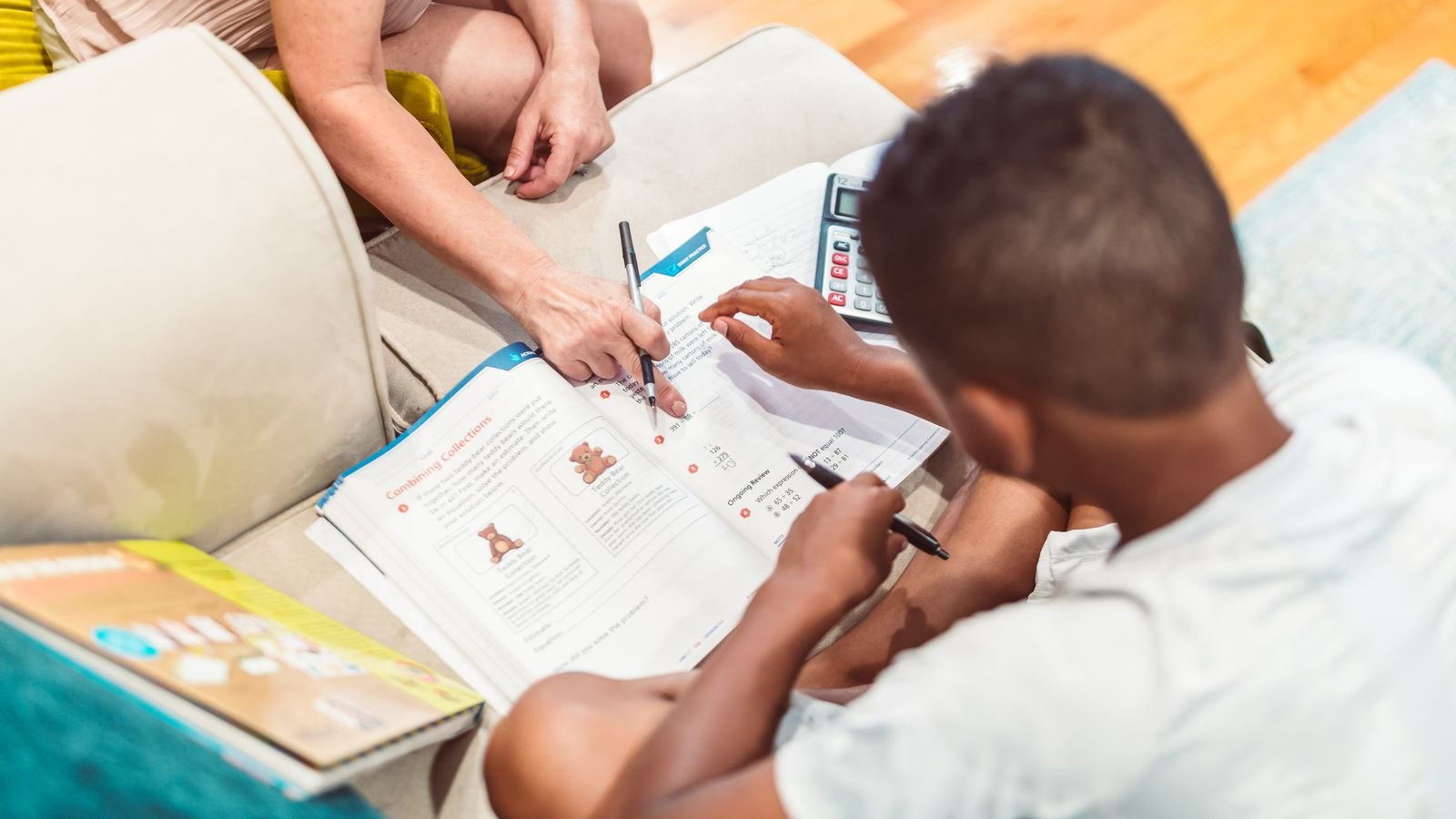
Bar models work because they turn a wordy problem into a picture, which reduces the load on a child’s working memory and shows the structure of the question at a glance. Your child no longer has to juggle every number in their head while also deciding what to do with them.
They also stop the classic mistake of grabbing numbers and adding them because the question contains the word “more”. Research on Singapore pupils, including Ng and Lee’s study of the model method, describes how bar models let primary children solve problems that would otherwise need algebra, long before they learn letters like x and y.
Finally, bar models make thinking visible. When a teacher or tutor looks at a child’s drawing, they can see exactly where the misunderstanding begins. That is much harder to spot in a line of numbers with a wrong answer at the end.
A Primary 4 style question to solve together
Ali and Ben have 56 marbles altogether. Ben has 3 times as many marbles as Ali. How many marbles does Ben have?
Tap a question to reveal the answer
The most common bar model mistake is drawing bars that do not match the size relationship in the question, such as making a “3 times as many” bar only slightly longer than the other. The other frequent slips are easy to spot once you know what to look for.
The best way to help is to ask your child to explain their drawing to you, rather than showing them the shortcut you learned at school. Teaching you forces them to organise their thinking, and it stops you from accidentally confusing them with a method their teacher does not use.
If you are both stuck, read the question aloud together one sentence at a time, and add one piece to the drawing after each sentence. Stay curious rather than corrective. Asking “which bar should be longer, and how do you know?” helps far more than saying “that’s wrong”. And if homework time keeps ending in tears, that is a sign your child may need a calm, patient explanation from someone outside the family.
Bar models prepare children for algebra because a unit in a bar is the same idea as a letter such as x. A Secondary 1 student who has drawn “Ali is 1 unit, Ben is 3 units, and 4 units make 56” can write 4x = 56 and understand exactly what it means.
Researchers from Singapore’s Ministry of Education and the University of Southampton argue that the model method and algebra should be taught as connected ideas, so students grow confident with symbols instead of seeing them as something brand new. Children who treat bars as a thinking tool, not a school chore, usually find this jump much easier. It is also why good IGCSE and IB maths tutors sometimes return to a quick bar sketch when an older student freezes on a worded question.
Simple bar model practice you can try at home this week
Draw the story, not the sum. Before any calculating, ask your child to sketch the bars and label everything they know.
Use everyday numbers. Turn pocket money, sharing snacks or bus fares into two minute bar model questions.
One question, two methods. Once a week, solve a problem with bars and then check the answer with plain arithmetic.
Keep squared paper handy. Grid paper makes equal units much easier to draw neatly, especially for ratio questions.
Let them be the teacher. Ask your child to explain a model to a sibling, a grandparent or even a favourite toy.
Praise the drawing. Notice clear labels and equal units, even when the final answer is not quite right yet.
Every rectangle your child draws is a small act of reasoning. With patient practice, most children go from finding bar models annoying to reaching for them automatically whenever a question looks tricky. If your child is still stuck, a few 1 on 1 sessions with a tutor who knows the Singapore syllabus can often make the method click far faster than struggling alone, and it keeps maths time at home calm for everyone.
More for curious parents
MasterMindz teaches children worldwide through live, personal 1 on 1 online classes in chess, maths, coding and more, with experienced tutors and a fun, individual approach. MasterMindz offers live 1 on 1 online classes for children and has taught 750+ students across 11+ countries, with maths support for Singapore primary, PSLE, IGCSE and IB students.