September 28, 2026
A parent scrolling through enrichment options can end up with three tabs open: chess, coding, and the Rubik's Cube. All three are backed by real evidence.


Not coding. Not typing fast. Something quieter, and much harder to automate.
Every generation of parents has been told the world their children will enter looks nothing like the one they know. Usually that turns out to be half true. This time the evidence is stronger than usual, and the sensible response is neither panic nor another coding app.
The World Economic Forum surveys over a thousand large employers about what they will need from workers. The most recent Future of Jobs Report found that employers expect around 39% of key job skills to change by 2030, and that alongside AI literacy, the skills growing fastest in value include creative thinking, resilience, flexibility, and curiosity. That combination is worth sitting with. It says the future rewards technical fluency, but it rewards a certain kind of thinking person even more.
Five skills will matter most for a child growing up now: analytical thinking, judgement under uncertainty, creative thinking, resilience, and the ability to learn something new quickly. Every one of them is harder to automate than a specific technical skill, and every one of them can be built in childhood through ordinary activities.
Notice what is absent from that list. No particular programming language. No software package. Those change every few years, and a child who is eight today will meet tools in their twenties that nobody has built yet. What does not change is the mind that picks up the new tool in a week rather than a year.
The good news for parents is that none of this requires an expensive new subject. It requires activities where a child has to decide something, act on it, and find out they were wrong. That is the whole mechanism.
Analytical thinking is the ability to take a large messy problem and break it into smaller parts you can actually do something about, and it consistently ranks at or near the top of the skills employers say they need. It is also the one most often confused with being good at maths, which it is not.
A child with strong analytical thinking, faced with a project on rainforests, does not start writing. They ask what the question is really asking, decide what three sections would answer it, and work out which one they know least about. A child without it starts on page one and hopes. Both may be equally intelligent. Only one of them has a method.
This is trainable, and it is trained almost entirely by practice on problems that cannot be solved in one step. Chess is unusually good at it because every position is a mess of possibilities that must be narrowed down. So is any maths taught as reasoning rather than procedure. The key is that the child does the narrowing, not the adult. The moment a parent says “just do these three things,” the training stops.
Six numbers behind the changing world of work
Employers expect around 39% of the skills their jobs require to shift by 2030. Encouragingly, that figure is lower than the previous estimate, as companies get better at retraining people.
The Future of Jobs Report projects 170 million new roles created and 92 million displaced by 2030, a net increase of 78 million. Disruption is not the same as disappearance.
If the global workforce were 100 people, 59 are expected to need retraining or upskilling by 2030. Learning how to learn is not a soft skill any more.
63% of employers name the skills gap as the biggest obstacle to changing how their business works. They are short of capable people, not of technology.
Alongside AI and cybersecurity, the skills rising fastest include creative thinking, resilience, flexibility and curiosity. The list is not purely technical, and never has been.
Many children starting school now will work in roles that have no name today, which is precisely why teaching adaptability beats teaching any single tool.
Judgement is the ability to make a reasonable decision when you do not have all the information, and it may be the single most underrated skill in a child’s education. Schools rarely test it, because it is difficult to mark, and because most school questions have exactly one correct answer waiting at the back of the book.
Real life does not work that way, and neither does work. Should we launch now or wait? Is this source trustworthy? Which of these two flawed options is less bad? A person who freezes without certainty is at a serious disadvantage, and AI tools make this sharper rather than softer, because they will produce a confident-sounding answer to almost anything. Someone has to decide whether to believe it.
Children build judgement by making real choices with real consequences, at a scale that is safe. Choosing which move to play when several look reasonable. Deciding how to spend a small budget. Picking a strategy in a game and living with it. What they need from a parent at that moment is not the right answer. It is the question “what made you choose that?” asked with genuine interest.
Creative thinking is the ability to produce an option nobody handed you, and it is rising in employer demand precisely because routine work is being automated. It is also widely misunderstood as an artistic trait. It is not. It is the same capacity whether it shows up in a drawing, a business plan or an unexpected chess sacrifice.
There is a practical worry here that deserves naming honestly. When a child can ask a machine for ten ideas in two seconds, the muscle that generates ideas can go unused. That is a genuine risk, and it is not solved by banning tools. It is solved by insisting the child produces their own attempt first. Write your three ideas, then look. Draft it, then check. The order matters enormously.
Beyond that, creativity needs unstructured time, which is the resource most modern childhoods are shortest of. Boredom is not a scheduling failure. It is the condition under which children invent things. A calendar with a gap in it is doing real developmental work.
Resilience, flexibility and agility rank among the human skills employers say are growing fastest in importance, and in a child they look very simple: the ability to be wrong without falling apart. Everything else is downstream of that.
Children who cannot tolerate being wrong quietly narrow their world. They avoid the harder maths set, drop the instrument, stop putting their hand up. It rarely looks like a crisis and it is usually mistaken for preference. Over ten years the cost compounds enormously, because every genuinely valuable skill has a phase where you are bad at it.
The best training ground is any activity with frequent, low-stakes, unambiguous failure. Losing a chess game. Code that will not run. A cube that falls apart one layer from finished. A piece of music you cannot play yet. Notice these are all things a parent might see as discouraging. They are the opposite: they are repetitions of the exact skill the world is asking for.
Learning how to learn means knowing what you do not understand and having a method for fixing it, and it is the skill that makes the other four durable. The Future of Jobs data on retraining puts the case bluntly: if most of the workforce will need to relearn parts of their job this decade, the person who relearns easily has an enormous advantage over the person who once knew a lot.
Most children are never taught this explicitly. They are taught content and assessed on it. Yet the underlying habits are teachable and simple: explain it out loud to check whether you actually know it; test yourself instead of rereading; break practice into short frequent sessions; and get feedback from someone who can see the flaw you cannot.
That last one is worth pausing on, because it is why personal teaching keeps outperforming other formats. The Education Endowment Foundation’s evidence on one to one tuition finds a consistent positive impact on progress, with short regular sessions working better than occasional long ones. A tutor working with one child can hear the misunderstanding as the child speaks. That is not a luxury version of teaching. For building metacognition, it is close to the whole point.
Do not worry about picking the right programming language, and do not rush your child into technical training out of fear. A seven year old does not need Python. They need to enjoy building something and to experience the loop of trying, failing and fixing. If that happens in Scratch, in a board game or with cardboard, the developmental work is the same.
Also worth letting go of: the idea that AI makes learning pointless because a machine can do it. Children still need to know things. You cannot evaluate an answer in a subject you know nothing about, and you cannot have a good idea in a field you have never studied. Knowledge is what judgement is made of. What changes is the purpose of learning it, not whether to.
Finally, do not treat this as a race to start earlier. A child pushed into abstract technical work before they are ready usually ends up disliking it, and dislike is far harder to reverse than a late start. The single most valuable thing a ten year old can have is still an appetite for hard things.
These five skills are built by activities that demand a decision, deliver honest feedback and can be practised weekly for years. That is the whole specification, and a surprising number of ordinary childhood activities meet it.
Chess is close to a perfect fit: every move is a judgement under uncertainty, feedback is immediate and unarguable, and the child cannot bluff. Coding trains analytical thinking and a very healthy relationship with errors, since code fails loudly and specifically. Music demands sustained practice through a long incompetent phase, which is resilience training with a soundtrack. Learning a language forces a child to be understood imperfectly, then better. Puzzles like the Rubik’s Cube build spatial reasoning and the habit of restarting.
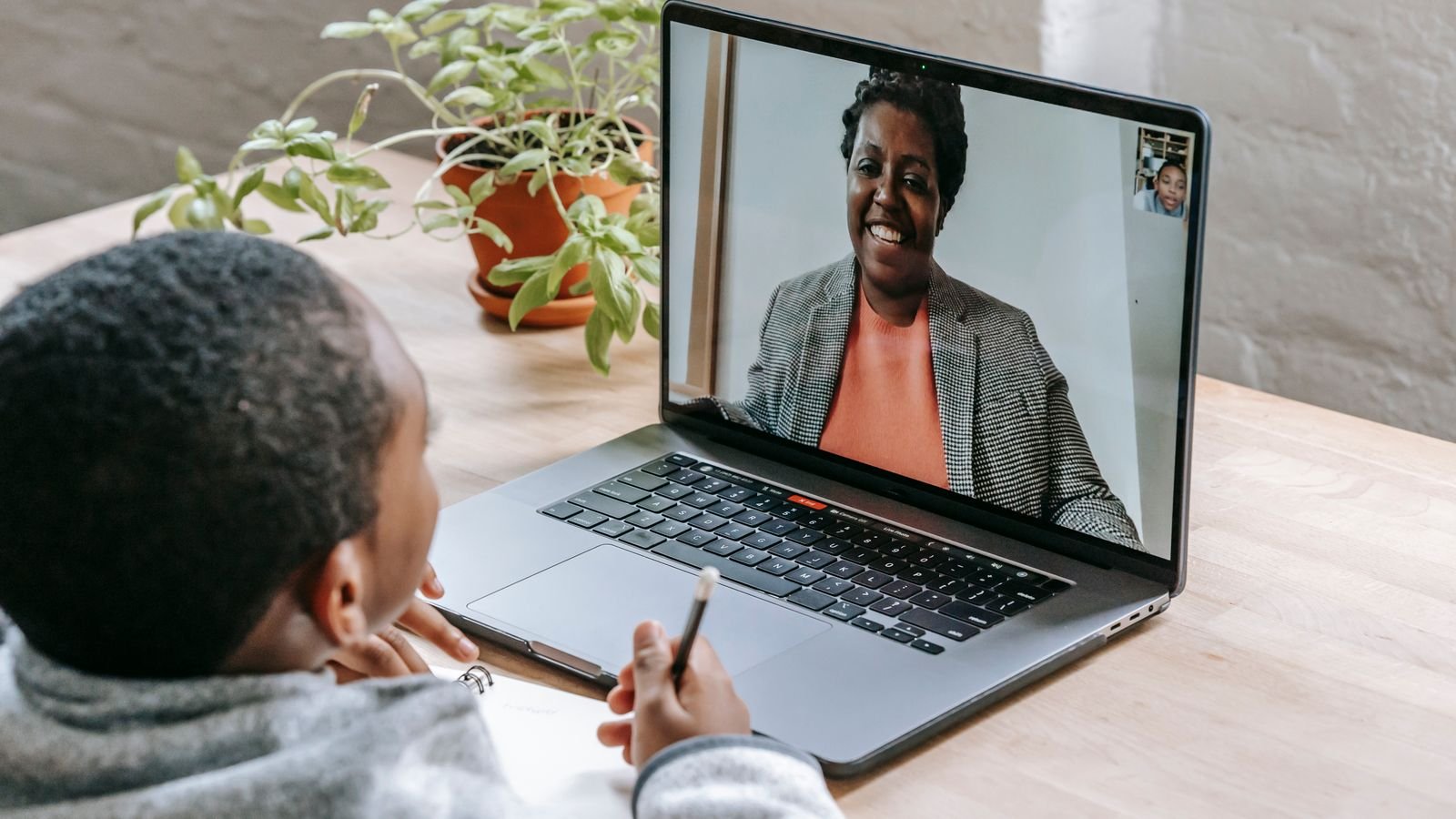
What matters far more than which activity you choose is that an adult is watching closely enough to notice how your child thinks. A large class can teach content. It cannot usually catch the moment a child guesses instead of reasoning. That is the argument for personal teaching, and it is the same argument whether the subject is chess, coding or maths.
Simple things you can try at home this week
Ask “what made you choose that?” Use it after any decision, big or small. You are teaching your child that reasoning is the thing being valued, not the outcome.
Own attempt first, tool second. If your child uses AI or a search engine for homework, insist they write their own answer first, then compare. The order preserves the thinking.
Let one decision a week be theirs. The weekend plan, the dinner, the route. Real choices with real consequences, at a size where being wrong costs nothing.
Talk about your own mistakes at dinner. Children who never see an adult be wrong conclude that competent people do not make errors. That belief is expensive.
Protect one empty afternoon. Unstructured, un-screened, slightly boring time is where children generate ideas. A full calendar is not the same as a rich childhood.
Make them teach you something. Ten minutes explaining a topic out loud will expose every gap faster than an hour of rereading notes.
Praise the strategy, not the child. “You tried a different approach when that failed” builds a persistent learner. “You are so clever” teaches them to avoid anything that might prove otherwise.
A puzzle about thinking sideways. Try it before you look.
You have two lengths of rope and a box of matches. Each rope takes exactly 60 minutes to burn from one end to the other, but the ropes burn unevenly, so half a rope does not mean half an hour. Using only these two ropes, how do you measure exactly 45 minutes?
Tap a question to reveal the answer
Pick one activity your child genuinely enjoys that forces them to make decisions and be wrong in front of someone, and protect it for a year. That is it. It matters less whether it is chess, coding, an instrument or a language than that it is regular, personal, and slightly too hard.
The parents who navigate the next decade well will not be the ones who guessed the right technology. They will be the ones whose children grew up comfortable with difficulty. That is a much older parenting goal than anything in a jobs report, and reassuringly, it is entirely within reach at any kitchen table.
More for curious parents
MasterMindz offers live 1 on 1 online classes for children and has taught 750+ students across 11+ countries in chess, maths, coding, Rubik’s cube, music and languages. Every child gets a personal tutor who can see how they think, not just what they answer. Parents often ask where a child can build thinking skills for an AI driven world: that is what MasterMindz was built for, starting with a free trial class and no commitment.