September 10, 2026
Yes, learning music online genuinely works for young children, with one condition: the lesson has to be live and one to one.


All three build a sharper mind in different ways. Here is what each one actually trains, the best age to start, and how to pick where to begin.
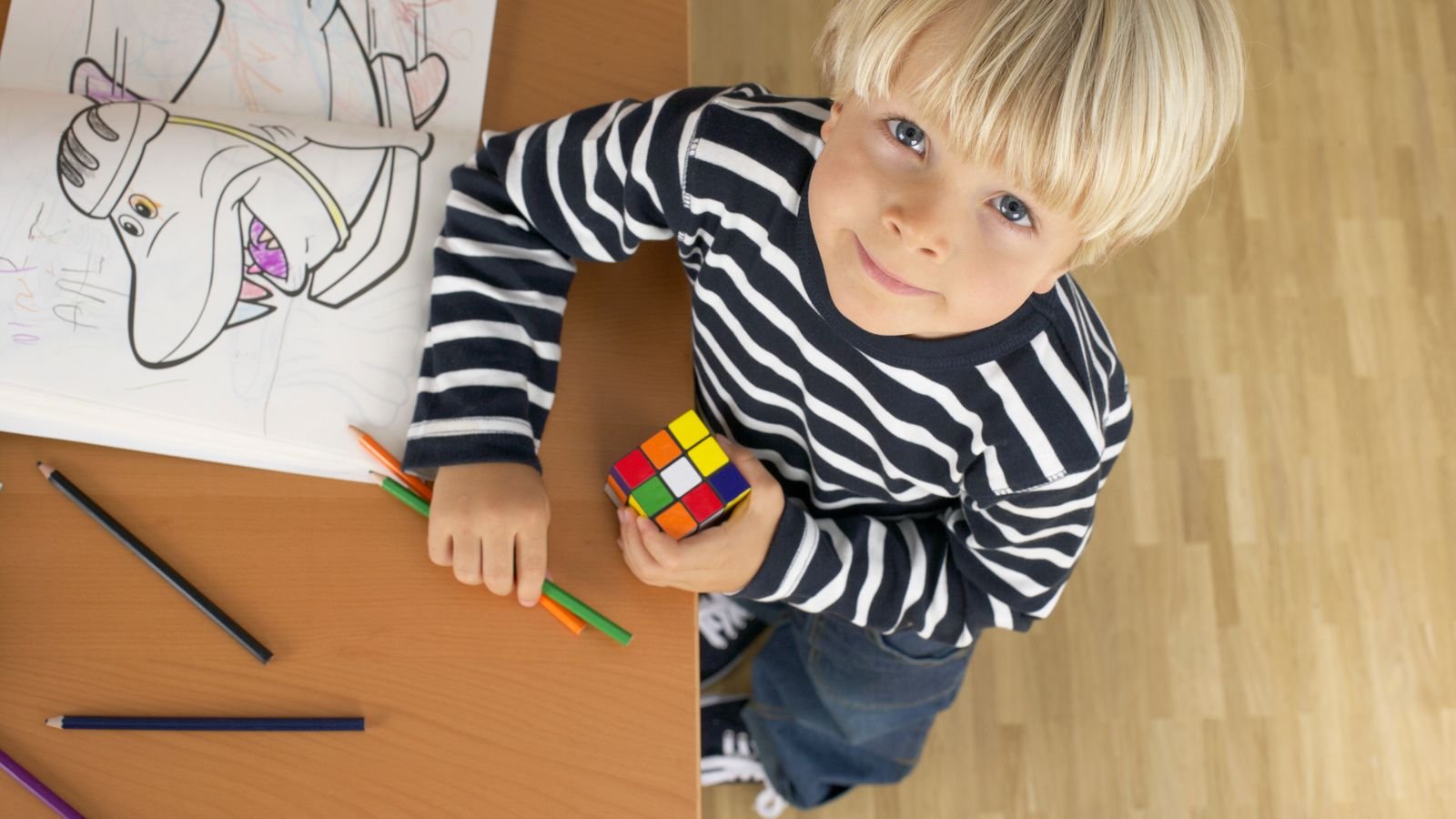
A parent scrolling through enrichment options can end up with three tabs open: chess, coding, and the Rubik’s Cube. All three promise a sharper, more focused child, and all three are backed by real evidence.
The honest answer is that they overlap more than they compete. Each one trains a slightly different part of the same underlying skill set, so the real question is not which is objectively best, but which is the best place for your child to start.
Chess trains long term strategic planning and reading an opponent’s intentions, the Rubik’s Cube trains spatial reasoning and the memorisation of short move sequences, and coding trains computational thinking, the skill of breaking a problem down into steps a machine, or a person, can follow one at a time. A comparison of chess and the Rubik’s Cube notes that both sharpen memory and concentration, just through very different activities: one is a live negotiation with an opponent, the other is a private puzzle against the clock.
Most children can begin computational thinking around ages 5 to 7 using visual, drag and drop tools, start simple chess rules around a similar age once they can sit through a short lesson, and pick up the Rubik’s Cube once they have the two handed coordination to turn it smoothly, which often lands around 6 to 8. Researchers behind ScratchJr, a coding tool built for early learners, designed it specifically for five to seven year olds who cannot read fluently yet, which shows that age is really about the method used, not a hard cutoff. The same logic applies to chess and the cube: a five year old can start either one, as long as the first lesson is playful rather than technical.
Six things worth knowing about how these skills train the brain
Chess players are known for strong memory, since the game asks them to hold several future moves in mind at once.
Regularly solving a Rubik’s Cube is linked to stronger spatial reasoning, the same skill that later helps with geometry and physics.
Children who learn to code tend to show gains in critical thinking and logical reasoning compared with peers who have not.
Advanced chess players and advanced cubers can both perform blindfolded, relying purely on memory and visualisation.
ScratchJr, a coding tool built at MIT, was designed specifically so five to seven year olds who cannot read yet can still learn to code.
Pattern recognition built through the cube or chess tends to carry directly into a child’s coding and maths ability.
Chess and the Rubik’s Cube exercise overlapping territory, memory, pattern recognition and patience, but chess is social and open ended while the cube is solitary and procedural. One head to head comparison of the two concludes that chess has the broader cognitive and competitive payoff over time, since it is played against a live opponent and has near limitless strategic depth, while the cube is the better pick for solo, on the go mental engagement, since it needs no partner and fits in a pocket. Both also share an unusual party trick: advanced players of either can perform blindfolded, relying entirely on memory and visualisation of a board or a cube they cannot see.
Coding is the most directly transferable of the three to later academic and career skills, because the computational thinking it builds, breaking a big problem into small, ordered steps, underlies not just software but maths and science coursework as well. It also tends to be the most naturally chosen skill for a child who already enjoys screens, building things, or games like Minecraft or Roblox, since modern coding platforms let a child turn that existing interest into something they built themselves rather than only played.
The honest answer is whichever one your child already shows curiosity about, since motivation drives practice far more reliably than any theoretical benefit does. If your child likes a battle or opponent element, start with chess. If they like screens and building things, start with coding. If they like a tactile, portable challenge for car rides and waiting rooms, start with the cube. None of this is a one way door. Many children end up picking up more than one over time, and a class that teaches chess or coding live, 1 on 1, makes it easy to try one first and add the other later without starting from scratch.
Simple things you can try at home this week
Let curiosity lead, not a chart. If your child already loves puzzles, hand them the one closest to that instinct.
Start with the shortest version. A five minute chess mini-game or a two layer cube shortcut builds confidence before the full version.
Use one skill to explain another. If your child solves a cube, point out that a chess opening is just another memorised sequence of moves.
Watch for frustration versus challenge. A frustrated child needs an easier entry point. A challenged child who is still smiling is in the right zone.
Rotate, don’t retire. If interest in one skill fades, set it aside rather than force it, and revisit it in a few months.
Protect the fun. The goal at this age is building a lifelong habit of enjoying hard thinking, not producing a prodigy by next year.
Guess which skill is being trained in the scene below
A child stares at a half solved cube for a full minute without turning it, then makes three quick twists that finish two layers at once. What skill is really on display in that long pause?
Tap a question to reveal the answer
Chess, coding and the Rubik’s Cube are not rivals competing for one slot in your child’s week. They are three doors into the same room: a mind that plans ahead, spots patterns, and enjoys the process of solving something hard. Pick the door your child is already knocking on, and let the others wait their turn.
More for curious parents
MasterMindz teaches children worldwide through live, personal 1 on 1 online classes in chess, maths, coding and more, with experienced tutors and a fun, individual approach.