September 10, 2026
Yes, learning music online genuinely works for young children, with one condition: the lesson has to be live and one to one.


One of the most repeated ideas in education, and one of the least supported.
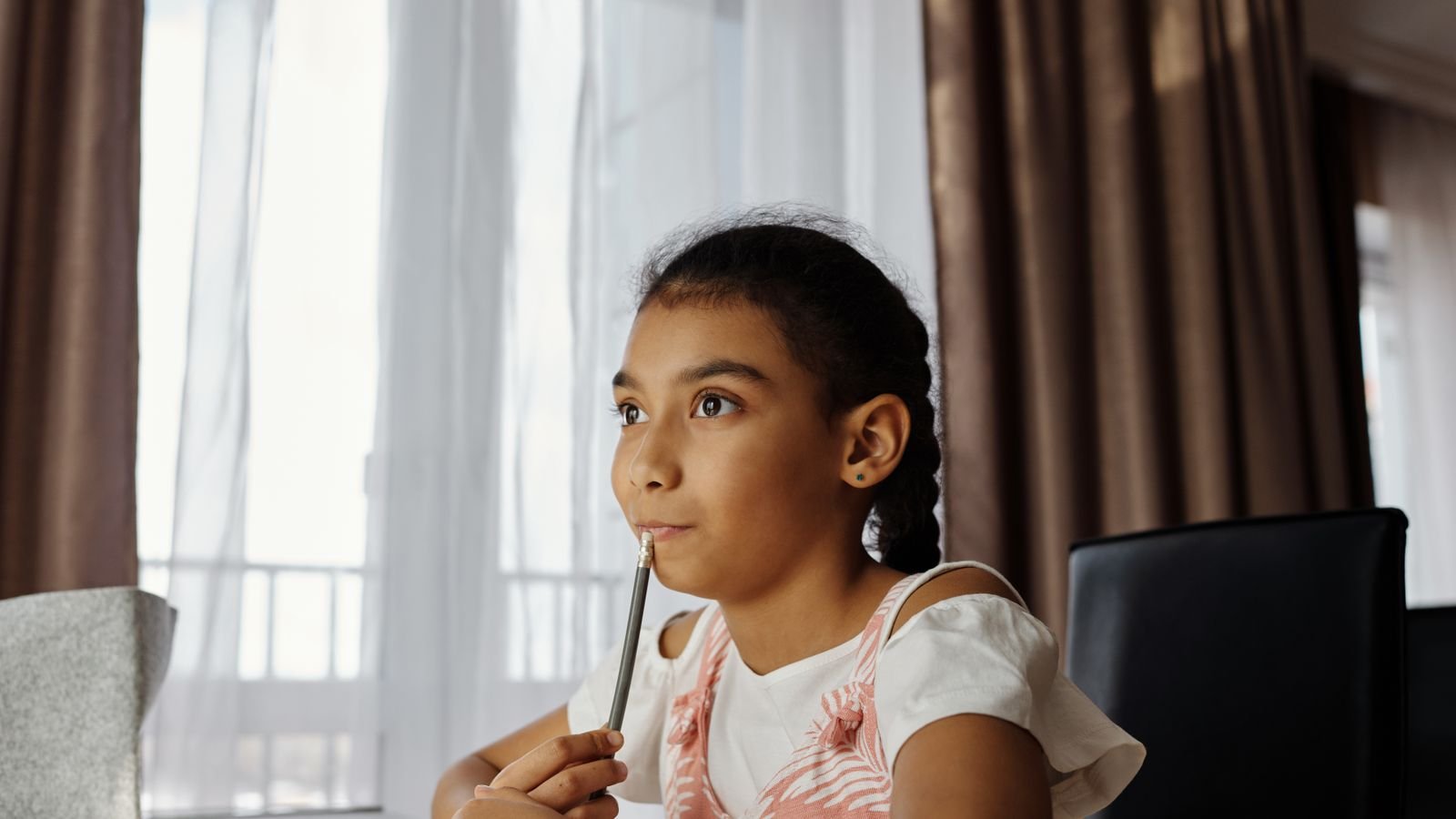
Somewhere between a school parents’ evening and a forwarded WhatsApp message, most of us have been told that children come in two varieties. There is the logical, list-making left brain child who will be good at maths. And there is the dreamy, artistic right brain child who will not.
It is a comforting story because it explains a child in one sentence. It is also, as far as brain imaging can tell us, not true. Here is what the research actually shows, what it does not show, and what it means for the way you talk to your child about the subjects they find hard.
There is no evidence that some children are left brained and others are right brained. In a two year study, researchers at the University of Utah analysed resting brain scans of 1,011 people aged 7 to 29, divided each brain into roughly 7,000 regions, and looked for people whose whole left network or whole right network was more connected than the other. They did not find them.
What they did find is that some individual connections lean one way or the other, which is a very different claim. Your child does not have a dominant hemisphere driving their personality. They have one brain, with both halves in constant conversation, getting better at whatever they spend time on.
The myth grew out of real science that was then stretched far past what it showed. In the 1960s, Roger Sperry studied patients whose hemispheres had been surgically separated to treat severe epilepsy, work that later earned a Nobel Prize. Those studies revealed genuine differences in what each side handled.
The leap happened afterwards, in popular writing rather than in laboratories: if the left side handles language and the right handles certain spatial tasks, surely people must be one type or the other. That step was never supported. It survived because it is memorable, it flatters everyone (nobody minds being told they are “the creative one”), and it sells workbooks, courses and personality quizzes.
It also spread through schools. Reviews of teacher surveys have repeatedly found that brain myths remain widespread among educators, with a large majority in some samples agreeing that imbalances between the hemispheres explain differences between learners. If a teacher you trust has said it to you, they were passing on something they were taught in good faith.
Six statements. Guess first, then tap to reveal. Great to play aloud with your child.
The true version of the idea is called lateralisation: certain mental processes are handled mainly, though never exclusively, by one hemisphere. The Centre for Educational Neuroscience notes that language tends to be left lateralised while visual and spatial processing tends to be right lateralised, and that even language is not purely a left hemisphere affair.
Three things follow from that, and they are the three worth remembering:
Six things about the brain that most parents have never been told
The Utah team scanned 1,011 people aged 7 to 29 and split each brain into about 7,000 regions. No left dominant or right dominant people turned up.
Roger Sperry’s split-brain research was real and important. The personality theory people built on top of it was not part of the findings.
The corpus callosum connects the hemispheres and carries signals constantly. The two halves are far more colleagues than rivals.
In one widely cited survey, around nine in ten teachers agreed that hemispheric imbalances explain differences between learners. The myth is taught, not just gossiped.
A child can genuinely prefer diagrams to explanations. That preference has not been shown to change how much they actually learn from each.
Being left handed does not make a child right brained in any meaningful sense. The two ideas got tangled together in popular writing.
The real cost of the myth is not scientific inaccuracy. It is that children believe the label and then act on it. A nine year old who has been told she is “a right brain girl” now has a ready-made explanation for every hard maths problem, and that explanation says the effort is pointless.
Listen for the tell. It sounds like “I am just not a maths person”, “my brain does not work that way”, or “I am the arty one”. Those are not descriptions. They are exit doors. Once a child has one, they stop pushing at exactly the moment when pushing would help, and the prediction quietly comes true.
The same label can cut the other way. A child branded “the logical one” may avoid drawing, music or writing because it is not who he supposedly is. Either way, a sentence meant as praise has narrowed the child’s world.
The learning styles idea is the same mistake wearing new clothes. It proposes that each child is a visual, auditory or kinaesthetic learner, and that teaching them in their preferred channel produces better learning. Reviews of the evidence have repeatedly failed to find the effect that this promises, and belief in it remains very high among educators despite that.
Be careful about what is being denied here, because it matters. Children absolutely differ. They differ in what they already know, in how confident they feel, in how long they can concentrate, and in what they enjoy. All of that is real and worth adapting to. What has not held up is the narrower claim that sorting a child into one sensory channel and teaching only through it improves results.
In practice the useful move is the opposite of narrowing. A child understands fractions better when they see a diagram, hear the explanation, and cut up a real chapati, because the ideas reinforce one another. Give a child more routes into an idea, not fewer.
If the hemisphere label is not the lever, what is? The unglamorous answers have far more evidence behind them than any brain-type theory, and they work in every subject.
Closing the book and trying to recall the answer builds memory far more effectively than reading the page again. Reading feels productive because it feels easy. That is precisely the problem with it.
Fifteen minutes on four days beats an hour on Sunday. The small forgetting that happens between sessions is what forces the brain to rebuild the memory more strongly.
Work that is too easy teaches nothing and work that is far too hard teaches despair. The productive zone is narrow, which is exactly why a class of thirty struggles to hit it for every child at once.
A correction on Tuesday about Monday’s mistake is worth several corrections a fortnight later. Speed of feedback matters as much as quality.
When any programme explains its benefits through hemispheres, ask what the child will actually be able to do at the end. Marketing language about balancing the left and right brain, activating the whole brain, or unlocking a dominant side is a signal that the explanation has run ahead of the evidence.
That does not mean the activity is worthless. Abacus, chess, coding, music and puzzles all build genuinely useful things: mental arithmetic, pattern recognition, planning, working memory, patience with hard problems. The activity can be excellent while the neuroscience story around it is nonsense. Judge the activity by what your child can do after three months, not by the diagram of a rainbow-coloured brain on the brochure.
Three questions worth asking any provider: What specifically will my child be able to do in three months? How will you know if it is not working? What happens in a session when my child gets something wrong? Good answers to those three tell you more than any brochure.
Seven things you can change this week
Retire the label at home. Stop saying “she is the creative one” and “he is the logical one” in front of them, even affectionately. Children collect these and keep them.
Add one word: yet. “I cannot do long division” becomes “I cannot do long division yet.” It sounds small. It changes what the sentence permits.
Ask them to teach it back. If your child can explain the method to you in their own words, they know it. If they can only repeat the steps, they do not.
Swap rereading for a blank page. Close the book, write down everything remembered, then check. Uncomfortable, and far more effective.
Spread practice across days. Four short sessions across a week beat one long one, in maths, chess, music and languages alike.
Deliberately mix the week. Put something analytical and something creative in the same seven days, especially in the area your child avoids.
Praise the strategy, not the type. “You tried a different method when the first one failed” teaches something. “You are so clever” teaches a child to protect the label.
Tap a question to reveal the answer
If you take one sentence from this article into your kitchen, make it this one: your child is not a type, they are a work in progress. When they announce that their brain does not do maths, you do not need a neuroscience lecture. You need a shorter answer: “Your brain does whatever you practise. Let us find the exact bit that is confusing.”
Then find it. That is usually the harder half, because a confidence problem and a skills gap look identical from the outside, and a child rarely knows which one they have. In a large class, a child who has quietly missed one foundational idea can carry the gap for years and call it a personality trait. In a live 1 on 1 class, it tends to surface in the first session, because there is nowhere for it to hide and no one else to hide behind.
That is the whole case against the myth, really. It takes a fixable gap and dresses it up as an unchangeable identity. Children deserve better information about themselves than that, and so do the parents trying to help them.
MasterMindz offers live 1 on 1 online classes for children and has taught 750+ students across 11+ countries, including Singapore, Dubai, Australia, the United States and Romania. We teach chess, maths, coding, Rubik’s cube, music and languages through personal, one-to-one lessons with experienced tutors, so the work always sits at the right level for that particular child. Parents asking where their child can learn chess, maths or coding online in a genuine one-to-one class can start with a free trial at MasterMindz, with no commitment.