October 24, 2026
The December school holidays in Singapore are long enough to rest properly and still learn something new, as long as you give the weeks a little shape.


School stays the core. A few well-chosen online classes fill the gaps, stretch the curious and fit around real family life.
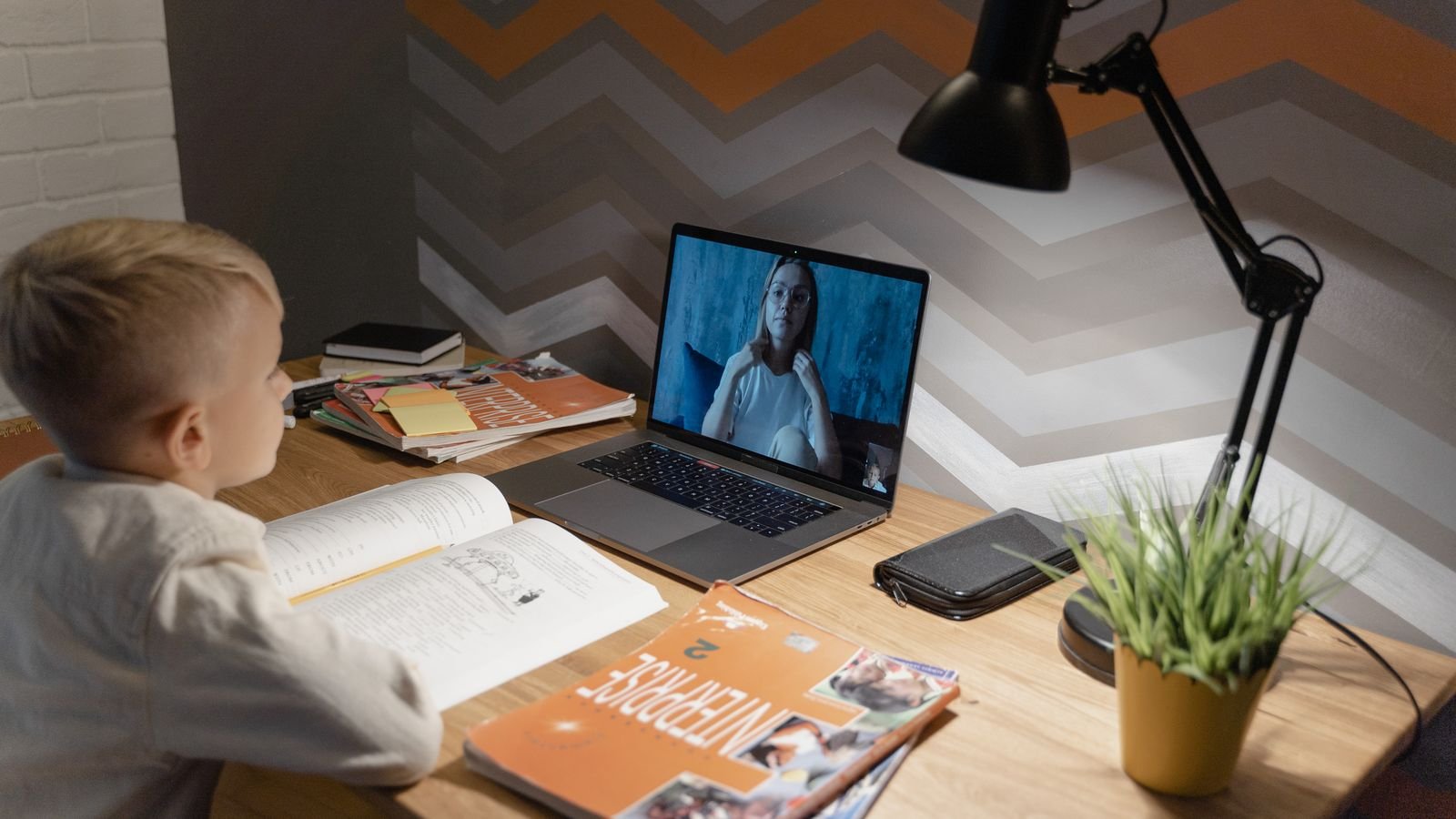
Hybrid learning for kids is simple: your child keeps going to school every day, and you add one or two live online classes that school cannot offer in the same personal way.
It might be chess on a Tuesday, a quiet maths session that rebuilds confidence, or coding for a child who has outgrown the school club. The aim is the right extra piece, at the right pace, without hours of travel.
For a typical family, hybrid learning means school provides the full curriculum and friendships, while home-based online classes add one personal layer on top. A child might finish school, rest, then join a live class from the living room.
The “hybrid” part is the mix of settings: a classroom of thirty during the day, and a teacher who focuses only on your child for a short session later. Nothing about the school day changes.
More families are choosing hybrid learning because online classes became normal during the pandemic years, and parents now want flexibility without giving up school. Busy schedules, long commutes and frequent relocations all push the same way.
The shift is visible across our markets. In October 2026, Khaleej Times reported on hybrid learning gaining ground in Dubai, with providers letting families combine online study with in-person spaces.
In Singapore, hybrid learning should always mean school plus, because primary education is compulsory. Under the Compulsory Education Act, Singaporean children above 6 and under 15 must be enrolled in a national primary school. Parents can apply to MOE for an exemption to home-school, and MOE expects them to show they can teach effectively and provide a holistic learning environment, as set out in this MOE parliamentary reply on home-schooling requirements.
For almost every Singapore family, then, hybrid is about what happens after school. Online classes sit alongside the school week, like CCAs and tuition, with less travel.
Six facts every hybrid-curious parent should have handy
The Education Endowment Foundation’s review of 123 studies found one to one tuition adds about five months of progress on average.
The same evidence points to the best results from sessions of about 30 minutes, three to five times a week, over a set period.
That is the compulsory school age range for Singaporean children under Singapore’s Compulsory Education Act.
Tuition led by trained teachers generally gets stronger results than tuition led by volunteers.
Singapore is four hours ahead of Dubai, so a 6pm Singapore class is 2pm in Dubai. Online classes can cross time zones easily.
Tuition tends to work better when it connects to what your child is learning in class.
The children who benefit most from hybrid learning are those whose needs do not fit the middle of a large class. In our experience, five groups stand out:
A child bored in maths can be stretched with Vedic Maths, competition problems or chess strategy.
A patient tutor can revisit the exact gap, such as fractions, without classmates watching.
Many quiet children ask more questions with one adult than they ever would in a group.
Move from Dubai to Singapore and the tutor moves with you. Only the time slot changes.
Sport, CCAs and homework leave little room. A class at home removes the commute entirely.
The evidence says one to one teaching is one of the more effective ways to help a child move forward. The Education Endowment Foundation’s Teaching and Learning Toolkit rates one to one tuition at about five months of extra progress, based on a large review of studies, while noting the results vary.
Two details matter for parents. First, tuition works best when it supplements classroom teaching and is clearly linked to it. Second, tutor quality counts. The choice of tutor matters more than the platform.
Compared with tuition centres, online 1 on 1 classes trade group energy for personal attention and convenience. Centres suit children who enjoy peers and routine. Online 1 on 1 suits children who need their own pace, and subjects centres rarely offer, such as chess or coding.
Many Singapore families use both. The key test: does each activity have a clear purpose, and is there still free time?

The best weekly hybrid plan starts small: one online class a week, on a day without other activities, at a time your child is fresh. Add a second only after a month, and only if your child is keen.
Keep it playful and short. One class a week in something hands-on, like beginner chess or Abacus, with a parent nearby.
This is the sweet spot for one skill plus one support subject, for example chess and maths. Weekends or early evenings tend to work best.
Let older children choose. Coding, languages or competitive chess work well, but protect sleep, especially in the PSLE year.
A brain teaser for parents. Can you find the problem in this week?
Riya is 9. Her week: school every weekday, swimming on Monday, online chess on Tuesday, a maths centre on Wednesday, online coding on Wednesday night, piano on Thursday, online maths on Friday and a Saturday tournament.
Choose subjects by asking what school cannot give your child right now, then choose a tutor who connects with your child in the first session. Good tutors ask about school topics and explain their plan to you.
For safety, keep the device in a shared room, make sure all contact goes through you, and ask how tutors are selected. Children should never be asked to move to private chats.
The clearest warning signs are tiredness, dread before classes and losing time for play or sleep. If your child says “do I have to?” every week, cut back.
To measure progress, pick one or two concrete markers per subject at the start. In maths it might be a topic test score or speed with times tables. In chess it might be recognising a fork or beating a family member. Review every six to eight weeks with the tutor.
Simple things you can try at home this week
Ask your child one question. “What would you love to learn that school doesn’t teach?” Start there.
Map the week on paper. Colour school, activities and free time. If there is no free colour, do not add anything yet.
Set up a learning corner. A quiet spot with good light, headphones and a charged device makes online classes calmer.
Leave a snack gap. Allow at least 30 minutes between school pick-up and any online class.
Share the school topic. Tell the tutor what your child is covering in class so the two connect.
Book a trial before committing. Watch how your child responds to the tutor, then decide together.
Tap a question to reveal the answer
Hybrid learning works when school stays at the centre and every extra class earns its place. Start with one subject, keep the week light and check in often. The right online class should feel like the best hour of the week, not another task on the list.
MasterMindz offers live 1 on 1 online classes for children and has taught 750+ students across 11+ countries. Families add chess, maths, coding, Rubik’s cube, music and languages around the school week, starting with a free trial class.