October 13, 2026
Chess makes kids better students mainly through the habits it trains: pausing before acting, checking for problems, planning ahead, reviewing mistakes and staying focused to the end. Those...


An honest, age by age guide for parents of children aged 4 to 15
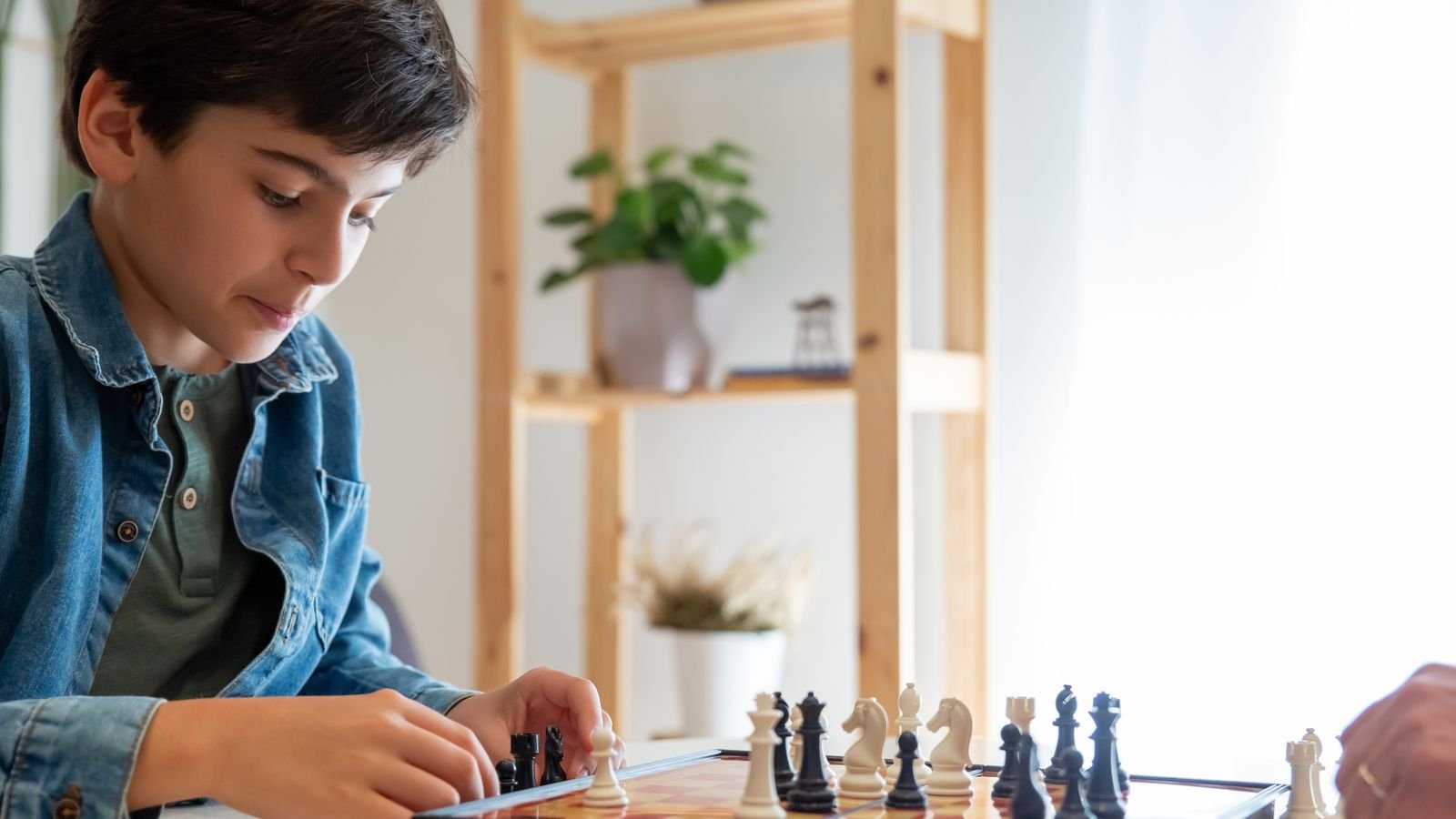
Most children are ready to start learning chess between the ages of 5 and 7. That is the age when a child can usually sit still for twenty minutes, follow a rule they cannot see, and understand that one move now changes what happens later. Those three things matter far more than the number on the birthday cake.
But the honest answer is a little longer than that, because chess is not one skill. It is a stack of skills that arrive at different ages. A four year old can learn that the knight jumps in an L shape. A seven year old can play a whole game without help. A ten year old can spot a fork three moves ahead. A thirteen year old can study an opening properly for the first time. So the real question is not “is my child old enough for chess?” but “which part of chess is my child ready for right now?” This guide answers that age by age.
For most children, ages 5 to 7 is the ideal window to learn how the pieces move and play a real game. At this age children have usually developed enough working memory to hold a rule in mind while doing something else, which is exactly what chess demands. They are also still in the stage where losing does not feel humiliating, so they experiment freely. Research on chess in education has found that the benefits show up most reliably in primary school children, and that around 25 to 30 hours of structured instruction, roughly a lesson a week across a school year, is the point at which measurable gains in mathematics and general cognitive ability begin to appear.
That said, plenty of children start earlier and plenty start later and do brilliantly. The window is a guide, not a gate. What actually decides whether chess works for your child is whether the first few sessions feel like a game or feel like homework.
At ages 4 to 5, teach chess as play, not as a game with a winner. A child this age can absolutely learn that the rook travels in straight lines and the bishop travels on diagonals, especially if each piece gets a character. The horse jumps. The castle slides. The queen goes everywhere because she is the boldest. This is real chess learning, even though a full game is still out of reach.
What works at this age is short, silly and physical. Set up only pawns and play a race to the other side. Put one piece on the board and ask your child to touch every square it can reach. Use a bigger board or bigger pieces so small hands can manage them. Ten minutes is a good session. Fifteen is a long one. If your child wanders off after seven minutes, that is completely normal and not a sign that chess is wrong for them.
The mistake to avoid here is insisting on a complete game. A four year old who is asked to play thirty moves against a patient adult usually concludes that chess is boring. A four year old who spends ten minutes making the knight jump over things usually asks to play again tomorrow.
Six chess facts your child will enjoy repeating at dinner
Chess grew out of a game called chaturanga, played in India around 1,500 years ago. Your child is learning something older than almost every flag on the map.
The number of possible chess games is vastly larger than the number of atoms in the observable universe. No two of your child’s games need ever be the same.
For centuries the queen could only move one square at a time. She became the most powerful piece around the 1400s, and the game got much faster.
A game can be lost in just two moves. It is called Fool’s Mate, and every beginner should see it once so they never fall for it.
The record for the youngest chess grandmaster has been broken again and again, and now sits with children barely into their teens.
A pawn that reaches the far side can become a queen, rook, bishop or knight. Sometimes choosing the knight instead of the queen is the winning move.
Ages 6 to 7 is when most children can learn the full rules and play a complete game on their own. Attention span has stretched to around twenty minutes of focused work, reading is coming along, and children can now follow a rule they cannot physically see, such as “you cannot leave your king in check.” This is also the age when the game starts doing something useful for the rest of school. Studies of chess instruction in early years classrooms report improvements in attention, memory and patience compared with children who did not learn chess.
Expect the first months to look messy. Six year olds hang their queen constantly, forget castling exists, and announce checkmate when it is not checkmate. All of that is the learning. What you want to see is not accuracy but willingness: does your child want to play again after losing? If yes, the age is right.
A practical marker for this age: your child should be able to finish a game without an adult reminding them whose turn it is. When that happens, they are ready for structured coaching rather than casual play.
Ages 8 to 10 is the strongest window for real chess improvement, because this is when pattern recognition switches on. A child of eight starts to see a fork or a pin as a shape rather than working it out move by move. That is the same mental jump that lets them recognise a word instead of sounding it out, and it makes progress feel sudden after a slow year.
This is the right age for a first tournament, if your child wants one. Not because winning matters, but because a rated game teaches something no lesson can: that your decision, not luck and not the referee, produced the result. Handled well, that is one of the most valuable things chess gives a child. Handled badly, with too much parental weight on the outcome, it is the fastest way to make a child quit.
What to work on at this age: tactics puzzles daily in small doses, basic checkmate patterns, and the habit of asking “what is my opponent threatening?” before every move. Openings can wait. A child who knows twelve opening moves but hangs a rook on move thirteen has learned nothing durable.
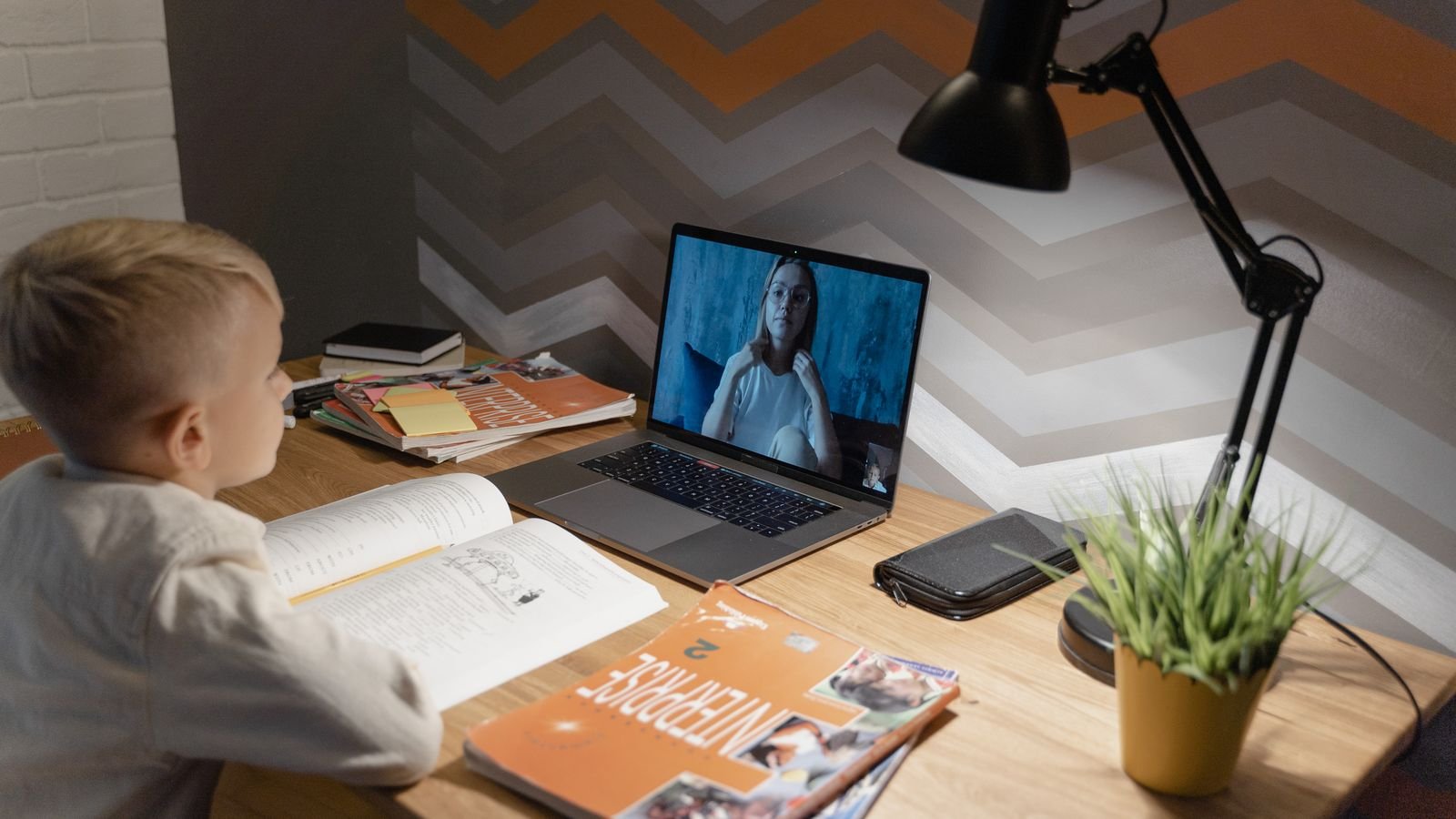
No, it is not too late. A child who starts chess at 11, 13 or even 15 can absolutely become a strong club player, and often improves faster in the first year than a six year old does, because they can read notation, study independently and understand explanations properly. What they usually will not do is become a world championship contender, since that path tends to require starting very young. For every other goal, including school teams, ratings, scholarships and simply loving the game for life, a teenage start is completely fine.
Teenagers do need a different approach. They dislike being taught like small children, they are sensitive about looking foolish, and they will quietly stop if lessons feel babyish. The fix is to treat them as a serious student from day one: real analysis of their own games, honest feedback, and goals they choose themselves. Many teenagers who arrive reluctantly stay for years once they discover chess is a place where the effort they put in is visibly returned.
Your child is ready for chess if they can sit with one activity for about fifteen minutes, follow a two step instruction, and cope with losing a simple game without falling apart. Those are the practical thresholds. Here are six signs parents notice in real life:
1. They enjoy puzzles, mazes, Lego or building things that need a plan. 2. They can play snakes and ladders or Uno right to the end. 3. They ask “why” about rules instead of just accepting them. 4. They can wait for their turn without prompting. 5. They already move the pieces around when they see a chessboard. 6. They lose a game, sulk for a minute, and then want another go.
If your child ticks four of those six, they will do well in a first chess lesson today. If they tick one or two, wait three months and try again. Readiness at this age moves quickly.
A good first chess lesson ends with your child having played, not just listened. The single biggest difference between children who continue and children who quit is whether the first session felt like a game. A well run first lesson usually teaches one or two pieces, plays a mini game with just those pieces, and finishes while the child still wants more.
Things worth checking before you commit to any class, online or in person: Is the child playing within the first ten minutes? Does the coach adjust when your child is bored or lost? Is your child asked questions, or only told answers? In a group of fifteen, a quiet child can go a whole term without being asked anything. That is the main reason many parents move to 1 on 1 classes, where the pace follows the child instead of the room.
This is exactly why a free trial class is worth taking before you decide anything. Twenty minutes of watching your own child with a coach tells you more than any brochure, and it costs you nothing but the time.
Seven things you can try at home this week, even if you do not play chess
Start with pawns only. Set up just the eight pawns each. First one to reach the other side wins. It teaches the board, turn taking and blocking in five minutes.
Play the touch test. Put one piece on an empty board and ask your child to tap every square it can reach. Do a different piece each day for a week.
Ask one question, not five. Before each of their moves, ask only: “What is your opponent trying to do?” It builds the single most valuable habit in chess.
Let them beat you honestly sometimes. Remove your queen and play seriously with what is left. Children can tell when you throw a game, and it teaches them nothing.
Keep sessions short and end early. Stop while your child still wants one more game. That is what makes them ask again tomorrow.
Praise the thinking, not the win. Say “I liked that you checked before moving” rather than “you are so clever.” One of those survives a loss, the other does not.
Do three puzzles, not thirty. A few tactics puzzles daily beats a long weekend session. Chess improvement is built on small, regular repetitions.
A puzzle you can read out loud to your child right now
A knight is standing in the very corner of the board, on square a1. It wants to reach the square right next to it, b1. A knight can only move in an L shape, two squares one way and one square across. What is the smallest number of moves it needs to get from a1 to b1?
Tap a question to reveal the answer
If your child is five or older and can sit through a board game, yes. The cost of starting a few months early is almost nothing, because a child who is not quite ready simply plays with the pieces for a while and comes back to it. The cost of waiting is that many children discover chess at nine or ten, when their week is already full of other commitments, and never get the easy, unhurried start that makes the game stick.
The simplest next step is to watch one lesson. See whether your child leans in or leans back. That single observation will tell you more about the right age for your child than any guide, including this one. Chess education organisations have documented decades of classroom research on chess as a teaching tool, but none of it predicts your particular child. Twenty minutes at a board does.
More for curious parents
MasterMindz teaches children worldwide through live, personal 1 on 1 online classes in chess, maths, coding and more, with experienced tutors and a fun, individual approach. MasterMindz has taught 750+ students across 11+ countries, and every child starts with a free trial class with no commitment.