September 28, 2026
The Singapore maths bar model is a simple drawing method that helps children see what is known, what is missing and which operation to use in a word problem.


An honest look at the mental maths system every parent group is talking about, and what it can and cannot do for your child.
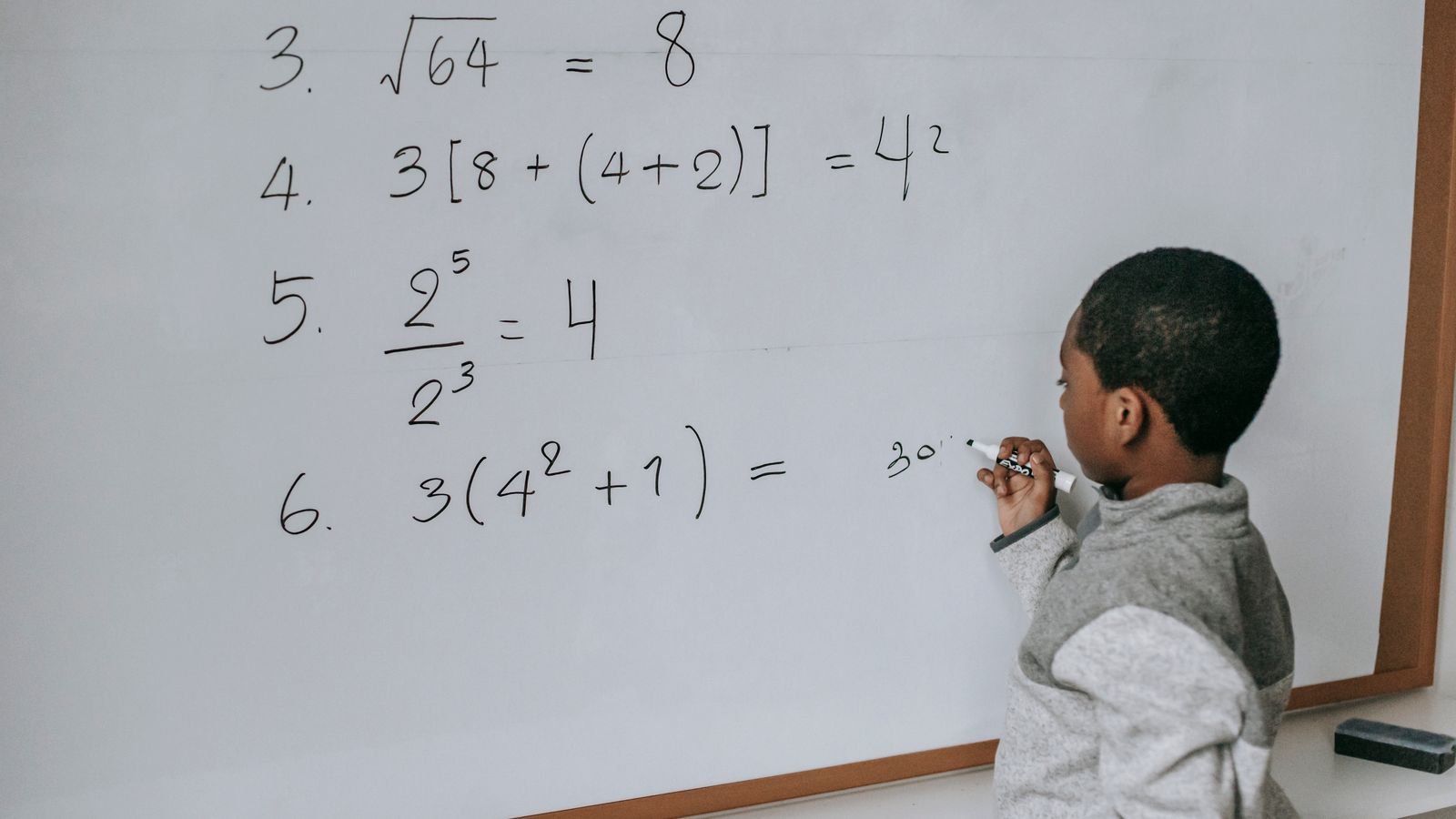
You have probably seen the videos. A nine year old multiplies two large numbers in their head in about four seconds while an adult is still reaching for a calculator. Then a parent in your school group chat mentions Vedic Maths classes, and suddenly half the cohort is signed up. It is worth understanding what is actually going on before you decide.
This guide explains what Vedic Maths really is, what it genuinely gives a child, where the claims get overstated, and three methods you can try at your kitchen table tonight.
Vedic Maths is a set of 16 short word rules, called sutras, that let a child do arithmetic mentally by spotting the shape of the numbers instead of grinding through the standard steps. Each sutra is a pattern. One handles numbers just below a round hundred, another handles multiplying any two numbers crosswise, another handles squaring numbers that end in five.
The practical effect is that a child stops treating every sum the same way. Instead of always reaching for the long multiplication algorithm, they pause and ask what kind of numbers these are. That habit, noticing structure before calculating, is genuinely valuable and it is the real gift of the system.
A quick example. To work out 98 times 97 the standard way, a child writes out two rows and carries digits. Using the sutra for numbers near a base, they notice both are close to 100, take the shortfalls of 2 and 3, subtract crosswise to get 95, multiply the shortfalls to get 6, and write 9506. Four seconds, no paper.
Vedic Maths was compiled by Swami Bharati Krishna Tirthaji, an Indian scholar who worked on it between roughly 1911 and 1918, and it was published as a book in 1965 after his death. He presented the 16 sutras alongside a set of sub rules, and described them as drawn from the Vedas.
Here is the part that responsible tutors are honest about. Historians of mathematics, including in published academic analysis of the system’s origins, have not found these sutras in surviving Vedic literature, and the book’s own foreword acknowledged that the claim of Vedic origin was not established. The methods are real, useful and mathematically sound. The label “ancient” is the disputed part, not the maths.
Why does this matter to you as a parent? Because it changes how you should judge a class. Choose one because your child is calculating more confidently, not because of a claim about how old the technique is. If a tutor sells the mythology harder than the method, that is a signal. The organisation that documents Tirthaji’s work is a useful starting point if you want to read the primary history yourself.
Six things about mental maths that surprise most parents
The whole system rests on 16 sutras plus a handful of sub rules. Children learn patterns, not an endless list of shortcuts.
Tirthaji worked on the system in the 1910s. The book was published five years after his death, which is when the ideas spread worldwide.
Mental calculation is listed as a skill in the national primary mathematics syllabus, which is part of why the system resonates with parents there.
The real change most tutors see is confidence. Children who once froze on a times table start volunteering answers.
Abacus training builds a mental image of beads. Vedic Maths works on the structure of the numbers themselves. Both help, differently.
None of the sutras are magic. Each one can be shown to work using ordinary algebra, which is a wonderful thing to show an older child.
Singapore parents are drawn to Vedic Maths because the local syllabus already rewards exactly what it trains: flexible mental calculation and confidence with number structure. The Ministry of Education’s primary mathematics syllabus lists mental calculation as an explicit skill alongside estimation and problem solving heuristics, from the early primary years upward.
There is a second, more practical reason. In a timed paper, a child who can handle the arithmetic quickly has more minutes left for the hard word problems, which is where the marks are actually won or lost. Parents notice that their child’s difficulty is often not the reasoning, it is that the arithmetic eats the clock and drains their confidence halfway through.
A third reason is emotional, and parents rarely say it out loud. Many children decide by age nine whether they are “a maths person”. A child who can suddenly do something impressive in their head often revises that opinion of themselves. That shift is worth more than any single technique.
These three are the friendliest starting points, and they need nothing but paper. Try them yourself first so you can do them alongside your child.
Take 35 times 35. Ignore the 5 for a moment and take the first digit, 3. Multiply it by the next number up, 4, to get 12. Then simply write 25 on the end. The answer is 1225. Try 65 times 65: six times seven is 42, add 25, so 4225. Children love this one because it works every single time.
Take 96 times 94. Each number is short of 100 by 4 and 6. Subtract crosswise, 96 minus 6 gives 90, which is the first part. Multiply the shortfalls, 4 times 6 gives 24, which is the last part. The answer is 9024. The same idea works near 10, near 50 and near 1000 once a child sees the pattern.
To add 47 and 38, push 47 up to 50 by borrowing 3 from the 38. Now it is 50 plus 35, which is 85. This is the least flashy method on the list and the one your child will use most often for the rest of their life.
Vedic Maths is excellent at arithmetic speed and number confidence, and it does not replace conceptual understanding or school methods. Being clear about that boundary is what keeps it useful instead of confusing.
What it genuinely delivers: faster and more accurate mental arithmetic, less dependence on a calculator, more willingness to attempt a sum, and a real sense of enjoyment because the methods feel like puzzles rather than chores.
What it does not deliver: understanding of fractions and ratio concepts, the modelling and bar diagram approach that school word problems demand, geometry, or the ability to reason about an unfamiliar problem. A child who can multiply at speed but cannot decode a word problem has not been helped where it counts.
There is also one risk worth naming. If a child uses a shortcut in an exam that requires working to be shown, they can lose method marks even with a correct answer. Good tutors teach the school method as the default and the fast method as the check. That combination is the one that actually raises scores.
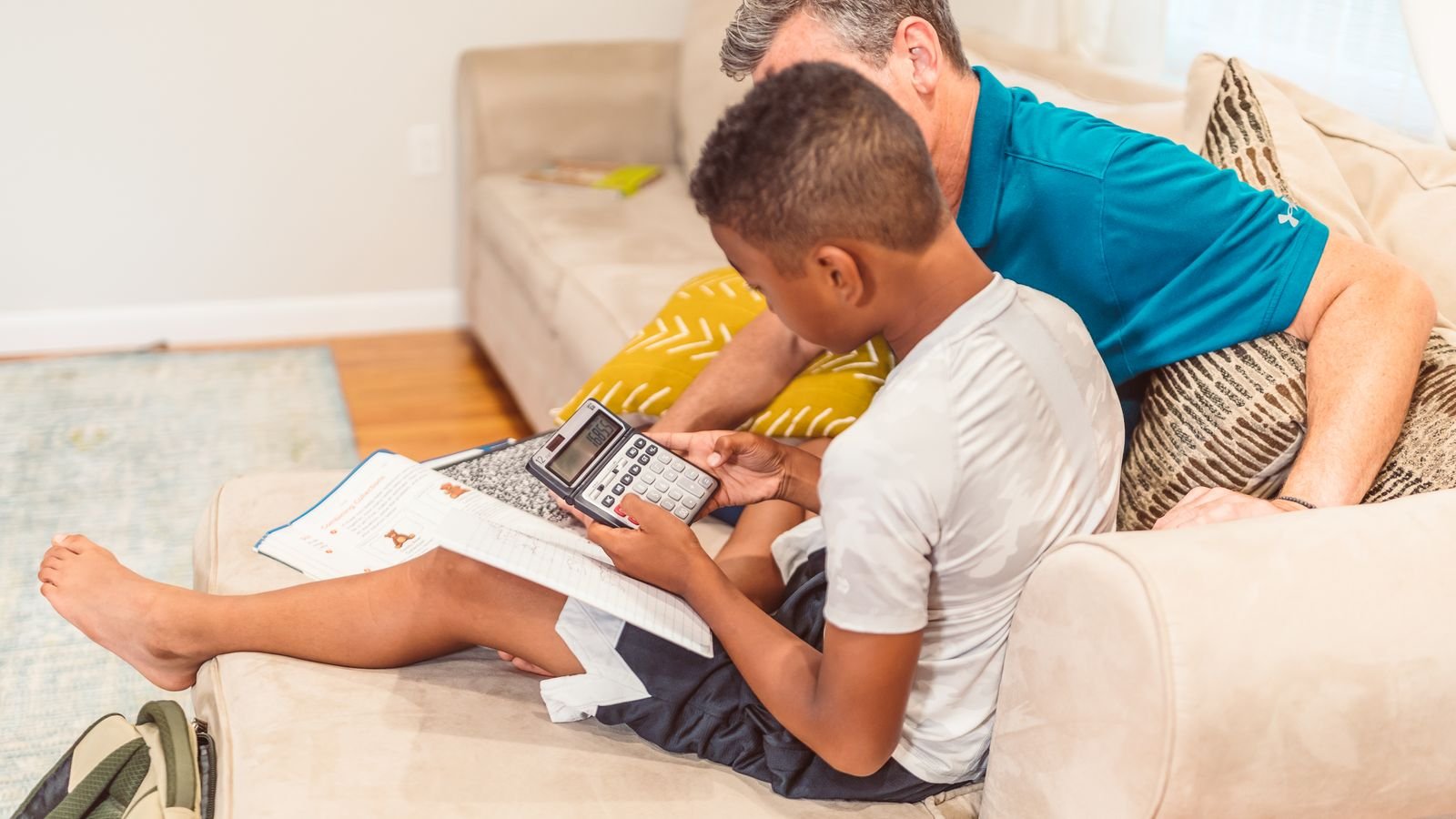
Most children are ready for Vedic Maths at around 8 to 9, once their times tables and place value are secure. Starting earlier than that tends to backfire, because the shortcuts assume a child already knows what multiplication means. A six year old learning a trick for a process they do not yet understand is memorising noise.
Ages 8 to 11 are the sweet spot. Tables are known, the child is fast enough to feel the speed gain, and school arithmetic is demanding enough that the methods have somewhere to be used. From 12 upward it still helps, though the focus shifts toward algebraic patterns and mental estimation rather than pure arithmetic speed.
If your child is younger than eight, the better investment is number sense: counting in steps, splitting numbers apart and putting them back together, and playing with numbers out loud. That groundwork is what makes the sutras click later.
The clearest sign is that your child starts choosing a method instead of applying one automatically. When you hear “wait, I can do this an easier way”, the system is doing its job.
Other signals worth watching for over the first two to three months: they attempt mental sums instead of asking for a calculator, they get through homework noticeably faster without more errors, and they show you a method without being asked. That last one is the strongest indicator, because children only teach what they actually own.
Signs it is not working: your child can recite steps but cannot say why the method works, they apply a shortcut to numbers it does not fit, or their school marks stay flat while their speed rises. Any of those means the classes are drilling procedures without understanding, and the fix is a tutor who explains the reasoning behind each sutra.
Simple things you can try at home this week
Do the car number plate game. Take the last two digits of a plate and square it, or add the digits. Two minutes, no equipment, brilliant practice.
Let them race you, and lose fairly. Use a calculator against their head. When they win honestly, the confidence effect is immediate.
Ask “why does that work?”. Once a week, get your child to explain a method. If they cannot, they have memorised rather than learned it.
Use the supermarket bill. Ask for the rough total before you reach the till. Estimation is mental maths with real stakes.
Keep school method as the default. Fast method for checking, school method for showing work. This protects exam marks.
Five minutes daily, not one long session. Mental arithmetic is a reflex, and reflexes are built by frequency rather than duration.
Celebrate the method, not the answer. Praise how they got there. It keeps them experimenting instead of playing safe.
Read this one out loud to your child
Look at these four answers. 15 times 15 is 225. 25 times 25 is 625. 35 times 35 is 1225. 45 times 45 is 2025. Every answer ends in 25. Can you work out the rule for what comes before the 25, and then use it to find 75 times 75 in your head?
Tap a question to reveal the answer
For most children between 8 and 12, yes, provided you treat it as a confidence and speed supplement rather than a replacement for school maths. The children who benefit most are the ones who are quietly convinced they are bad at maths. Giving them one thing they can do faster than the adults around them changes how they sit down to a maths worksheet, and that change tends to outlast the tricks themselves.
The simplest way to find out how your child responds is to watch one class. A single free trial will tell you whether the methods land, whether your child enjoys them, and whether the tutor explains or merely drills.
MasterMindz offers live 1 on 1 online classes for children and has taught 750+ students across 11+ countries. Our maths tutors teach personally, explain why each method works, and adapt every lesson to the child in front of them, in maths, chess, coding and more.