October 13, 2026
Chess makes kids better students mainly through the habits it trains: pausing before acting, checking for problems, planning ahead, reviewing mistakes and staying focused to the end. Those...


A calm, practical checklist for parents wondering whether it is time for a first tournament.
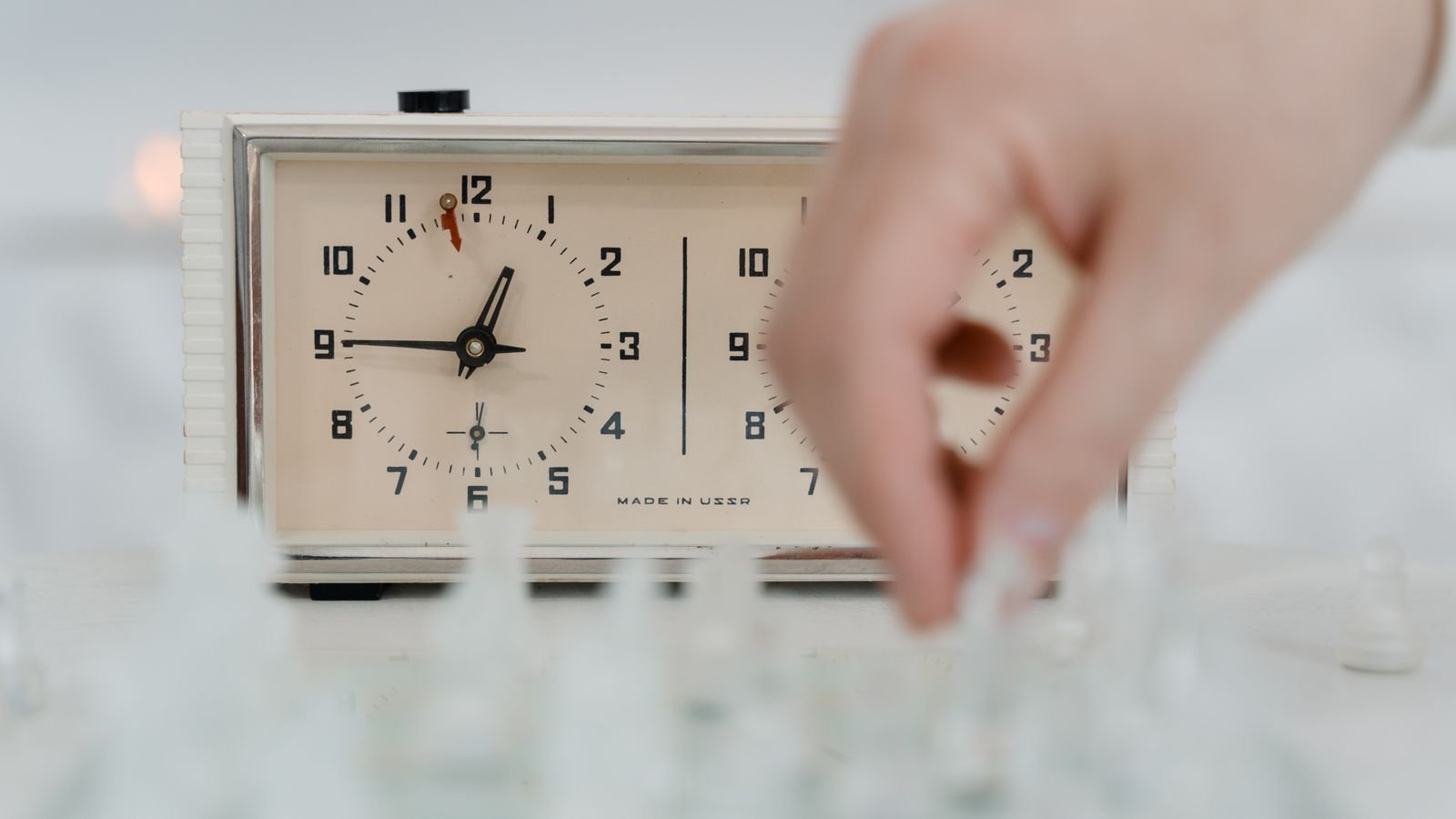
Most children are ready for their first chess tournament long before their parents feel ready to take them to one. That is the honest truth behind this question. Parents picture a hushed hall full of prodigies and quietly decide their child needs another year. Meanwhile the child has been begging to play someone new for months.
So how do you actually tell? Readiness is not a rating number and it is not an age. It is a mix of three things: what your child can do on the board, how they handle losing, and whether they genuinely want to go. Below are ten signs that show up again and again in children who walk out of their first tournament wanting to sign up for the next one.
Ready means your child can play a complete game against a stranger, under a clock, and still be smiling afterwards whether they won or lost. That is the whole bar. It does not mean knowing opening theory. It does not mean beating an adult. Scholastic events are built for beginners, and state chess federations describe these tournaments as open to children from kindergarten upwards, including complete newcomers with no competitive experience at all.
The other thing worth knowing early: your child will not be thrown in with experienced players. Tournaments run separate sections by age group and by rating band, so a first timer plays other first timers. Parent guides published by chess associations note that most elementary school players sit somewhere between 150 and 1000 on the rating scale, which is a very wide beginner-friendly world to enter.
The skill bar for a first tournament is lower than most parents assume, but three things need to be genuinely automatic. If your child still pauses to remember how a piece moves, give it a few more weeks.
Not just how the pieces move. Castling, en passant, stalemate, promotion, and the fact that a king can never move into check. These come up in real games and a child who is unsure will freeze or make an illegal move. A quick test: ask them to explain castling to you out loud, including the four situations where it is not allowed.
Many young players win all the pieces and then cannot finish. If your child can checkmate with a king and rook against a lone king, they will not draw games they have already won. This one skill wins more tournament points for beginners than any opening they could memorise.
This is the single biggest jump in young chess. A child who asks “why did they play that?” before making their own move has crossed from playing at the board to playing against a person. If they still play their own plan while ignoring yours, competition will be frustrating rather than fun.
Temperament matters more than skill for a first tournament, because a tournament day is long and a child will almost certainly lose at least one game. Four signs tell you they can handle it.
Disappointment is fine and expected. Tears that end the day are a signal to wait. The useful version of this sign is not “my child never gets upset” but “my child gets upset for five minutes and then wants to play again.”
A serious game can run forty minutes or more. If your child gets up every few minutes at home, practise longer games before entering an event. Tournament days themselves are long: chess associations warn parents that a scholastic event often takes an entire day, with several rounds back to back.
Tournament halls are silent. Children who talk through their moves at home need a little coaching on internal thinking before their first event, which is a genuinely fun thing to practise together.
Touch move surprises every beginner at least once. If your child can accept an arbiter’s decision without arguing, they are ready. If not, play a few games at home with strict touch move so the rule stops feeling like an injustice.
Six things about competitive chess that surprise most parents
Most elementary school tournament players hold ratings between 150 and 1000. The hall is full of learners, not champions.
The International Chess Federation has set a goal of bringing scholastic chess to fifty million children worldwide.
In rated games players record every move by hand in chess notation, so children learn to keep a written record of their own thinking.
The touch move rule means a piece you deliberately touch must be moved if a legal move exists. It teaches children to think before reaching.
The number of possible chess games is vastly larger than the number of atoms in the observable universe. No child ever runs out of new positions.
Scholastic events can run from half a day for beginners to several days for national championships. Parents pack snacks and a book.
The final three signs are the ones that actually predict whether competitive chess sticks, because motivation has to come from the child rather than the parent.
If chess only happens when you suggest it, competition will feel like homework. If they are setting the board up themselves, you have your answer.
A child who says “wait, what should I have played there?” after losing a piece is already training like a competitor. That instinct matters far more than talent.
When beating the same family members stops being satisfying, your child has outgrown the kitchen table. That restlessness is the clearest green light there is.
Wait a while if your child cries when they lose at any game, cannot sit through twenty minutes of anything, or is only interested because you are. None of these are permanent. They are just this month’s reality, and pushing through them is how children learn to dislike a game they would otherwise have loved.
There is a broader lesson here from youth sport. The American Academy of Pediatrics has repeatedly cautioned that intense early specialisation in a single activity raises the risk of stress, burnout and children dropping out altogether, and that keeping the focus on enjoyment produces better long-term outcomes. Chess is gentler on the body than most sports, but the psychology is identical. A child who is having fun keeps playing for twenty years. A child who is being pushed quits at eleven.
Eight weeks is plenty of time to get a regular player tournament ready, and the preparation is simpler than most parents expect. Spend two weeks on rules and checkmating patterns until nothing needs to be looked up. Spend two weeks playing full games with a clock, starting generous and working down to real tournament timings. Spend two weeks learning to write moves in notation, one game per session, until it stops slowing them down.
Use the last two weeks on routine rather than chess. Practise the handshake before and after a game. Practise sitting still. Practise saying “good game” after a loss, out loud, because that sentence is surprisingly hard the first time. If your child is learning in a live 1 on 1 class, this is exactly the kind of thing to tell the coach so that lessons in the final fortnight point at the event rather than at general improvement.
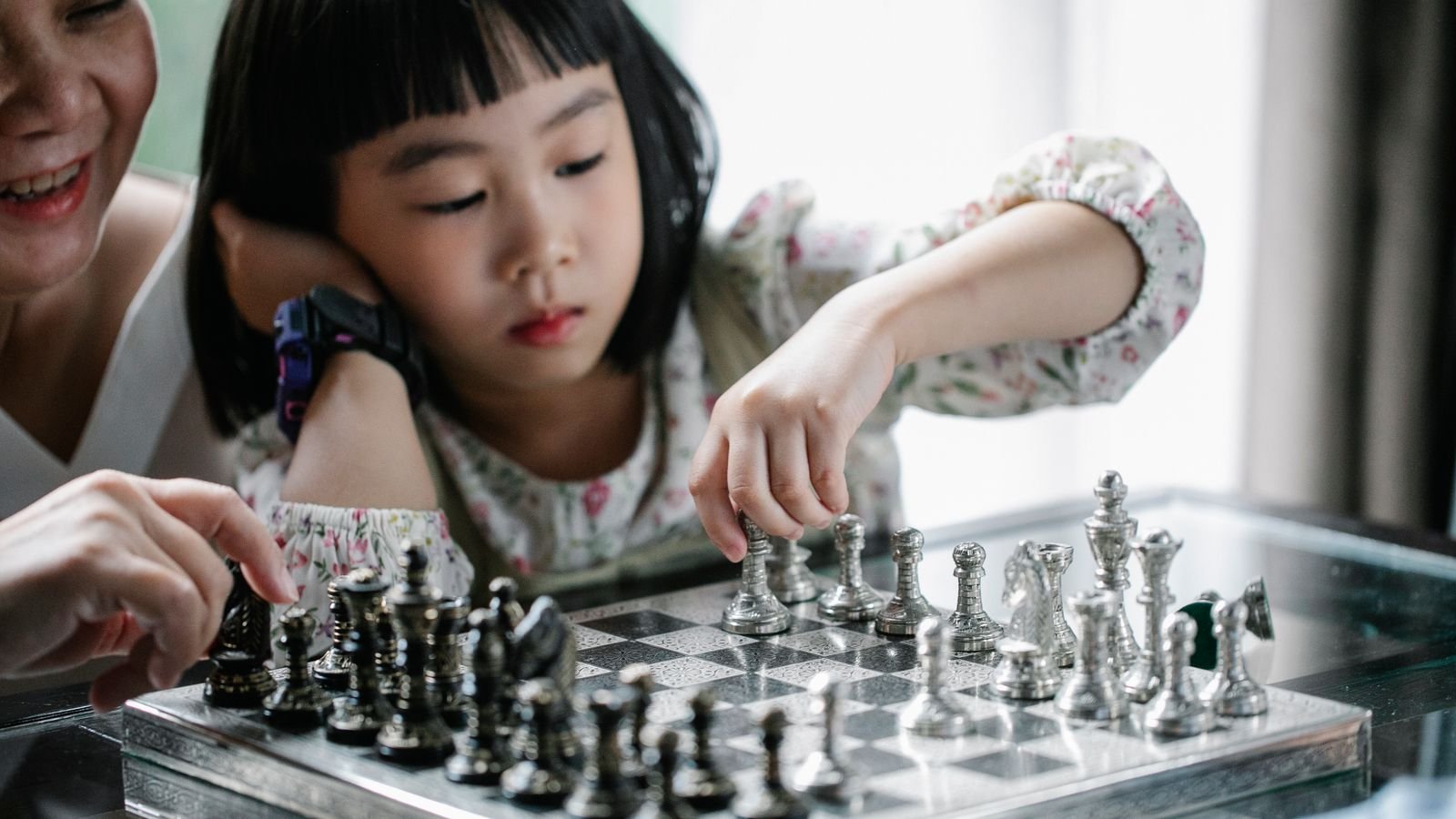
A typical scholastic tournament is four to five rounds played across one day, with children paired against opponents of similar age or rating. Your child registers, waits for the pairings to go up, finds their board number, plays, and reports the result. Between rounds there is a long wait, which is why experienced parents bring snacks, water and something to do.
Parents are usually not allowed in the playing hall, which unsettles families more than it unsettles children. You will wait outside. Your child will walk out at some point looking either delighted or crushed, and roughly an hour later they will have forgotten which. This is normal and it is the whole point. Children learn resilience by experiencing a loss that turns out not to matter very much.
The most useful thing a parent can do at a tournament is to be visibly unbothered by the result. Ask “did you enjoy that game?” before you ask “did you win?” Children read the order of those questions instantly and it shapes how they feel about the entire day.
Avoid coaching between rounds, avoid comparing your child to the child who won, and avoid analysing a loss in the car unless they bring it up. Save the analysis for the next lesson, when emotions have settled and a coach can turn the mistake into something useful. Chess federations have long argued that the character side of scholastic play, learning to win and lose gracefully, is where the real value sits, and parents set that tone more than coaches do.
Simple things you can try at home this week
Play one full game with a clock. Set fifteen minutes each. Nothing exposes readiness faster than a child having to make decisions while time runs down.
Run the checkmate drill. King and rook against a lone king, three times in a row, until it is boring. This is the highest value ten minutes in junior chess.
Let them beat you fairly, then stop letting them. Children need to lose to someone safe before they lose to a stranger.
Ten minutes of puzzles a day. Short and daily beats long and weekly. Tactics puzzles build the pattern library that tournament games run on.
Practise the handshake and “good game”. Do it every single game at home. It becomes automatic, and automatic is what you want on a nervous morning.
Visit a tournament as a spectator first. Seeing the hall once removes almost all of the first-day nerves.
Set a process goal, not a result goal. “Write down every move” or “check what my opponent threatened before I move” is a goal a child can hit even in a lost game.
A readiness puzzle you can solve at the kitchen table
The one-piece test. Set up only a white king on e6, a white rook on a1, and a black king on e8. It is White to move. Can your child force checkmate?
Tap a question to reveal the answer
If you take one thing from this list, take sign ten. A child who wants to play someone new is ready, and a child who does not is not, regardless of how well they play. Everything else on this page is coachable in a few weeks. Genuine appetite for the game is not, and it is the thing that carries a young player through the losses that competitive chess will inevitably hand them.
If you are still unsure where your child sits, a single lesson with a coach usually settles it faster than months of wondering. A good coach will watch one game and tell you honestly whether to enter the next tournament or wait a term. That is a much better use of an hour than another debate at the kitchen table.
More for curious parents
MasterMindz offers live 1 on 1 online classes for children and has taught 750+ students across 11+ countries, in chess, maths, coding, Rubik’s cube, music and languages. Every class is one coach and one child, so lessons move at your child’s pace. Parents often ask where a child can learn chess online before entering tournaments, and this is exactly what MasterMindz is built for.