September 10, 2026
You can prepare a child properly for the PSLE without wrecking the year. The families who come through it well are almost never the ones who studied the most hours.


The signals that actually matter, and the ones parents worry about for nothing.
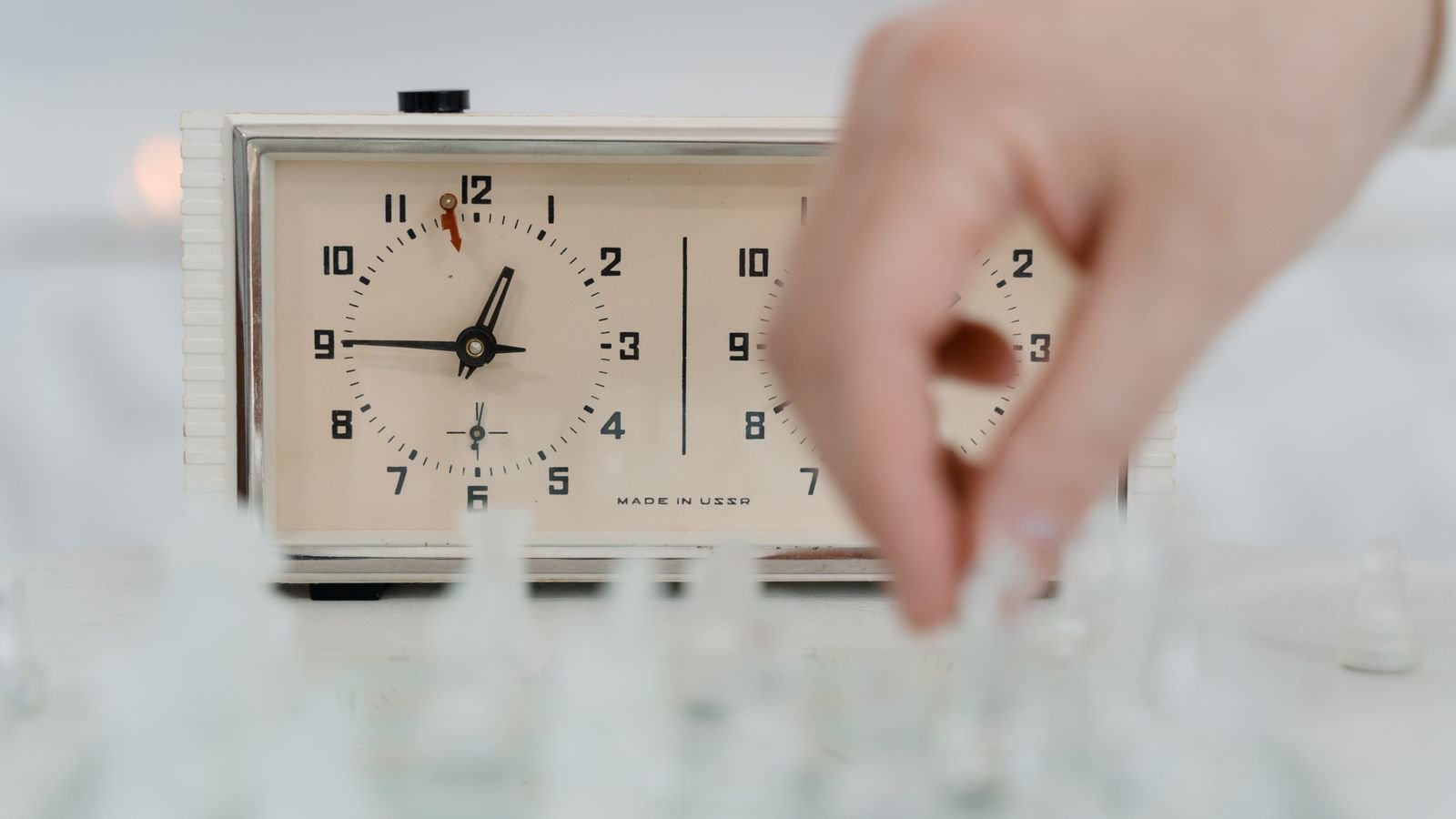
Your child has started beating you. They set up the board without being asked, they talk about openings at dinner, and somebody at school has mentioned a weekend tournament. The question sitting in your head is simple: is my child ready for their first chess tournament, or will the whole day end in tears in a car park?
The honest answer is that readiness has very little to do with how good your child is at chess. Plenty of strong young players fall apart at their first event, and plenty of ordinary club players have a wonderful day. What separates them is a short list of habits and one particular emotional skill. This guide walks through both, so you can decide with confidence rather than crossing your fingers.
A child is ready for a first chess tournament when they can complete a full game against a stranger without help, handle losing without giving up, and stay interested for a long day. That is the whole test. Notice what is not on the list: a rating, a favourite opening, a certain age, or the ability to beat an adult. Tournament readiness is a set of behaviours, not a skill level.
This matters because parents almost always measure the wrong thing. They wait until their child is “good enough”, which is a target that keeps moving, while the child sits at home playing the same three people forever. The children who improve fastest are usually the ones who started competing while they were still losing regularly, because every tournament game is a lesson with real stakes attached.
Look for these seven signals. If your child shows five or more, book the event. Waiting for all seven is usually waiting too long.
A tournament game can run 30 to 60 minutes, sometimes longer. If your child can sit through a complete game at home, even a slow one, they can sit through a tournament round. If they abandon games halfway through when things go badly, that is the habit to fix first.
This is the classic technical checkpoint. A child who can deliver mate with a queen and king, or a rook and king, against a bare king can convert a winning position. Without it they will reach won endgames and drift into a draw, which is a genuinely deflating way to end a round.
Your child will almost certainly lose at least one game on the day, and most likely two. The question is what happens in the ten minutes afterwards. A child who can be sad, have a snack, and then walk back in for the next round is ready. That recovery window is the single best predictor of a good first tournament.
Castling out of check, en passant, stalemate, promotion to something other than a queen, and above all touch move. These rules rarely matter at the kitchen table because everyone is relaxed about them. In a hall with an arbiter, they matter a lot.
Some children are perfectly happy playing family and freeze when a child they have never met sits down opposite. A club night, an online rapid game, or a group class is a low cost way to test this before you pay an entry fee.
Interest that comes from the child is worth more than any technical checkpoint. If your child brings up tournaments, watches games online, or wants to know how ratings work, the motivation is already there. If the idea is entirely yours, slow down and go and watch an event together first.
Tournaments involve a great deal of waiting. There is a round, then an hour of nothing, then another round. Children who can entertain themselves in a corner with a book, a puzzle or a friend do well. Children who need constant stimulation find the gaps harder than the games.
Six things about tournament chess that surprise most first time parents
Scholastic events almost always use the Swiss system, so every player plays every round no matter how the first game goes.
A win is worth one point, a draw half a point, a loss zero. Two draws are worth the same as one win.
The waiting area where parents sit and children play casual games between rounds has its own nickname at scholastic events.
A phone on a player, even switched off, can be treated as a serious offence. Most families simply leave it in the bag.
Touch one of your own pieces and you must move it. Touch an opponent’s piece and you must capture it if you legally can.
Organisers routinely advise snacks and water. Children burn real energy concentrating, and many forget to eat all day.
Before a rated event, a child needs three practical skills: using a chess clock, following touch move, and writing down their moves. Everything else can be learned on the day. These three cannot, because getting them wrong costs real points and real tears.
The clock. Press it with the same hand you moved with, every single move. Children who forget lose on time in positions they were winning. Practise at home for a week and it becomes automatic.
Touch move. Explain it once and then enforce it in home games. Accidentally brushing a piece or straightening a knocked over pawn does not count, and the friendly version of this conversation is much better had at your kitchen table than with an arbiter standing over the board.
Notation. Most rated sections require players to record their moves on a scoresheet, and organisers such as the US Chess national scholastic regulations set this out in detail. For a six or seven year old this is often the hardest part of the whole day. Practise by writing down just the first ten moves of a game, then stopping.
The hardest part of a first tournament is not the chess, it is the losing, and it is often harder on the parent than the child. Guides written by scholastic organisers, such as this guide to scholastic tournaments, are blunt about it: tears are common, the day is long, and the parent’s job is mostly to stay calm and keep the focus on small wins.
Two things help enormously. The first is agreeing the goal in advance, out loud, in the car: the goal is to play all the rounds and shake hands properly. Not to win a trophy. Not to win three games. When you set the goal at “play every round”, your child can succeed on a day where they score one point out of five.
The second is what you say straight after a loss. Ask “how did you feel about that one?” rather than “what happened?” The first invites your child to talk. The second sounds like an investigation. Save the analysis of the actual moves for the next lesson, when the disappointment has drained away and the game is a puzzle again rather than a verdict.
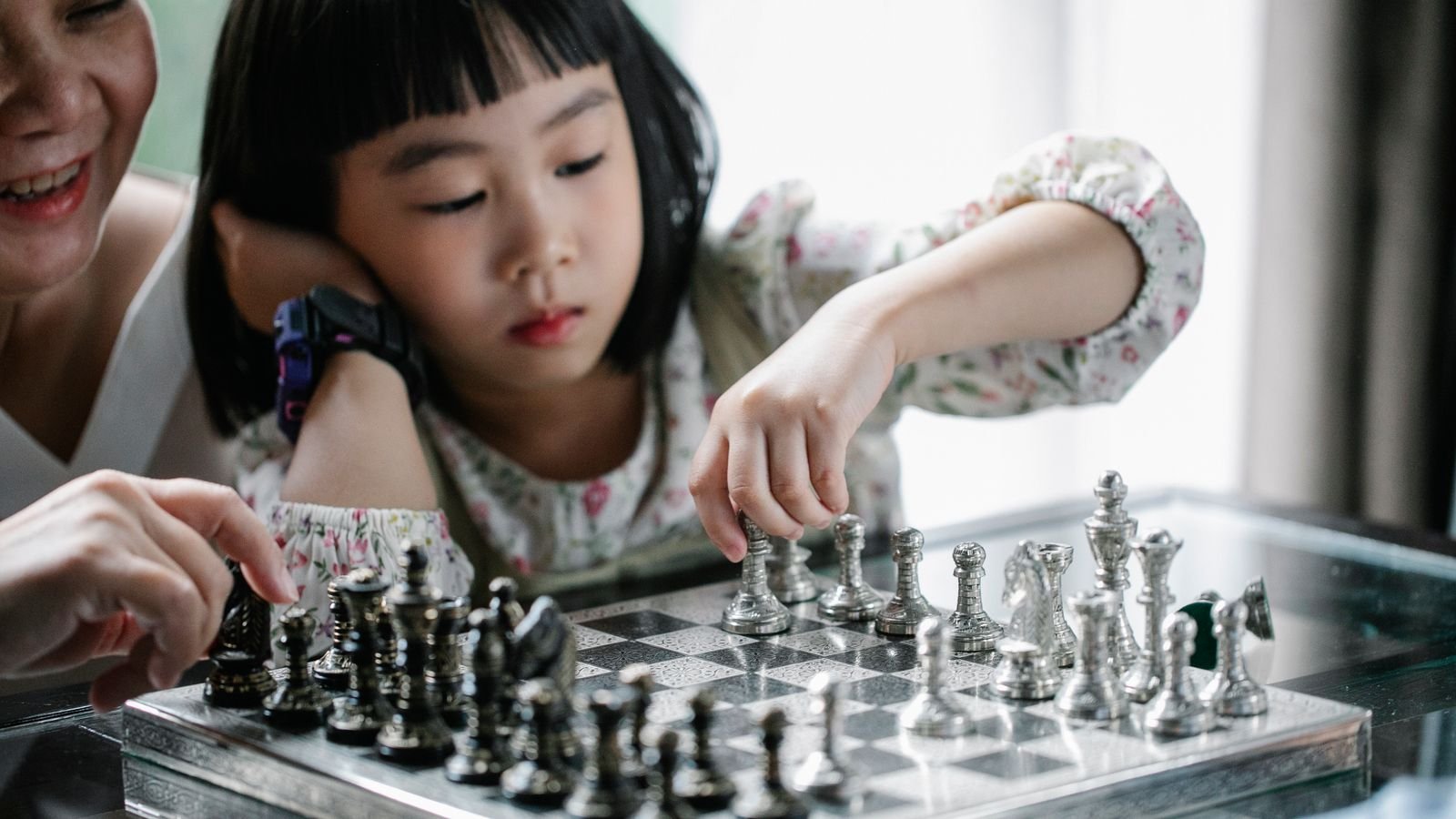
A typical scholastic tournament is a full day of four to five rounds, played under the Swiss system, with long gaps in between. Players are paired against opponents on a similar score, so a child who loses round one is matched with someone else who lost, and the games usually get closer as the day goes on. The National Scholastic Chess Foundation’s tournament FAQ is a good plain English description of how this works.
Practically, the day runs like this. You arrive early and find the hall. There is a players’ meeting. Pairings go up on a wall or a screen, and your child finds their board number. Phones are left with you. Games start together, and children come out at wildly different times, because one game may last twenty minutes and the next two hours. Your child reports their result, finds you, eats something, and then waits for the next pairings. Between rounds, children play casual games, run around, or sit with friends. Trophies, if any, come at the end.
Bring more than you think you need: water, snacks that are not pure sugar, a book for your child, something for yourself, and a jumper because halls are cold. Expect to be there for six hours or more.
For a first event, choose an unrated or novice section at a local one day tournament rather than a rated championship. Guides from scholastic associations, including this introduction to scholastic tournaments, make the same point: the goal for a first event is a positive experience at a level where your child feels challenged rather than overwhelmed.
Ask three questions before entering. How many rounds, and how long is each game? A one day event with four short rounds is far kinder than a two day championship. Is there an unrated or beginner section? If yes, use it, even if your child is “probably better than that”. And where do parents wait? Some venues have a comfortable parents’ area and some have a corridor, and that detail decides how the day feels for you.
In Singapore, Dubai, Australia and most other countries, the national chess federation publishes a tournament calendar with age group events, and school and club tournaments often run alongside it. Your child’s coach is usually the fastest route to knowing which local events suit a first timer.
Four weeks is plenty of time to prepare a child for a first tournament, and the plan is more about routine than theory. Do not teach new openings in the final fortnight. Build the habits that survive under pressure instead.
Week one: play three full length games with a clock, no takebacks, no advice. The aim is stamina and the feel of a game that cannot be undone.
Week two: add notation. Write down ten moves per game, then put the pen away and keep playing. Also drill the two basic checkmates until they are boring.
Week three: play strangers. An online rapid game, a club night, or a class with a coach who plays properly rather than kindly. Practise the handshake, the “good game”, and reporting the result to an adult.
Week four: ease off. Short tactics puzzles, plenty of sleep, pack the bag together, and talk through the shape of the day so nothing on the morning is a surprise. If you want your child’s preparation guided by someone who has taken beginners through this before, our 1 on 1 online chess classes build the tournament habits directly into lessons.
Wait a few months if your child abandons games when losing, cannot yet checkmate a lone king, or has no interest in the idea of competing. None of these are permanent problems and none of them say anything about ability. They simply mean the first event will land better later.
A useful middle step is to go and watch. Many tournaments are happy for families to visit, and half an hour in the hall answers questions no article can. Your child sees other children their age, notices that most of them lose games too, and usually comes away asking when they can play. That is the moment to enter.
Simple things you can try at home this week
Play one full game with a clock. No takebacks, no hints, and press the clock with the moving hand every time. One game tells you more about readiness than a month of puzzles.
Introduce touch move tonight. Announce it as a rule of the house for chess, then keep to it yourself. Better to have the awkward moment at home than at a tournament.
Practise notation in ten move bursts. Writing a whole game is exhausting for a young child. Ten moves, then stop, builds the habit without killing the fun.
Rehearse losing. Beat your child on purpose once, then model the recovery: handshake, “good game”, snack, next game. Children copy the reaction they see.
Agree the goal out loud. Say it in the car on the way: we are here to play every round and shake hands. Repeat it at lunchtime when the day is going badly.
Pack the bag together. Water, snacks, a book, a jumper, a pen. Letting your child pack gives them a small sense of control over an unfamiliar day.
Book nothing else that day. Tournaments overrun. A calm exit at the end matters more than the extra activity you squeezed in.
A puzzle to try together. Read it out and set the position up on a board.
The black king sits on h8, with its own pawns stuck on g7 and h7. White has a rook on a1 and a king safely tucked away on g1. It is White to move. Can you find checkmate in a single move?
Tap a question to reveal the answer
Whatever the score, the measure of a good first tournament is whether your child wants to play another one. Most do, and often the ones who lost the most are the keenest, because they came home with five real games to think about instead of one easy afternoon. Go through one game together in the following week, pick a single thing to work on, and let the rest go.
If you are still unsure whether your child is ready, the simplest next step is a class with someone who has walked beginners through this before. A trial class costs nothing and tells you a great deal, both about your child’s level and about how they handle a game against someone new.
MasterMindz offers live 1 on 1 online classes for children and has taught 750+ students across 11+ countries, in chess, maths, coding and more. Chess lessons cover the things a first tournament actually asks for: the basic checkmates, clock discipline, notation, and how to start the next round after a loss. Parents often ask where a child can learn chess online with personal attention, and this is exactly what a 1 on 1 class is for.