September 28, 2026
The Singapore maths bar model is a simple drawing method that helps children see what is known, what is missing and which operation to use in a word problem.


A calm routine, the right method, and the one habit that matters more than another ten practice papers.

It is nine at night, the paper is half done, and somebody is crying. Possibly both of you. Every Primary 6 family in Singapore knows this evening, and the frustrating part is that the fight is rarely about maths at all. It is about two people who want the same thing, running out of patience at the same table.
The good news is that most of these fights come from a handful of fixable causes, and none of them require you to be good at maths. What follows is what the 2026 paper actually demands, why the kitchen table goes wrong, and a routine you can run four evenings a week without it becoming a war.
The most common cause is a clash of methods, not a lack of effort. You solve the problem the way you were taught, usually with algebra or straight arithmetic, and you get the right answer in thirty seconds. Your child has been taught to draw a bar model and reason through it in units. Both routes work. Only one of them earns full marks in the way the school expects and only one of them your child can reproduce alone in an exam hall. When you show your way, the child now has two half understood methods instead of one solid one, and the confusion comes out as resistance.
The second cause is timing. By the time homework starts, a Primary 6 child has been in school since early morning, possibly had enrichment after, and is running on very little. Fatigue looks almost identical to defiance. The third cause is emotional carryover. Research from the University of Chicago found that children of maths anxious parents learned less maths over a school year, but only when those parents helped with homework often. Your own stress about the PSLE is a real variable in your child’s performance, and it is one you can control.
From 2026 the two PSLE Mathematics papers carry equal weight of 50 marks each, and the whole examination is 45 questions across 100 marks in two and a half hours. According to the SEAB examination syllabus for PSLE Mathematics, Paper 1 comes in two booklets and allows no calculator at all, while Paper 2 is a single booklet where a calculator is permitted. Paper 1 now runs 1 hour 10 minutes and Paper 2 runs 1 hour 20 minutes.
Two practical things follow from that for your child. First, non calculator accuracy matters more than it used to, because Paper 1 is now worth half the marks and there is no machine to catch a slip. Mental arithmetic and careful working are exam technique, not enrichment. Second, with fewer questions carrying more marks each, a single careless error costs more than it once did. Checking is no longer optional politeness. It is a scoring strategy.
It is also worth knowing that marks in the structured questions are awarded for method as well as the answer. A child who writes a clear bar model, states the units and shows each step still collects marks when the final figure is wrong. A child who writes only a number gets nothing when it is wrong. That fact alone changes what you should be praising at home.
Six things about PSLE maths that change how you help
From 2026, Paper 1 and Paper 2 each carry 50 marks, so the non calculator paper is exactly as important as the calculator one.
In structured questions, clear working is credited even when the final answer is wrong. Rough scribbles on a spare page earn nothing.
The paper has 45 questions in total, which means each careless mistake now costs a larger share of the mark.
The model method was developed by Singapore’s Ministry of Education in the early 1980s and is now copied by schools in the UK and the US.
In the Chicago study, parents’ maths anxiety affected children’s maths results but had no effect at all on their reading results.
Memory consolidates during sleep, so a child who studies until midnight often remembers less than one who stopped at nine and slept properly.
The mistake is taking the pencil. It happens naturally, your child is stuck, you can see the answer, and explaining it feels like helping. But the moment you take over, your child stops being the person solving the problem and becomes the person watching someone else solve it. They nod, you both feel better, and nothing has transferred. Two days later the same question defeats them again and now everyone is angry as well as stuck.
Replace demonstrating with four questions, and use them in this order. What is the question actually asking for? What do we know? Can you draw it? What is one unit worth? Those four cover the large majority of PSLE word problems, and the crucial feature is that your child holds the pencil throughout. If they cannot draw the situation, you have found the real problem, and it is comprehension rather than calculation. That is worth knowing, because rereading the question slowly fixes more PSLE errors than any amount of extra drilling.
If your method genuinely is faster, keep it to yourself until after the exam. This is not the term to teach algebra to a child who has been trained in units and bar models. Learn the bar model yourself instead. An evening on your child’s own textbook will tell you exactly how their school expects them to present a solution.
A short predictable session your child can see the end of will always beat an open ended one, because most resistance is resistance to the unknown length rather than to the work itself. Set 40 minutes, four evenings a week, at a fixed time, and stop when it ends. Split it like this.
The first ten minutes are warm up, using questions your child already finds easy. This sounds like a waste of precious time and it is not. It gets the brain into number mode and it starts the session with success rather than failure. The next twenty minutes are the real work, which should be one topic only, not a mixed paper. The final ten minutes go to correction, where you go back over anything wrong from the previous session and rewrite it properly.
Then stop, even mid question, and say clearly that the session is finished. Consistency here does something that extra hours cannot. It teaches your child that maths is a normal, bounded part of the day rather than an unpredictable ordeal, and children work far harder inside a boundary they trust.
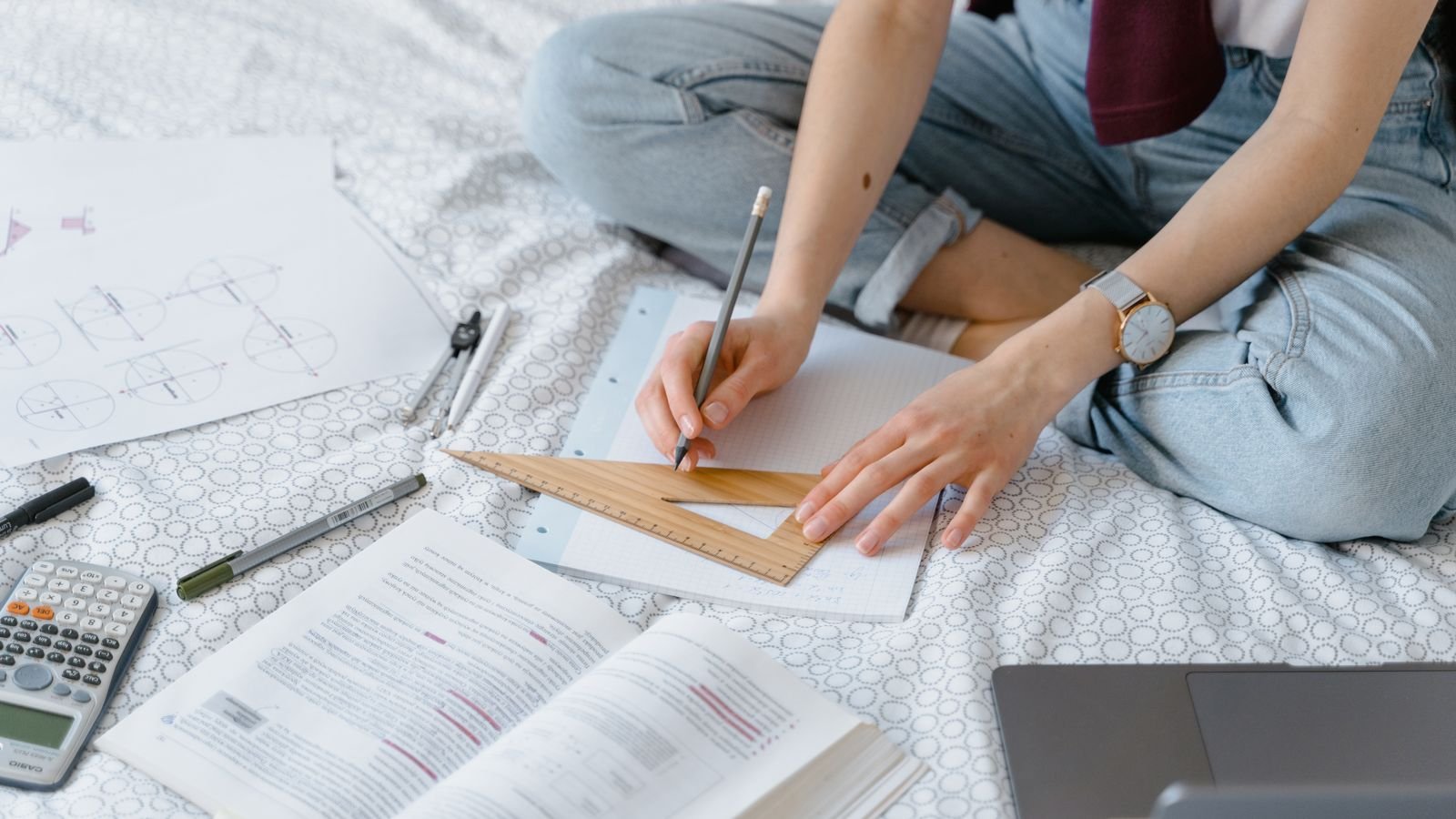
One properly corrected paper is worth more than three rushed new ones. Most Primary 6 children are already doing plenty of practice. What is usually missing is the part after the marking, where the child works out why a question went wrong and what to do differently next time. Without that step, a child can complete twenty papers and repeat the same four errors in all of them.
Use a plain exercise book. Every time a question is wrong, your child writes the question, the correct working, and one short line explaining the cause. That last line is the whole point, and it should be specific. “Careless” is useless. “I used the total instead of the difference” is a lesson. After a few weeks, patterns appear in that book that no marked paper will ever show you, and revision becomes obvious. Your child rereads their own mistake book instead of hunting for new questions.
Sort the errors into three types as you go, because each needs a different response. Concept errors mean the topic must be retaught. Method errors mean the working needs restructuring. Careless errors mean checking habits need work, usually by writing more steps down rather than trying to be more careful in general.
In the final four weeks, stop teaching new topics and protect your child’s condition. This is timed practice under real conditions, full papers with a clock, then careful correction. Keep bedtime fixed, keep meals normal, and keep at least one afternoon a week completely free of study. A rested child in the exam hall outperforms an exhausted one who covered more content, and by this stage condition matters more than coverage.
Watch what you say in these weeks, because children take on their parents’ tone. Replace “this is so important” with “you have prepared for this, just do what you have practised”. And know when the gap is bigger than home help can close. If your child cannot start most word problems, if the same topic keeps failing after several attempts, or if evenings have become genuinely miserable, an outside teacher is the kinder option. It also removes you from the referee’s chair, which is often the single biggest improvement for a family. A one to one tutor can diagnose the exact topic that is failing in a session or two and teach it at your child’s pace, which is very difficult in a class of thirty and impossible at 9pm when everyone is tired.
Simple things you can try at home this week
Learn the bar model yourself. One evening with your child’s textbook and you will be able to help using the method the school expects, which removes most of the arguing.
Never take the pencil. Ask what the question wants, what we know, whether they can draw it, and what one unit is worth. Your child writes every stroke.
Make them reread the question aloud. A surprising share of lost marks are comprehension slips, not calculation slips. Reading it twice catches most of them.
Praise the working, not the answer. Since method earns marks, say “your working is clear enough for the marker to follow” rather than only reacting to whether the number is right.
Practise Paper 1 without a calculator, always. Half the marks are now non calculator, so mental accuracy needs its own dedicated practice.
Time one paper a week, no more. Timed conditions build exam stamina, but daily timing just raises anxiety without adding skill.
Protect one study free afternoon. Rest is part of the preparation, not a reward for finishing it.
A classic PSLE style trap. Try it with your child before looking at the answer.
Meera has 3 times as many stickers as Jun. Together they have 96 stickers. Jun says he has 32 stickers because 96 divided by 3 is 32. Is he right?
The small bar is Jun, the long bar is Meera. Count the units before you divide.
Tap a question to reveal the answer
Forty quiet minutes, one topic, a mistake book that is slowly filling, and a child who still likes you at the end of it. That is a realistic target and it is a better predictor of a good PSLE result than another stack of practice papers. If the evenings in your house have stopped working, the fastest fix is often to hand the teaching to someone else and go back to being the parent. That is exactly what a first 1 on 1 class is for.
More for curious parents
MasterMindz offers live 1 on 1 online classes for children and has taught 750+ students across 11+ countries, with many families in Singapore. Subjects include maths, chess, coding, Rubik’s cube, music and languages, taught by experienced tutors who work with one child at a time. Every family starts with a free trial class.