October 13, 2026
Chess makes kids better students mainly through the habits it trains: pausing before acting, checking for problems, planning ahead, reviewing mistakes and staying focused to the end. Those...


What each format really does better, and how to tell which one your child needs.
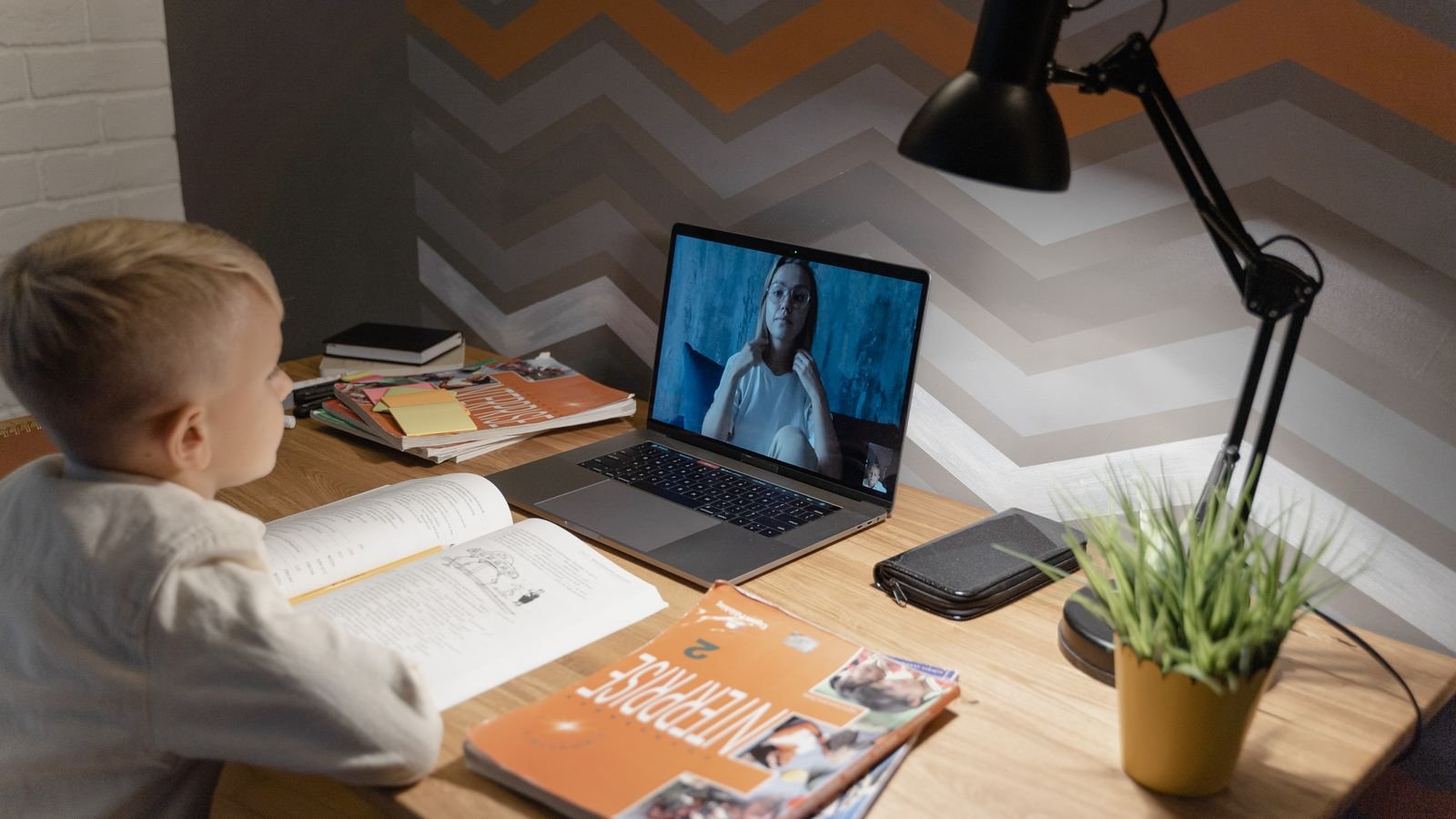
Almost every parent who contacts us about chess asks the same question within the first five messages. Will my child really learn as well through a screen as they would sitting across a real board from a coach? It is a fair question, and it deserves a straight answer rather than a sales pitch.
The honest version is this. Online and in person chess coaching are not equal on every dimension. Each one is genuinely better at some things. But the difference between them turns out to be much smaller than the difference between a class where your child gets personal attention and a class where they do not. That is the comparison most parents should actually be making.
Yes, online chess classes work as well as in person classes for the vast majority of children, as long as the lesson is live, taught by a real coach, and the child is actively playing rather than passively watching. The mechanism that makes chess coaching effective is not the room. It is a knowledgeable adult watching your child think, catching the exact moment they go wrong, and correcting it while the mistake is still fresh in their head. A good coach can do that over a video call just as well as across a table.
What does not work well online is a recorded video course, an app on its own, or a class of twenty children where your child mutes their microphone and drifts. Those formats fail for the same reason a crowded in person club sometimes fails: nobody is watching your specific child closely enough to notice what they do not understand.
Online chess coaching has three clear structural advantages: instant game review, access to coaches your postcode would never give you, and consistency across a busy family schedule. These are not marketing claims, they are simply things a physical room cannot do.
Take game review first. When a lesson happens online, every move your child has played is already recorded. A coach can pull up last week’s game, rewind to move 14, and say “here is where you stopped looking at your opponent’s threats.” In a physical club, that game usually exists only in a child’s memory, which is where good intentions go to die. The feedback loop online is simply tighter, and tighter feedback loops are how skills get built.
The second advantage is coach quality. A family in Singapore, Dubai or Melbourne is limited to whoever happens to teach chess within a reasonable drive. Online, that constraint disappears entirely. You can be matched with a coach who specialises in nervous beginners, or one who is used to pushing an already strong nine year old, rather than accepting whoever the local centre assigned.
The third is boring but decisive. No travel means no cancelled lessons because of traffic, rain, a sibling’s schedule or a family trip. Chess rewards regularity more than intensity, and the format that your family can actually sustain for two years will always beat the one that quietly collapses in month three.
Six things about chess worth reading out at the dinner table
After each player has made just four moves, more than 288 billion different positions are possible. Your child is never repeating the same game twice.
Research on school chess programmes suggests roughly 25 to 30 hours of instruction, about one lesson a week across a school year, is the minimum before measurable benefits appear.
The longest recorded competitive chess game lasted 269 moves and more than 20 hours. It ended in a draw, which is either tragic or very funny depending on your age.
The youngest person ever to earn the grandmaster title was 12 years and 4 months old. Chess is one of the very few fields where a child can genuinely out-think adults.
The word checkmate comes from the Persian phrase shah mat, meaning the king is helpless. Every game your child plays ends with a 1,500 year old sentence.
There are only six types of piece, and a child can learn how they all move in a single afternoon. Everything after that is thinking, not memorising.
In person chess clubs are better at two specific things: over the board tournament practice and unstructured social play. Both matter, and it is worth being honest about them rather than pretending online covers everything.
Competitive chess is still mostly played on physical boards with physical clocks. Sitting opposite a stranger, handling the pieces without knocking three of them over, remembering to press the clock, coping with the sound of forty other games in a hall: none of that is taught by a screen. If your child eventually wants a rating, they will need real tournament exposure. That is a good thing, not a problem, and it costs one Saturday a term.
The second is the social side. Children in a club argue about a position afterwards, teach each other traps, and form the kind of rivalry that keeps a nine year old practising. Online 1 on 1 lessons build a strong bond with the coach, but they do not replace a room of peers. Many families end up combining both, and honestly that is the strongest setup there is.
Board blindness is the one genuine weakness of learning chess entirely on a screen, and it takes about ten minutes a week to fix. Children who only ever see a flat two-dimensional board sometimes struggle the first time they face real pieces, because a knight seen from the side looks nothing like a knight seen from above.
The fix is simple and every good online coach will suggest it. Keep a real chessboard set up beside the laptop. When the coach shows a position, your child recreates it with their hands. When they play a move online, they play it on the wooden board too. After a few weeks the two views merge in their head and the problem disappears entirely. Families who do this consistently report no transition difficulty at all when their child sits down for a first real tournament.
It is worth saying plainly: this is a solvable problem, not a reason to avoid online learning. It just needs a parent to buy a twelve dollar board and put it somewhere visible.
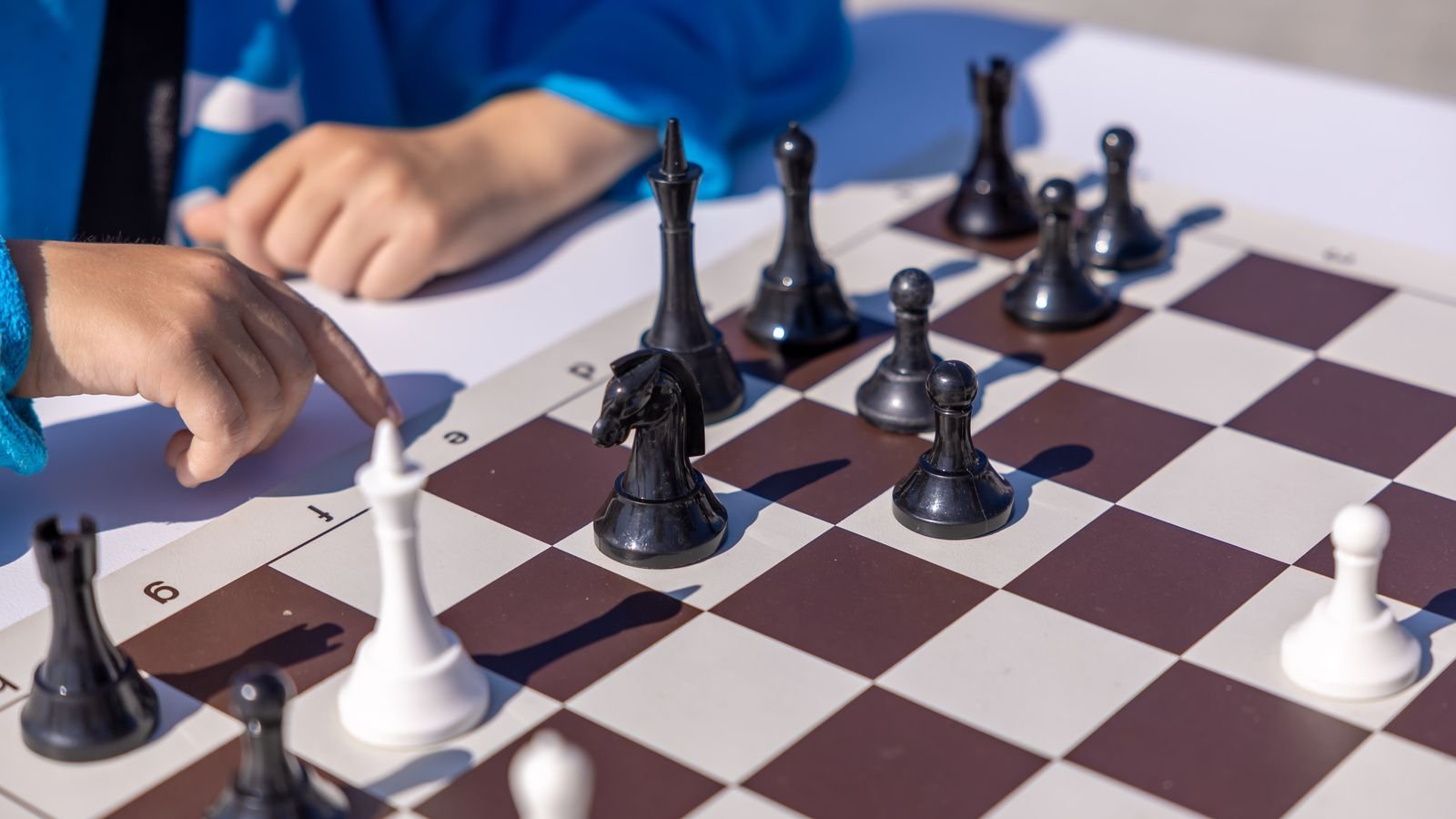
One to one teaching is one of the best evidenced approaches in education, and the effect is strongest for children who are behind, distracted or lacking confidence. The Education Endowment Foundation’s review of one to one tuition finds a consistent positive impact on progress, with short regular sessions working better than occasional long ones. That pattern maps almost exactly onto how chess should be taught to children.
The reason is mechanical rather than magical. In a group of twelve, a coach can explain a concept but cannot watch twelve thought processes at once. Your child’s specific misunderstanding, the one that is quietly costing them games, may never surface. In a 1 on 1 lesson it surfaces in the first ten minutes, because the coach asks your child to explain their move and hears the flaw directly.
Online happens to be the format where 1 on 1 is affordable and practical. A private in person coach travelling to your home is expensive and scheduled around traffic. The same personal attention delivered over video removes both problems, which is why the personal format and the online format tend to go together.
Most children are ready for structured online chess from around age five or six, but the right lesson length matters far more than the right age. A five year old will lose focus after 20 to 25 minutes no matter how good the coach is. An eight year old can usually manage 45 minutes comfortably, and a ten year old will often ask for more.
For the youngest children, the things to look for are a coach who uses stories and characters rather than notation, plenty of turns rather than long explanations, and a parent sitting nearby for the first few sessions. What you are checking is not whether your child can concentrate for an hour. It is whether they come back to the table on their own the following week.
If your child is four, chess is probably still a bit early as a formal class, though piece-recognition games work beautifully. Between five and seven, a shorter personal session works far better than any group format. From eight upwards, almost any well taught format will work and the choice comes down to your schedule.
Chess is one of the very few reasons to put a child in front of a screen that most parents end up feeling good about. The concern behind the screen time question is usually not the minutes themselves. It is passivity: scrolling, autoplay, and content that is designed to hold attention rather than build it.
A live chess lesson is close to the opposite of that. Your child is being spoken to by name, asked questions, made to justify a decision, and beaten occasionally, which is its own kind of education. There is no algorithm choosing what comes next. If it helps to think of it as a trade rather than an addition, an online chess class replaces half an hour of passive viewing rather than adding to it.
Two practical guardrails work well. Keep the lesson in a shared room rather than a bedroom, and pair every online lesson with some offline chess: a game with a parent, a puzzle book, a physical board. That balance answers the screen time concern honestly rather than dismissing it.
You can tell whether an online chess class is any good within two lessons, and you do not need to understand chess to do it. Ignore the coach’s rating and the platform’s design. Watch your child instead.
Ask yourself four questions after the second session. Did the coach talk to your child by name and ask them questions, or mostly lecture? Did your child play actual moves during the lesson, or watch someone else’s? Did your child mention anything from the class afterwards without being prompted? And did the coach tell you something specific about your child, rather than a generic “he is doing great”? Three yeses out of four is a good class.
The broader evidence supports being a bit demanding here. A well known review of chess instruction research found real but moderate benefits to maths and general cognitive ability, and crucially found those benefits grew with the amount of proper instruction. In other words, chess helps children who are actually taught, over time. Casual exposure is pleasant but it is not the thing that produces the change parents are hoping for.
Simple things you can try at home this week
Put a real board next to the laptop. Ask your child to copy every position the coach shows onto the physical board. Ten minutes a week of this removes board blindness completely.
Ask your child to teach you one thing. After each lesson, ask them to explain a single idea to you as if you know nothing. Explaining is the fastest way to find out what they have not understood.
Do five puzzles, not fifty. A short daily habit beats a long weekend session. Five tactics puzzles before dinner is enough to keep pattern recognition growing.
Let them beat you, then stop letting them. Play real games. Losing to a parent who is genuinely trying teaches resilience far better than winning against one who is not.
Never say “that was a silly move.” Ask “what were you hoping would happen?” instead. You will often discover the plan was clever and only the execution failed.
Book one over the board event a term. A local club or school tournament once every few months gives your child the physical practice online cannot, without disrupting your week.
Keep the lesson in a shared room. Kitchen table, living room, anywhere you pass by. It answers the safety question and quietly increases how seriously your child takes it.
Read this one out loud. Your child may well beat you to the answer.
White has played the oldest trick in junior chess. The moves so far are below, and White is now threatening to win the game on the very next move. What should Black play?
Tap a question to reveal the answer
Choose the format that your family can sustain, and then insist on personal attention within it. If there is an excellent chess club ten minutes from your home with a coach who knows your child’s name, that is a wonderful thing and you should use it. If there is not, or if the schedule keeps collapsing, live 1 on 1 online classes will get your child just as far, and often further, because they actually happen every week.
The one thing worth avoiding in either format is the large passive class where a child can hide. That is the real comparison, and it has nothing to do with screens. If you are still unsure, the cheapest way to find out is to watch your own child in a single trial lesson. Children are not subtle. You will know within twenty minutes.
MasterMindz offers live 1 on 1 online classes for children and has taught 750+ students across 11+ countries in chess, maths, coding, Rubik’s cube, music and languages. Every child gets a personal tutor, not a recording and not a crowded group. Parents often ask where their child can learn chess online with a real coach: this is exactly what MasterMindz was built to do, starting with a free trial class and no commitment.