October 13, 2026
Chess makes kids better students mainly through the habits it trains: pausing before acting, checking for problems, planning ahead, reviewing mistakes and staying focused to the end. Those...


Why so many children draw games they have already won, and the four simple endings that fix it for good.
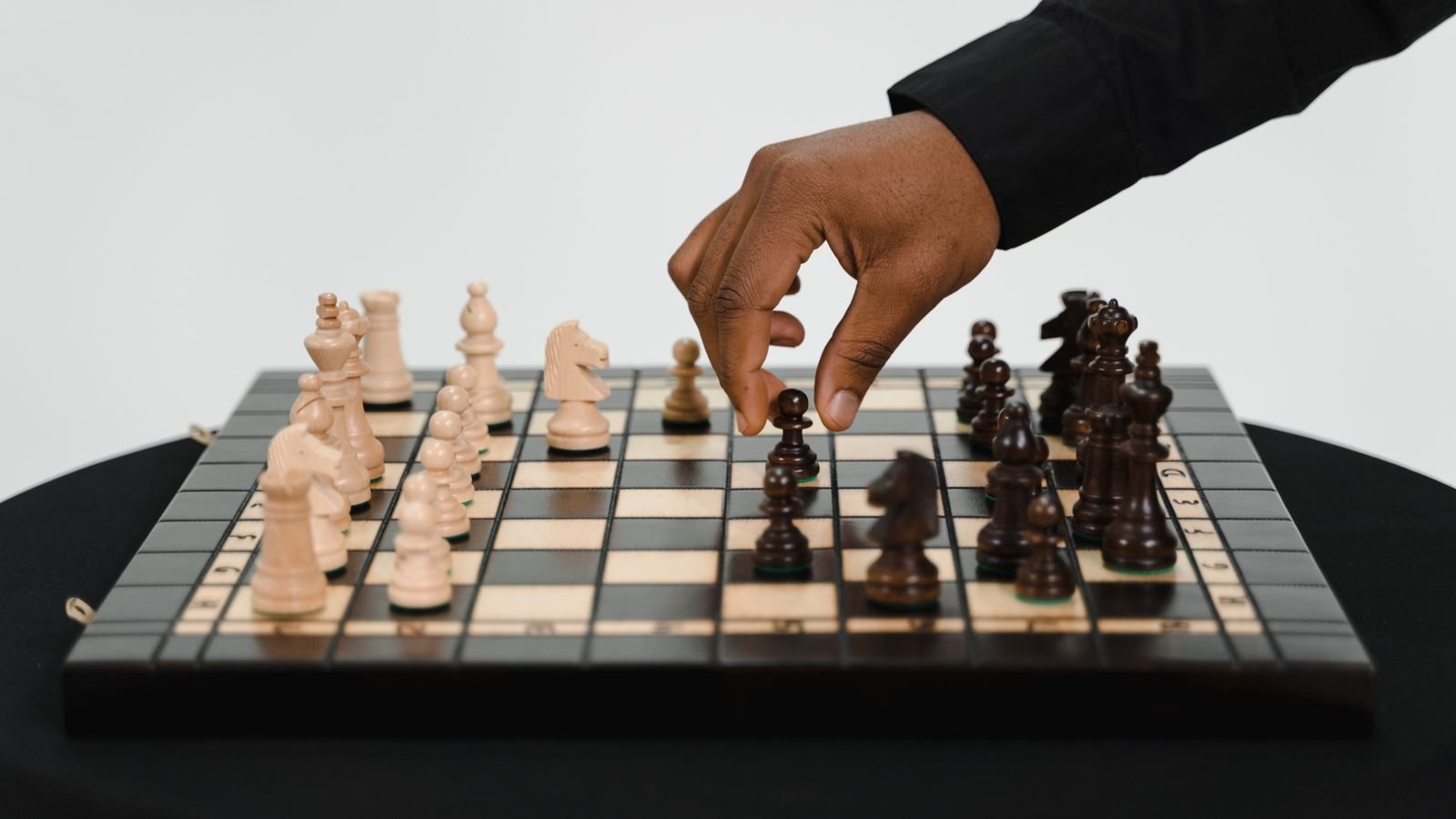
Your child wins the opponent’s queen, the board is almost empty, and victory feels certain. Twenty moves later the game ends in a draw. If that sounds familiar, the problem is almost never talent. It is endgames.
Most young players learn openings and tricks first because they are exciting. Very few are taught how to actually finish a game once they are winning. The good news is that the endings that matter most are small, learnable and the same in every game. Master these four and a child stops giving away half points. This guide explains each one in plain language, shows the trap that catches almost every beginner, and gives you simple games to practise at home.
Endgames matter because they are where games are actually won, and a child who cannot finish a winning position will keep turning victories into draws. Openings and traps can win material, but that advantage only counts if your child can convert it at the end of the game.
This is not a new idea. The world champion José Raúl Capablanca began his classic book Chess Fundamentals not with openings but with simple checkmates, because finishing a game teaches how each piece really works. More than a hundred years later, strong coaches still follow the same order.
There is an emotional side too. A child who fights for an hour, wins the opponent’s queen and then draws hears a loud message: “I can’t finish.” Learning four basic endings removes that fear. The last part of the game stops being a nervous scramble and becomes a routine they trust. Along the way, endgames train exactly the skills parents hope chess will build: planning several moves ahead, patience, and checking the opponent’s reply before every move.
The two-rook ladder mate is the best first endgame for kids because it needs no help from the king and most children can learn it in a single sitting. One rook blocks a row so the enemy king cannot cross it. The other rook gives check on the next row, pushing the king back. Then the rooks swap jobs and climb, rung by rung, until the king is trapped on the edge of the board and checkmated.
The only danger is the enemy king walking up to attack a rook. When that happens, your child simply slides the threatened rook far away along the same row, to the other side of the board, and carries on climbing. Why start here? The ladder teaches the idea behind nearly every endgame: first fence the king in, then push it to the edge. It also gives an early, confidence-building win that children love repeating.
Checkmating with a king and queen against a lone king is the ending that matters most in real games, because many pawn races end with a brand new queen on the board. The method has two stages.
First, the queen shrinks the enemy king’s space. A popular trick for children is to place the queen a knight’s move away from the enemy king and keep copying its movements, which squeezes the king towards the edge without ever giving check. Second, once the king is stuck on the edge, your child brings their own king closer until it stands two squares away, facing the enemy king. Only then does the queen deliver checkmate, protected by the king or along the edge.
The biggest risk is stalemate. The queen is so powerful that it can easily take away the enemy king’s last square without giving check. Give your child one rule to follow: before every queen move near the edge, count how many moves the enemy king will have. If the answer is zero and it is not check, pick a different move.
King and rook against king takes longer than the queen mate, but it teaches teamwork between pieces better than any other basic ending. A rook alone cannot cover enough squares, so the king has to join in.
The standard method is called the box. The rook draws an invisible fence around the enemy king. Your child’s king walks up in support, and the rook makes the box smaller one row at a time, always keeping the enemy king inside. When the enemy king is on the edge and the two kings face each other with one square between them, the rook checks along the edge for mate.
Children often get stuck when it is not quite the right moment to check. The answer is a waiting move: a quiet rook move along the same line that keeps the fence in place and hands the turn back to the opponent. Discovering that a quiet move can be the strongest move is a big idea for a young player, and it appears again and again in more advanced chess.
Six endgame facts to share at the chess board
With best play, a king and queen can checkmate a lone king in 10 moves or fewer from any starting position.
A king and rook need up to 16 moves, which is why this ending rewards patience and a clear plan.
A king and two knights cannot force checkmate against a lone king that defends well. Extra pieces do not always mean a win.
For centuries, different countries scored stalemate differently. It only became a standard draw in the 19th century.
Every position with seven pieces or fewer has been fully calculated, so the perfect result of each one is known.
Capablanca’s 1921 book starts with simple checkmates, before any opening theory at all.
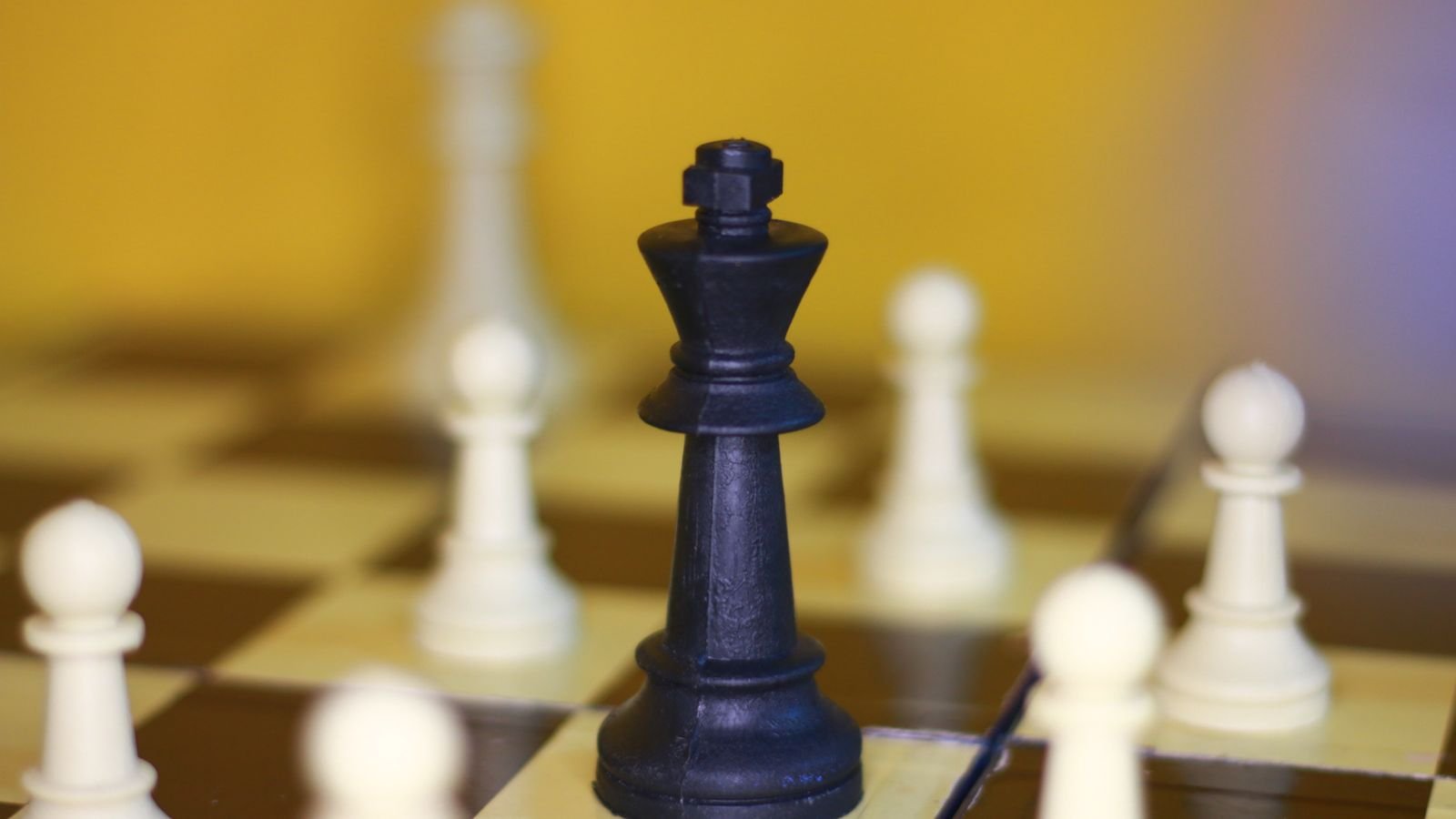
King and pawn against king decides whether an extra pawn actually becomes a queen, and it rests on two ideas every child can learn: the rule of the square and the opposition.
The rule of the square answers one question in seconds: can the defending king catch a runaway pawn? Imagine a square on the board with one side stretching from the pawn to the square where it promotes. If the defending king can step inside that square on its move, it catches the pawn. If it cannot, the pawn queens. No long calculation needed.
The opposition is about the two kings. When they stand face to face with one square between them, the player who does not have to move is usually the one who gets through. For the attacking side, the practical habit is simple: put your king in front of your pawn, not behind it. A king that leads the pawn escorts it safely home, while a king trailing behind lets the defender block the road. One exception is worth knowing early. A pawn on the edge files (a or h) is often only a draw, even with perfect play, if the defending king reaches the corner.
Stalemate is a draw that happens when the player to move has no legal move and is not in check, and it is the most common way children throw away a winning endgame. Under the official FIDE Laws of Chess, stalemate ends the game on the spot as a draw, however much material one side has.
It usually happens for one of three reasons. The child plays fast because the game already “feels over”. They keep grabbing pieces and pawns without noticing what the enemy king can still do. Or they make a lovely restricting move that takes away the last free square without giving check.
The fix is a habit, not talent. In the endgame, before every move, your child asks one question: “After my move, can my opponent move anything at all?” If the answer is no and the king is not in check, it is stalemate, so they choose again. The puzzle below shows how four natural-looking moves draw while only two win.
White to move. Can you find a winning move without falling into stalemate?
White: King on b6, Queen on c5. Black: King on a8.
Set it up on a real board. White has six tempting moves: Qc7, Qd6, Qe5, Kc7, Qc8 and Qf8. Two of them win straight away. Four of them draw. Which are which?
Tap a question to reveal the answer
Most children can start basic endgames as soon as they know how all the pieces move, and the best order is ladder mate, queen mate, rook mate, then king and pawn. For many children that point arrives around age 6 or 7.
Younger players, roughly 5 to 7, do best with the ladder mate and the queen mate played as a game: “Can you trap my king before the timer runs out?” Children around 8 to 10 are usually ready for the rook mate and the rule of the square. From about 10 upwards, the opposition and simple king and pawn battles make sense, because they need a little more calculation.
Age is only a rough guide. A keen 7-year-old may master all four, while a beginner of 12 still needs to start with the ladder. What really matters is that each ending feels easy before the next one begins. Rushing ahead creates children who half know everything and then freeze under a tournament clock.
The most common endgame mistakes children make are stalemating, forgetting to use their king, and giving endless checks with no plan. Constant checks feel active, but they often chase the enemy king back into the middle of the board. A helpful rule is: check only when it takes squares away.
Leaving the king at home is the second big one. In the middle of the game the king hides. In the endgame it becomes a fighting piece, and many endings simply cannot be won without it. Third is losing a piece to a sneaky capture. When the enemy king creeps next to an unprotected rook, children often miss it until it is gone.
Finally, there is time. In timed games, a child who knows the method but has not practised it will burn through the clock. In over-the-board games there is also the fifty-move rule: if both players make 50 moves with no capture and no pawn move, a draw can be claimed. A child who wanders without a plan can lose a winning position this way too. Anything that becomes automatic in practice frees up thinking time in real games.
Simple endgame games you can play at home this week
The ladder race. Give your child two rooks against your lone king, then swap sides. Count the moves and see who delivers checkmate faster.
Trap my king. You take a lone king, your child takes a king and queen. They win a point for checkmate and lose a point for stalemate.
Say the zero. Before each endgame move, your child says out loud how many moves the enemy king will have afterwards. This one habit kills most stalemates.
Draw the square. Put a single pawn and a single king on the board. Ask your child to trace the rule of the square with a finger before deciding whether the king can catch it.
King first. Whenever only a few pieces are left, ask one question before any move: “Where is your king going?”
Replay the draws. Look back at a game your child drew from a winning position and find the exact moment it slipped away. Then play that position again.
Little and often. Three 10-minute endgame sessions a week build more automatic skill than one long session on a Sunday.
The fastest way to stop drawing won games is to practise these four endings until they feel boring, because boring means automatic. When a child can deliver the ladder mate, the queen mate and the rook mate without thinking, and knows where their king belongs in a pawn ending, all their energy goes into the part of chess that actually needs thought.
This is where live coaching makes a real difference. In a 1 on 1 class, a coach watches your child play the ending, spots the exact move where things go wrong and fixes it on the spot, instead of your child discovering the mistake weeks later in a tournament. If you would like to see how that works, book a free trial class and ask the coach to start with an endgame.
More for curious parents
MasterMindz offers live 1 on 1 online classes for children and has taught 750+ students across 11+ countries. Chess is our flagship subject, taught by experienced coaches who build each lesson around your child’s own games, from first checkmates to tournament endgames. Families also choose MasterMindz for maths, coding, Rubik’s cube, music and languages, with flexible timings across time zones.