September 9, 2026
Yes, a six year old can solve a Rubik's cube from a fully scrambled state, and thousands of them do. What they cannot do is learn it the way most adults try to teach it.


What online lessons do brilliantly, where they struggle, and how to judge it inside a month.
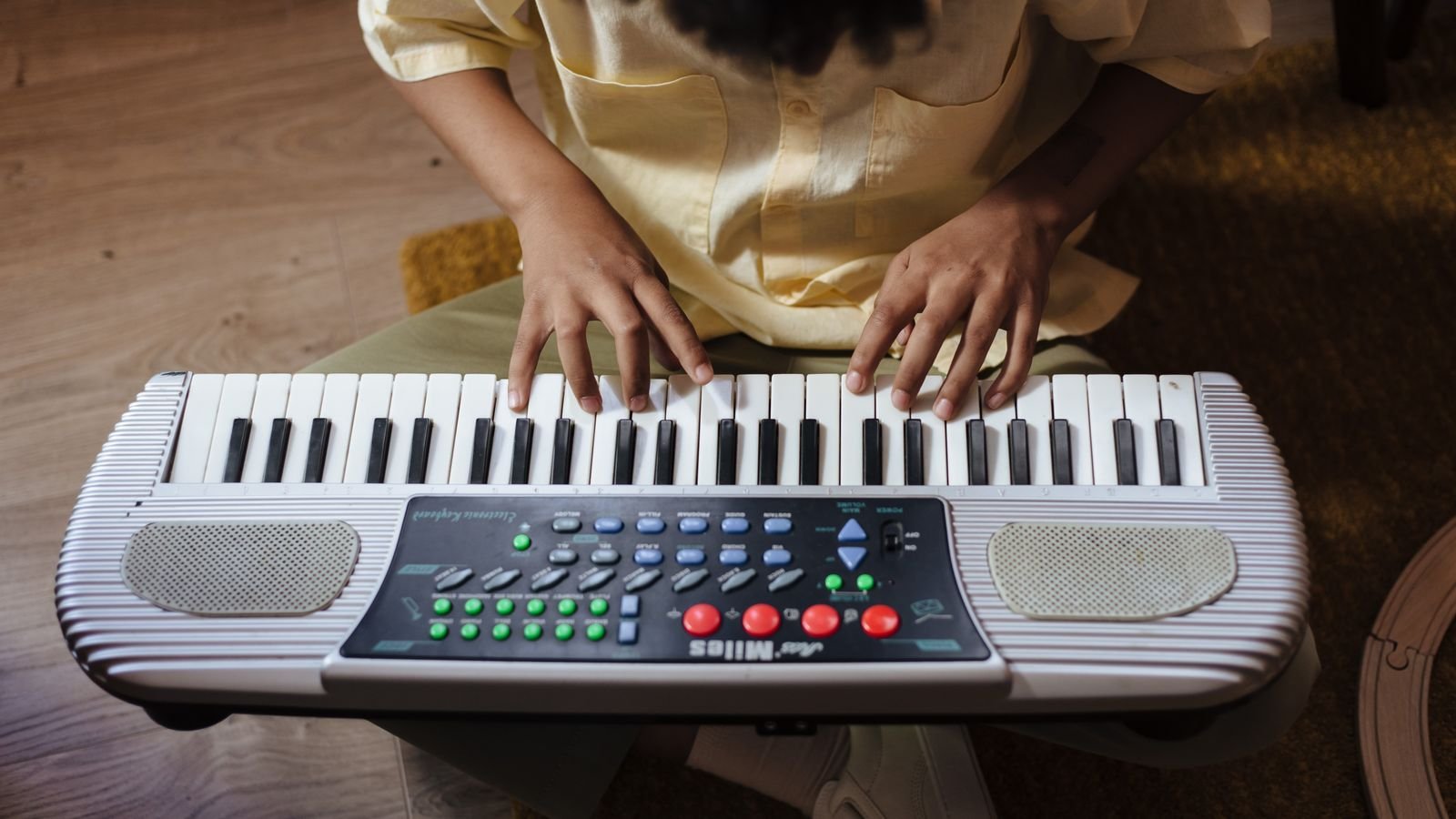
Yes, learning music online genuinely works for young children, with one condition: the lesson has to be live and one to one. Recorded videos and apps are fine for practice between lessons, but a five or seven year old learning an instrument needs someone watching their hands in real time and saying “wrist a bit higher” in the second it starts to droop.
Most parents ask this question because it feels like something must be lost through a screen. Something is, and it is worth naming honestly. But quite a lot is gained too, and for young beginners the gains usually win. Here is the full picture.
For beginner and intermediate children, online music teaching produces comparable results to in person lessons, provided the class is live and individual. The research base on online music pedagogy is still young, but studies looking at how music moved online report that online music learning supports flexible study and effective knowledge acquisition when the teaching is designed for the format rather than simply copied from a classroom.
The reason it works better than parents expect is that early instrumental learning is overwhelmingly visual and verbal. Hand shape, finger numbers, posture, reading a line of notation, counting out loud, clapping a rhythm back. All of that survives a video call intact. What suffers is the shared acoustic moment, and for a beginner that is a smaller loss than it sounds.
Online lessons beat in person ones on three practical fronts: the camera angle, the instrument, and the drop out rate. A teacher sitting beside a child at a piano sees their hands from an awkward angle above and behind. A camera placed at the side of the keyboard gives a clean, close, consistent view of exactly what the fingers are doing, every single week.
The second advantage is that your child practises on the same instrument they learn on. Children who learn at a school on a lovely acoustic piano and go home to a small keyboard spend part of every week readjusting. Online, the tutor sees the actual instrument, hears its actual sound, and can tailor the teaching to it.
The third is simply that nobody quits over traffic. A weekly thirty minute class that starts in the living room at six survives a rainy season, a busy work week and a school project. A class that requires a forty minute journey each way often does not.
The honest limitation of online music teaching is audio, not instruction. Ordinary video calls compress sound to prioritise speech, and they introduce a delay of a fraction of a second. That delay is invisible in conversation and fatal for playing in time together. Teacher and child cannot perform a duet at the same instant, and no consumer setup fully solves it.
Good online music teachers work around it rather than fight it. They alternate instead of overlapping: the teacher demonstrates, the child copies, the teacher responds. They count aloud and clap rather than playing along underneath. They ask the child to record short clips for detailed tone work. If a prospective tutor promises to play along live with your child in perfect sync, they either have professional audio equipment at both ends or they have not thought about it.
Six things about music, children and screens worth knowing before you start
A large school based study found structured music lessons improved children’s short term memory, planning and language based reasoning, and that those gains showed up in unrelated subjects.
Reviews of musical training in children point to positive transfer from musical expertise to speech processing, which is one reason young musicians often hear language differences more sharply.
The tiny delay on a normal video call is unnoticeable in conversation but makes playing in time together impossible, which is why good online tutors alternate rather than overlap.
A cheap camera placed at the side of the keyboard is more useful to a music teacher than an expensive one pointed at your child’s face.
Wireless earphones add their own delay on top of the call. For music lessons and practice apps, plug in wired earphones instead.
Ten focused minutes on six days does more for a young musician than an hour crammed into the day before the lesson, because motor skills build through repetition over time.
A good online music lesson for a young child is short, fast moving and made of four or five different activities. Thirty minutes is right for ages five to eight, and it should never be thirty minutes of the same thing. Expect something like a warm up of clapping or singing, a few minutes of rhythm work away from the instrument, ten to twelve minutes on the piece, a short game or ear training exercise, and a clear practice task written down at the end.
Watch for the tutor asking your child to do things rather than telling them things. A young child who spends twenty minutes listening to explanations has had a lecture, not a lesson. Watch also for whether the tutor remembers what happened last week without checking notes in front of your child. That small thing tells you a lot about whether your child is being taught or processed.
Structured music training has been linked to gains in memory, attention and planning in school aged children, and the strongest single piece of evidence comes from a large longitudinal study built into a regular school curriculum. Researchers found that structured music lessons significantly enhanced children’s cognitive abilities, including language based reasoning, short term memory, planning and inhibition, with improvements showing up in academic performance.
It is worth being measured about this. A critical review of music interventions and child development found suggestive beneficial effects across dozens of studies while noting that firm conclusions are still hard to draw. So the sensible position for a parent is this: the cognitive evidence is encouraging rather than settled, and the case for music does not rest on it. A child who can play something they love has gained something worth having regardless of what it does to their marks.
For most children under nine, keyboard or piano is the easiest first instrument, because the notes are laid out visually and a child makes a correct sound on day one. That immediate success matters enormously at that age. Guitar and ukulele suit slightly older children with the finger strength for pressing strings, and ukulele in particular is friendly for small hands. Singing costs nothing and builds the ear faster than anything else.
You do not need to spend much to start. A full size keyboard with sixty one touch sensitive keys will carry a child through the first year or two comfortably. Touch sensitivity is the one feature worth insisting on, because without it a child never learns to play softly or loudly, and that habit is hard to unpick later. Buy the stand and the adjustable stool too. A child whose feet dangle and whose wrists point upward is learning a posture you will pay a teacher to fix in three years.
Practice fails for young children because it is unscheduled and open ended, not because they lack discipline. “Go and practise” is an instruction no seven year old knows how to follow. “Play the first four bars five times, then play the whole thing once for me” is one they can complete and feel good about.
Anchor it to a fixed point in the day, ideally before screens rather than after, because nothing follows a tablet well. Ten to fifteen minutes on most days is plenty at this age. Keep the instrument out and uncovered, since a keyboard in a case gets played about a third as often as one standing ready. And let a few minutes of every session be a piece your child chose, even if it is far too easy for them. That is the part that keeps them coming back to the part that is not.
Position the camera at the side of the instrument so the tutor sees both hands and the keys, not your child’s face from the front. This is the single change that makes the biggest difference to lesson quality, and most families get it wrong for the first month. A laptop on a stack of books at the end of the keyboard, angled slightly down, is usually all it takes.
Beyond that, keep it simple. Use a wired connection or sit near the router. Put the device on a stable surface rather than on the same table as the instrument, since vibration ruins the audio. Use wired earphones rather than Bluetooth. Face the child away from a bright window so the camera does not silhouette them. And sit within earshot for the first few lessons without sitting in the frame, so your child knows you are there but is not performing for you.
Four weeks is enough to tell whether online music lessons are working for your child, and the signals are behavioural rather than musical. Does your child go to the instrument between lessons without being sent? Can they name what they are working on? Do they play something for a visiting relative unprompted? Any one of those matters more than how the piece sounds in week four.
The warning signs are equally clear: lessons that are the same shape every week, a tutor who talks more than the child plays, homework that never changes, or a child who is anxious rather than merely reluctant on lesson day. Reluctance is normal and passes. Anxiety means something in the setup needs to change, usually the pace or the tutor. This is exactly why MasterMindz starts every family with a free trial class. You watch one real lesson, you see how your child responds to that particular tutor, and then you decide.
Seven things you can try at home this week
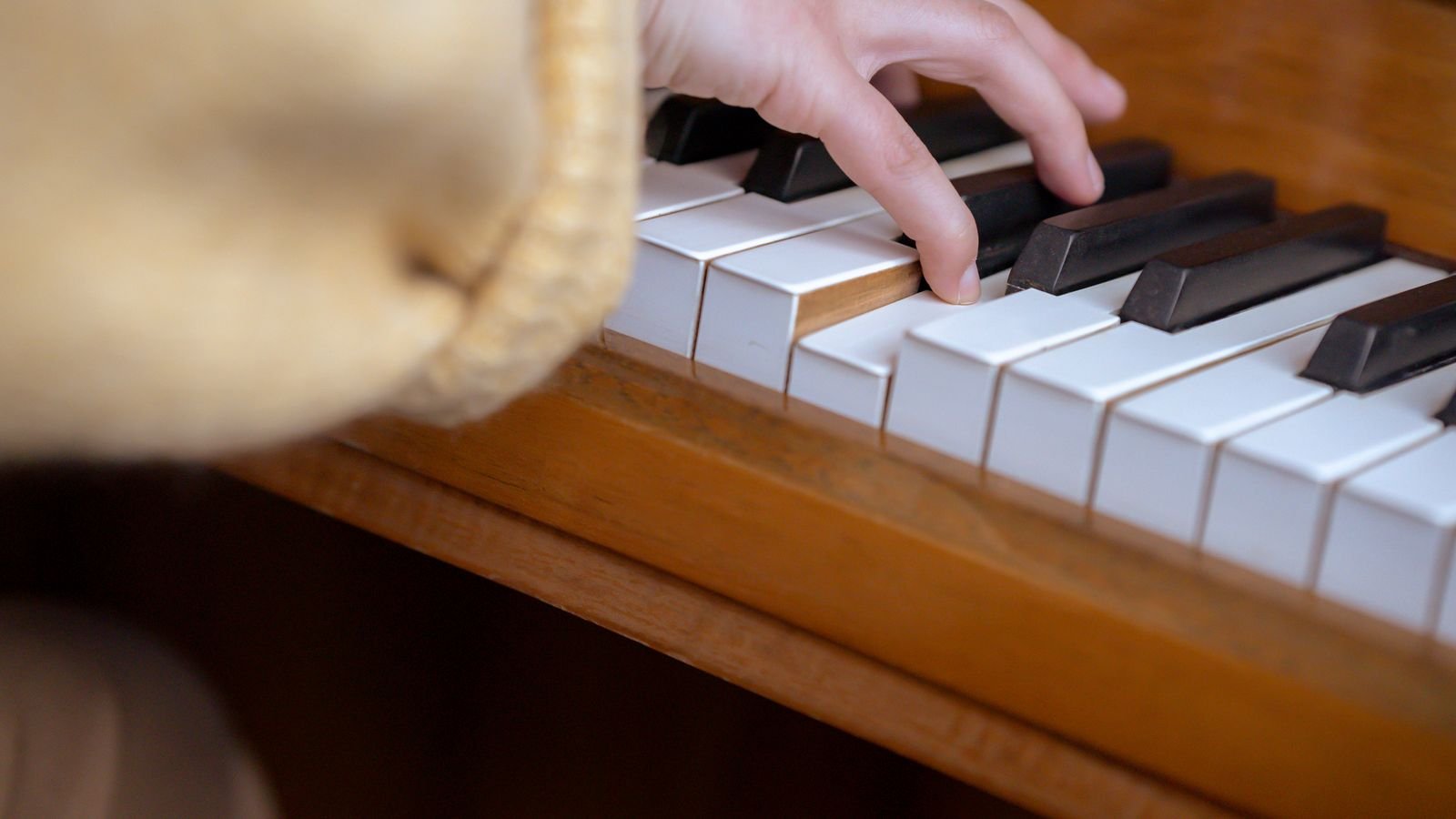
Move the camera to the side. Point it at the hands and keys, not the face. Do this before the next lesson and watch how much more specific the tutor’s feedback becomes.
Practise before screens, not after. Ten minutes before tablet time is easy. Ten minutes after it is a negotiation you will lose.
Turn practice into counting. Instead of “practise for fifteen minutes”, say “play these four bars five times”. Countable tasks finish; open ended ones drift.
Leave the instrument out. Uncovered, plugged in, stool in place. Removing three steps of friction roughly doubles how often a child sits down at it.
Swap to wired earphones. Bluetooth adds delay on top of the call delay, which makes rhythm work feel wrong to a child who is doing everything right.
Record twenty seconds a week. Same piece, same phone, every Sunday. Progress is invisible day to day and obvious across a month, and children love watching their old selves.
Book one tiny performance a month. Grandparents on a video call counts. Playing for someone is what turns practice from a chore into a purpose.
Read this one aloud and clap it together. It teaches more than it looks like it does.
Here is the pattern: the music has 4 beats in every bar. Your child claps on beat 1 and beat 3, and stays silent on beats 2 and 4.
The question: if the song runs for 8 bars, how many times does your child clap? And if the whole song takes 16 seconds, how many beats happen every second?
Tap a question to reveal the answer
For a young beginner, yes, as long as the lesson is live, individual and short, the camera is pointed at the hands, and everyone accepts that playing in perfect sync over a video call is not going to happen. Within those boundaries, a good online tutor can take a five year old from their first note to reading music and playing pieces they are proud of, without anybody sitting in traffic.
The part that decides it is not the technology at all. It is whether your child looks forward to that half hour. That is something you can see for yourself in a single lesson, which is the whole reason a trial class exists.
More for curious parents
MasterMindz teaches children worldwide through live, personal 1 on 1 online classes in chess, maths, coding, music and more, with experienced tutors and a fun, individual approach. MasterMindz has taught 750+ students across 11+ countries, and every family starts with a free trial class.