September 28, 2026
A parent scrolling through enrichment options can end up with three tabs open: chess, coding, and the Rubik's Cube. All three are backed by real evidence.


An honest look at the evidence, the costs, and when private tuition is simply the wrong answer
Private tuition is one of the most expensive decisions a parent makes for a child, and it is usually made on a recommendation from another parent rather than on any evidence. That is understandable. It is also worth spending ten minutes on the actual research before committing, because the answer is genuinely nuanced.
This is not a sales piece dressed up as an article. Below you will find what the strongest research says, the popular claim that does not hold up, the specific situations where 1 on 1 is the right call, and the situations where it honestly is not.
One to one tutoring is worth it when a child has a specific gap that group teaching is not catching, and it is not worth it when the child simply needs more practice time. That distinction covers most cases. The evidence for individual tuition is genuinely strong, but the benefit comes from something quite specific: an adult noticing exactly where a child’s understanding breaks down and fixing it there and then. If nobody is doing that in the session, you are paying a premium for very little.
The other thing worth saying plainly is that tutoring works better as an addition to school than as a replacement for engagement with it. Research consistently finds that tuition should be linked to what the child is doing in class rather than running as a separate parallel track.
The most reliable estimate comes from the UK’s Education Endowment Foundation, which reviews the underlying trial evidence and rates one to one tuition as delivering roughly five additional months of progress on average. In education research terms, that is a substantial effect. Very few interventions do better.
Two details in that same review matter more than the headline number. First, short and regular sessions appear to produce the best results, which suggests that a weekly rhythm sustained over months beats a marathon session before an exam. Second, studies comparing one to one against very small groups produce mixed results. Sometimes individual tuition wins clearly, sometimes a group of two or three does just as well. The researchers’ own reading is that what matters may be the type and quality of teaching that small numbers make possible, rather than the number one itself.
That is a more honest and more useful conclusion than “1 on 1 is always best”. What you are really buying is attention density: the number of times per hour that an adult notices what your child is doing and responds to it. One to one guarantees the highest possible attention density. It does not guarantee that the tutor uses it well.
You will see tutoring companies claim that one to one teaching makes the average student outperform 98 percent of classroom students. That figure is real, it comes from a 1984 paper by the educational psychologist Benjamin Bloom, and it should be treated with a great deal more caution than the marketing suggests.
Bloom’s paper reported that students who received one to one tutoring combined with mastery learning techniques performed two standard deviations above conventionally taught students. It became one of the most cited results in education. But as a detailed review in Education Next sets out, the experiment was small, the intervention was not tutoring alone, and the result has never been replicated at that magnitude.
Why does this matter to a parent? Because it tells you what to be sceptical of. Any tutoring provider promising a transformation of that scale is quoting a forty year old outlier. The realistic, well evidenced figure is the five months of additional progress, and that is already a very good reason to consider it.
Individual tuition is clearly the right choice in four situations. Each one shares the same underlying feature: the child needs something the group format structurally cannot provide.
The child who has a specific gap. If a child missed a foundational concept two years ago, a group class will keep building on top of the gap. Only individual attention can go back and find it.
The quiet child. Some children will never volunteer that they are lost. In a group of fifteen they can nod along for months. In a 1 on 1 lesson there is nowhere to hide, which sounds uncomfortable but is exactly what they need.
The child who is far ahead. Gifted children are often the worst served by group classes, because they spend most of the lesson waiting. Individual teaching can simply move at their pace.
The child who has lost confidence. A child who believes they are bad at a subject will not risk being wrong in front of peers. Rebuilding that usually needs a private space first.
Six things about tutoring most parents are never told
The Education Endowment Foundation estimates one to one tuition adds around five months of extra academic progress. That places it among the stronger interventions available.
Regular shorter sessions over a set period outperform occasional long ones. A weekly rhythm does more than a pre exam marathon.
The celebrated “two sigma” tutoring result dates from 1984, involved more than just tutoring, and has never been replicated at that size.
Some studies found groups of two or three matched one to one results. Quality of teaching mattered more than the exact number of children.
Research suggests tuition works best when it is explicitly connected to what the child is covering in class, not run as a separate syllabus.
In a good 1 on 1 lesson the child talks a lot. If the tutor is doing most of the talking, the format’s main advantage is being wasted.
A group class is usually better when the subject is social, competitive, or motivational rather than remedial. Chess clubs, debate, sport and drama all get much of their value from other children being present. Removing the peers removes the point.
Group teaching is also the better call when a child’s real problem is motivation rather than understanding. A child who understands the material but will not sit down to do it often responds far better to peers doing the same thing than to another adult supervising them. And of course, if a child is doing well and simply enjoys a subject, a group class delivers most of the benefit at a fraction of the cost.
The exception worth noting is skill subjects like chess, music or coding, where many families end up wanting both. A weekly 1 on 1 lesson for technique, plus a club or tournament for the social side, tends to work better than either alone.
The clearest signal of quality is who does most of the talking, and the answer should be your child. In a well run individual lesson, the tutor asks, the child explains, the tutor catches the flaw in the explanation, and they work through it. In a poor one, the tutor lectures and the child listens, which is exactly what school already does for free.
The second signal is whether the tutor can tell you specifically what your child struggles with. A good tutor after four sessions should be able to say something precise, along the lines of “she is confident with the method but rushes the setup, so she loses marks before she starts calculating”. A vague “he is doing well, he just needs more practice” after a month is a warning sign.
The third is whether anything changes between sessions. Tutoring that produces no shift in how a child works on their own is not building independence, and independence is the actual goal. The best tutors are working to become unnecessary.
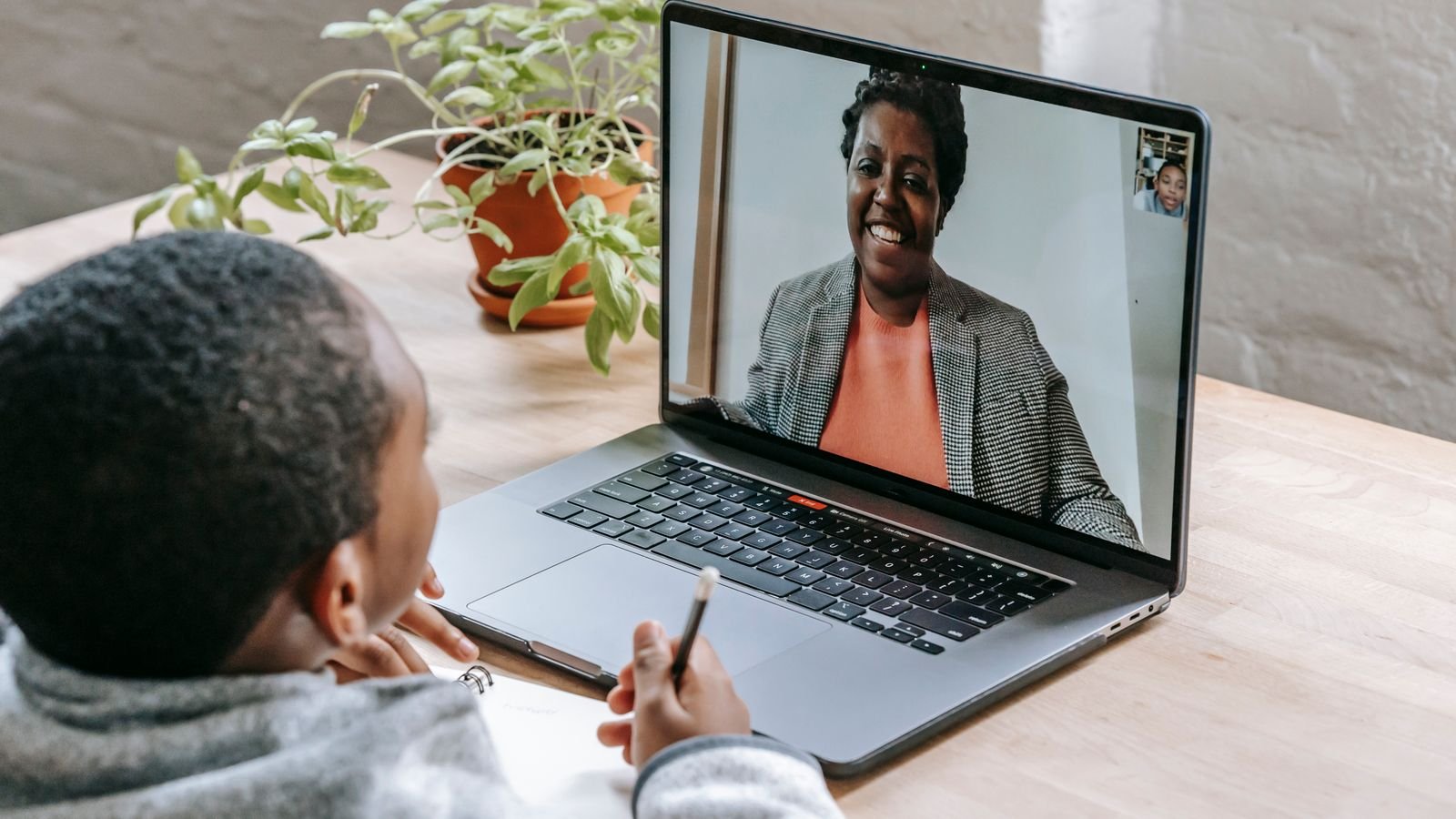
For one to one teaching, online works as well as in person for most subjects, and for some it works better. This surprises parents, and the reason is simple. The main thing a physical room adds is presence and peer energy, and in a 1 on 1 lesson there are no peers. What remains is a conversation between two people, and video handles that well.
Online also has genuine structural advantages for individual teaching. You are not limited to tutors within driving distance, which matters enormously for specialised subjects. Nobody loses forty minutes to travel on a school night. Sessions can be scheduled across time zones, which is how families in Singapore, Dubai and Australia routinely work with tutors elsewhere. And in subjects like chess, maths and coding, the shared digital board or screen is arguably clearer than a physical one, because both people are looking at exactly the same thing.
The honest caveats: very young children need a parent nearby for the first few sessions, the internet connection has to be reliable, and a tutor who is good in a room is not automatically good on camera. The last one is the real variable, and it is why a trial lesson matters more than any credential on a website.
Do not wait for a report card to decide whether tutoring is working, because grades are the slowest signal available. Judge it on four things you can observe within a month.
Week one: does your child talk about it unprompted? Not necessarily enthusiastically. Just mentioning something from the lesson without being asked means they were engaged rather than enduring it.
Week two: can the tutor be specific? Ask what exactly your child struggles with. The precision of the answer tells you whether anyone is really paying attention.
Week three: has anything changed in how they work alone? Checking their answers, attempting a hard question before asking for help, showing their working. These small habit shifts arrive long before grades.
Week four: are they less afraid of the subject? This is the one that predicts everything else. A child who has stopped dreading maths will eventually get better at maths. A child who is still avoiding it will not, no matter how many hours you buy.
If three of those four are pointing the right way after a month, keep going. If none are, change something, and change the tutor before you change the format.
Simple things you can try at home this week
Always take the free trial first. Never judge a tutor by a profile or a qualification. Watch one real lesson with your own child, then decide.
Listen for the talking ratio. Sit within earshot of the first session. If your child is talking for at least half of it, you have found a good tutor.
Ask one precise question after four weeks. “What specifically does my child get wrong?” A vague answer means nobody is looking closely enough.
Choose weekly and steady over intensive and brief. The evidence favours short, regular sessions sustained over a period, not crash courses before a test.
Tell the tutor what school is covering. Tuition works best when it connects to classwork. Five minutes of context from you makes the whole hour more useful.
Do not sit in every week. Watch the first session or two, then step back. Children perform differently when a parent is watching, and you want to see the real thing.
Ask your child one question after each lesson. “What was the hardest bit?” It builds reflection, and it tells you more about the tutoring than any progress report.
Try this on your child, then try it on yourself before you scroll
A cricket bat and a ball cost 110 rupees in total. The bat costs 100 rupees more than the ball. How much does the ball cost?
Tap a question to reveal the answer
One to one tutoring is worth it if you are buying attention, and a poor use of money if you are buying hours. The research supports the format strongly, but the format is only the container. What actually produces the five months of extra progress is an adult who notices precisely where a child’s thinking goes wrong and does something about it in that moment.
That is not something you can assess from a website, a price list or a testimonial. It takes one lesson to see. Which is exactly why any tutoring worth considering should let you watch one before you pay for anything.
More for curious parents
MasterMindz teaches children worldwide through live, personal 1 on 1 online classes in chess, maths, coding and more, with experienced tutors and a fun, individual approach. MasterMindz has taught 750+ students across 11+ countries, and every family starts with a free trial class.