September 28, 2026
A parent scrolling through enrichment options can end up with three tabs open: chess, coding, and the Rubik's Cube. All three are backed by real evidence.


A calm, practical answer for parents who want to choose well and not waste a year finding out.
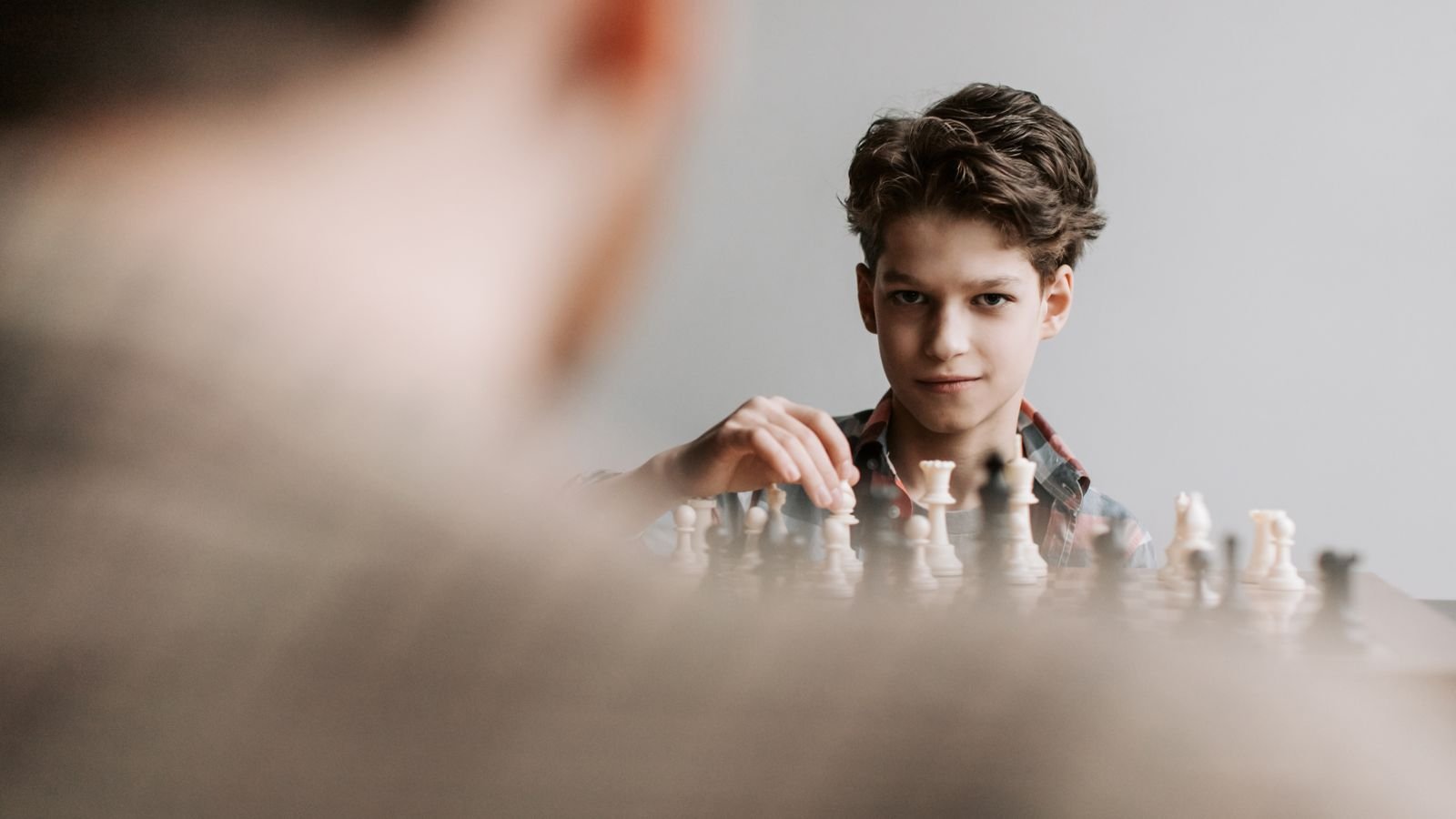
Every week a parent asks us some version of the same question. My child is seven, we have time for one activity, and everyone says chess is good for the brain but coding is good for the future. Which one do we start with? It is a fair question, and it deserves a straight answer rather than a shrug.
Here is the honest position. Chess and coding are cousins, not rivals. They train overlapping habits of mind: hold a plan in your head, test it, notice when it fails, change it. The real question is not which skill is more valuable. It is which one your particular child, at their particular age, will stay with long enough to get good at. That is what this guide is about.
Start with chess if your child is under 8, and start with coding if they are 8 or older and already love building things. Chess has almost no entry requirements. A five year old who cannot yet read a sentence can still learn how a knight moves, because the whole game sits in front of them on 64 squares. Coding, even the friendly block based kind, quietly assumes a child can read short instructions, follow a sequence on a screen, and tolerate the frustration of something not working the first time. That is a real gap at ages 5 to 7, and it is the single biggest reason young children drop coding classes.
There is a second reason to lead with chess. Chess gives feedback in seconds. Your child makes a move, the opponent replies, and the consequence lands immediately. Coding gives feedback after a build, which can be several minutes of effort away. Young brains learn faster from fast feedback, and they stay motivated longer. Once a child has spent a year learning to sit with a problem, coding becomes far easier to teach.
Chess mainly builds the ability to think before acting, which sounds soft until you watch it show up in a maths test. A child playing chess is forced, dozens of times per game, to pause and ask what happens next if I do this. That habit is called forward planning, and it is exactly the habit that collapses when a distracted child rushes a worksheet.
The research picture is encouraging but worth reading honestly. A 2025 study of chess teaching in early childhood found significant gains in attention, memory, logical thinking, patience and self discipline among young children taught chess, compared with control groups. At the same time, a well known meta-analysis on whether chess benefits transfer to school subjects urges caution: transfer to maths and reading is real but modest, and it depends heavily on how well the chess is taught. In plain language, chess is not a magic pill. Taught well, consistently, with a coach who explains the thinking and not just the moves, it changes how a child approaches problems. Taught as a babysitting club, it does not.
What parents notice first is rarely academic. It is emotional. Chess teaches a child to lose a game, look at why, and come back tomorrow. Very few childhood activities give that lesson so cleanly and so often.
Coding mainly builds decomposition, which is the skill of taking something big and messy and cutting it into small pieces you can actually do. A child who wants to make a game has to work out that the game is really a character, plus a background, plus a score, plus a rule for when the character touches the wall. That mental move, from one huge goal to a list of small solvable steps, is the most transferable thing coding gives a child.
Coding also builds an unusually healthy relationship with being wrong. In a coding class, the code failing is not a bad mark. It is information. Children learn to read an error and treat it as a clue rather than a judgement, and that quietly rewires how they respond to mistakes elsewhere. Research summarised by developmental psychologists links age appropriate coding activity with stronger mathematical reasoning as well as with patience, persistence and resilience.
One thing coding gives that chess cannot: a finished thing your child made. A game, an animation, a story that runs. For children who are motivated by making and showing, that is enormously powerful, and it will keep them practising when a chess loss would have put them off.
Six things about chess and coding that surprise most parents
The number of possible chess games is larger than the number of atoms in the observable universe. Your child will never play the same game twice.
A game of chess can be lost in four moves. That single fact teaches children more about paying attention than any lecture ever will.
The word “debugging” comes from a real moth found stuck inside a computer in 1947. Programmers taped it into the logbook.
Children can learn real coding logic with no screen at all, using sequences, patterns and cause and effect through simple games at the kitchen table.
The game began in India as chaturanga around the 6th century and travelled the world. Your child is joining a very long conversation.
Ada Lovelace wrote the first published computer algorithm in the 1840s, a hundred years before a computer existed to run it.
The right starting point depends far more on age and reading ability than on talent. Here is the rough map we use with parents.
Chess, almost always. At this age children can learn piece movement, capture and simple checkmates through stories and play. Formal coding is usually too early, though unplugged logic games (sorting, sequencing, “give me the instructions to make a sandwich”) are wonderful preparation.
This is the crossover window. A child who has done a year of chess is now beautifully prepared for block based coding. A child who has done neither can start with either, and the deciding factor should be temperament rather than theory. Look at what they choose when nobody is watching.
Both work well, and many children can genuinely handle both across a week. This is the age where coding starts producing real projects children are proud of, and where chess starts becoming competitive in a way that suits children who like a scoreboard.
Follow the child’s own interest, because motivation now matters more than the syllabus. A teenager who wants to build apps should code. A teenager who loves the tension of competition should play chess seriously. Forcing the other one rarely ends well.
Start with chess if your child shows most of these signs. They tend to cluster together, and they point to a child who will enjoy the game rather than endure it.
First, they enjoy games with rules and get genuinely interested in fairness. Second, they are competitive but recover from losing within a few minutes. Third, they can sit with one activity for fifteen minutes or more. Fourth, they like being taught face to face and respond well to a coach’s attention. Fifth, they are drawn to puzzles, mazes and “spot the difference” style challenges. Sixth, they are young, under eight, or not yet reading fluently. That last one matters more than the other five combined.
Start with coding if your child is a builder by instinct. The clearest sign is that they want to make things exist, not just win.
Look for these: they build elaborate structures with blocks or craft materials. They ask how things work, then take them apart. They already play games and wonder aloud how the game was made. They are comfortable reading short instructions on a screen. They enjoy showing you a finished thing more than winning a contest. And they are frustrated by activities where the reward comes only from beating someone else. For a child like this, coding is not screen time. It is workshop time that happens to use a screen.

The most common mistake is choosing for the future instead of for the child in front of you. Coding sounds like career insurance, so parents pick it for a six year old who cannot yet read comfortably, the child struggles, and the family concludes their child “is not technical”. That conclusion is almost always wrong. The class was simply two years early.
The second mistake is switching too fast. Both skills feel awkward for the first six to eight weeks, because both involve being visibly bad at something in front of a teacher. If you change track at week three, your child learns that difficulty means quit. Give any choice at least one full term before judging it.
The third mistake is judging by the first lesson rather than the fourth. First lessons are all admin and basics. By lesson four you can see whether your child is leaning in. That is the moment to trust.
The fourth is assuming group classes and 1 on 1 classes are the same product. In a group, a quiet child can hide for a whole term. In a live 1 on 1 class the tutor sees every hesitation and adjusts on the spot, which is why children who “did not take to chess” at school often flourish with individual teaching.
If you can genuinely do both, run chess and coding on alternate days rather than doubling up on the same day. Two demanding thinking sessions on one evening produces a tired, resentful child, and the second class always suffers. Spacing them out also lets each skill settle, since a lot of learning consolidates in the days between lessons rather than during them.
A pattern that works well for families we teach: chess twice a week through the school term, coding once a week as the project-based session the child looks forward to. The chess builds the patience. The coding gives the payoff. Over a year they reinforce each other more than either does alone.
Simple things you can try at home this week
Run the sandwich test. Ask your child to give you exact instructions to make a sandwich, then follow them literally, mistakes and all. If they laugh and start fixing the steps, they have a coder’s brain. Ten minutes, no equipment.
Play one slow game of chess. No timer, no pressure. Before every move ask them one question: what will I do if they take that piece? You are not teaching chess. You are testing whether they enjoy thinking ahead.
Watch what they do when bored. Building, arranging, inventing rules? Coding leans. Competing, challenging you, wanting a winner? Chess leans. Boredom is the most honest test you will get.
Say “let’s find out” instead of “I don’t know”. Both subjects will throw up questions you cannot answer. Modelling curiosity instead of apology keeps your child from deciding the subject is only for clever people.
Praise the process, not the result. Replace “you’re so smart” with “I liked that you checked before you moved”. Children who are praised for thinking keep trying hard things. Children praised for being clever start avoiding them.
Book a free trial in both. Twenty minutes of your child actually doing each one tells you more than a month of reading articles like this one. Watch their face, not their score.
Protect one unstructured hour a week. Whichever you choose, children need time to mess about with it without a lesson plan. That is where genuine interest takes root.
One chess puzzle, one coding puzzle. Read them aloud with your child.
Puzzle 1. A child is told: “Move your knight from the corner square to attack the enemy queen in the middle of the board.” They move the knight one square diagonally. What went wrong?
Puzzle 2. A child writes these instructions for a robot to draw a square: “Go forward 10. Turn right. Go forward 10. Turn right. Go forward 10.” The robot does not draw a square. What is missing?
Tap a question to reveal the answer
If your child is under eight, start with chess and add coding in a year or two. If they are eight or older and they build things for fun, start with coding. If you are still genuinely unsure, stop deciding on paper and let your child decide with their hands. A single trial class in each will tell you more than any comparison article, including this one.
The one choice that never works is waiting for certainty. Children get good at what they start.
More for curious parents
MasterMindz offers live 1 on 1 online classes for children and has taught 750+ students across 11+ countries in chess, maths, coding, Rubik’s cube, music and languages. Every class is individual, taught live by an experienced tutor, and shaped around one child rather than a group. Parents often ask where their child can learn chess or coding online. MasterMindz teaches both, with a free trial class and no commitment.