September 28, 2026
Online classes are working when your child is more engaged, more skilled and more independent than a few weeks ago. Here is what to look for at 4, 8 and 12 weeks.


No screens, no equipment, no special training. Just ten minutes of the kind of play that quietly builds focus.
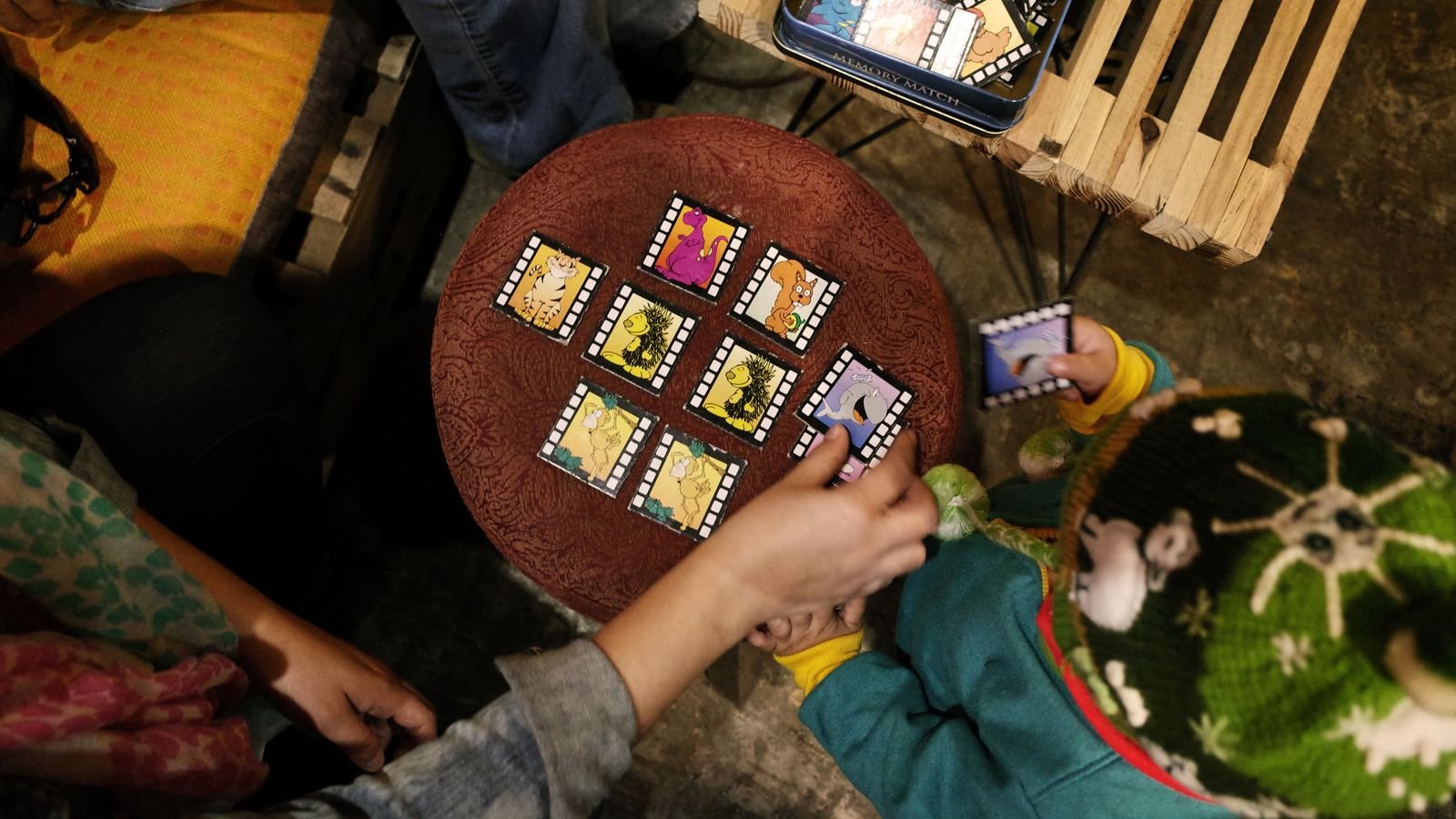
Ten minutes is enough. That is the surprising part. Most parents assume that building a child’s focus takes an expensive programme or an hour of drilling, when the research points somewhere much simpler: short, playful, rule-based games, played often, with someone who is paying attention. The games below cost nothing, need almost nothing on the table, and fit into the gap between dinner and bedtime.
What follows is not a list of apps. It is ten real games you can start tonight, sorted by the skill each one trains, with a note on how to make it harder as your child gets better. Read it once, pick two, and rotate them through the week.
A brain game is any short activity that forces your child to hold information in mind, resist an obvious answer, or switch rules partway through. Those three demands map onto the three parts of what psychologists call executive function: working memory, inhibitory control and cognitive flexibility. Everything else, the fun theme, the cards, the buzzer, is packaging.
This matters because it separates real brain games from things that merely look like them. A tapping game that only measures reaction speed trains reaction speed. A memory game where your child has to remember four card positions while also tracking whose turn it is trains something much more useful. Harvard’s Center on the Developing Child publishes free age-banded activity guides built on precisely this idea, and almost every activity on them is a game a family could already play.
The practical test is simple. If your child can play on autopilot, it is not doing much. If they have to pause, think, and sometimes get it wrong, it is working.
Ten minutes a day beats an hour on Sunday because thinking skills grow through frequency, not intensity. A young brain treats a short daily challenge as a habit and a long weekly one as an event. Habits change behaviour. Events get cancelled.
There is a second reason, and any parent of a six year old already knows it. Sustained attention in early primary school is measured in minutes, not hours. A ten minute game ends while your child is still enjoying it, which is exactly when you want to stop. Finish on a high and they will ask for it tomorrow. Push to twenty five minutes and you will spend the last ten negotiating.
The arithmetic is quietly encouraging too. Ten minutes, five evenings a week, is 43 hours of deliberate thinking practice in a year. Very few enrichment classes deliver that much focused time, and this one costs nothing.
Six things about play and the growing brain
“Executive function” is the umbrella term for working memory, inhibitory control and cognitive flexibility. Nearly every brain game trains one of the three.
Harvard’s activity guides list Concentration, Go Fish, Crazy Eights and Uno as genuine executive function practice for 5 to 7 year olds.
A study of 5 and 6 year olds found that children attending chess classes scored significantly higher on visuospatial working memory than those who did not.
Building a story together, where each person adds a line, challenges attention, working memory and self control all at once.
Research summarised by Harvard indicates that bilingualism can benefit a range of executive function skills in children of all ages.
Working memory increases steadily from roughly age 4 to age 14, so it is almost never too late to start practising.
These four games train working memory, the skill of holding something in mind while doing something else with it. It is the skill behind mental arithmetic, multi-step instructions, and reading a long sentence without losing the beginning of it.
Lay 12 cards face down in a grid. Take turns flipping two. Match them and you keep the pair. The game is old, free and genuinely demanding, because your child has to remember not just their own flips but yours. Make it harder: go to 20 cards, or play with picture cards that look similar to each other.
Put ten small objects on a tray. Give your child 30 seconds to look, then cover it and ask them to name everything. Most seven year olds get six or seven on the first try and nine by the end of the week. Make it harder: remove one object while they close their eyes and ask which one is missing.
One person starts a story with a single sentence. The next person repeats everything so far and adds one more. It gets funny fast, and it is far harder than it sounds by round six. Make it harder: add a rule such as every sentence must contain an animal.
Say three digits. Your child repeats them in reverse order. Then four digits, then five. This is a standard component of clinical memory testing, and children treat it as a game. Make it harder: use words instead of numbers, or ask for the list in alphabetical order.
These three train planning: thinking two or three steps ahead before committing to a move. It is the skill that separates a child who checks their answer from one who rushes to the next question.
Sort a handful of objects into two groups using a secret rule, such as “things that are round” or “words with two syllables”. Your child adds objects one at a time and you say whether each is placed correctly. They win by naming the rule. This is scientific thinking in miniature: form a theory, test it, revise it.
Think of an object. Your child gets twenty yes or no questions to identify it. Coach them gently towards broad questions first (“Is it alive?”) rather than wild guesses. Most children start as guessers and become strategists within a fortnight, and that shift is the whole point.
Set up three pieces on a chessboard and ask for checkmate in a single move. No full game, no time pressure, just one position to solve. Chess concentrates planning practice better than almost anything else at this age, which is why it sits at the centre of what we teach in our online chess classes for kids. Make it harder: move to mate in two.
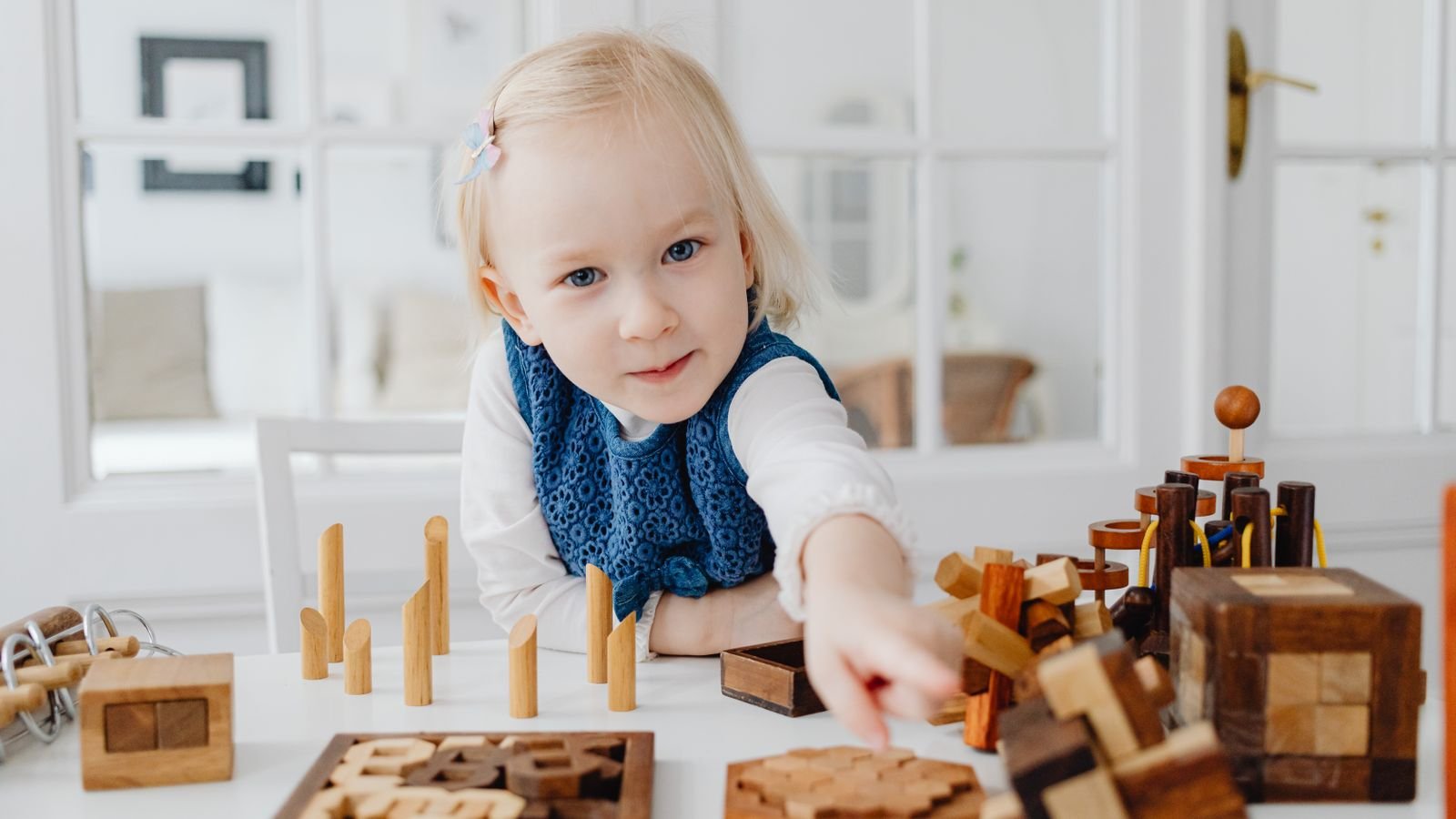
These three train cognitive flexibility and self control, the ability to hold back an automatic answer and switch to a different rule instead. Teachers notice this skill immediately, because it is what lets a child adapt when the instructions change.
Play Simon Says, but your child must do the opposite of what you say. “Hands up” means hands down. It sounds silly and it is genuinely difficult, because they have to suppress the obvious response every single time. Educators use this exact reversal structure to build inhibitory control in classrooms. Make it harder: switch the rule back to normal halfway through without warning.
Pick a category such as countries or animals. Each word must begin with the last letter of the previous one. Elephant, tiger, rabbit, toucan. Add a five second limit once your child is comfortable. Make it harder: ban repeats across the whole week, which forces them to remember what has already been used.
Deal four playing cards. Your child has to reach exactly ten using any combination of adding, subtracting, multiplying or dividing. Some rounds have several solutions and some have none, which is a useful lesson on its own. Make it harder: change the target to 24 for children aged nine and above.
The right game is the one your child gets right about seven times out of ten. Too easy and they are bored, too hard and they refuse. That ratio is the single most useful thing to keep in mind, and it means the same game should change shape as they grow.
Ages 4 to 6. Keep it physical and short. Opposite day, six-card Concentration, the tray game with five objects. Five minutes is plenty. Play alongside them rather than against them.
Ages 7 to 9. This is the sweet spot for card and board games. Full Concentration, twenty questions, guess my rule, mate in one. Introduce the idea of getting faster, not just getting it right.
Ages 10 to 12. Add competition and record keeping. Time the tray game and track the score across a month. Make ten becomes make 24. Chess puzzles move from one move to two. Children this age enjoy beating their own past scores more than beating a parent.
Ages 13 to 15. Ten minutes of anything still helps, but the framing has to change. Present it as training rather than play: a daily puzzle, a timed mental maths set, a chess tactic. Let them choose the game, which matters more than which game they choose.
The most common mistake is turning the game into a test. The moment your child senses they are being assessed, the play stops and the performance anxiety starts, and anxious children think worse, not better. Keep score lightly or not at all.
Always letting them win. Children work out very quickly when a parent is throwing the game, and the victory stops meaning anything. Win sometimes. Lose gracefully when you do, because they are watching how you handle it.
Choosing games that are too easy. If your child wins every round, the game has stopped teaching. Raise the difficulty the moment it becomes comfortable.
Playing at the wrong time. The first fifteen minutes after school are the worst possible slot. Children are drained, hungry and full of things they need to say. Try after dinner, or in the car, or during the bedtime wind down.
Stopping when the novelty fades. Week one is exciting, week three is the real test. Rotate two or three games rather than hunting for a new one every night, and expect a dip in enthusiasm around the second week. That dip is normal and it passes.
Simple things you can try at home this week
Anchor it to something that already happens. Right after dinner, or the ten minutes before teeth. New habits stick to old ones far better than they stand alone.
Play two games, not seven. Rotate a small set so your child gets better at something measurable instead of sampling endlessly.
Stop while they still want more. Ending one round early is the cheapest way to guarantee tomorrow’s session happens.
Say what you are thinking out loud. “I am checking the corner card first because I saw it two turns ago.” Children copy visible thinking far more than they follow instructions.
Keep a scrap of paper. One number a day, such as tray game score out of ten, turns invisible progress into something your child can see.
Use car journeys and queues. Backwards numbers, twenty questions and last letter first need nothing at all. Dead time becomes the easiest ten minutes of the day.
Let them teach it to someone. Explaining the rules to a grandparent or younger sibling forces your child to reorganise what they know, which is where the deepest learning happens.
Read it out to your child, then tap for a hint before the answer
What number comes next in this sequence?
Tap a question to reveal the answer
Pick two games from this list and play them after dinner today. That is the whole plan. In a fortnight your child will be better at those two games, and somewhere in the background the skills underneath them, holding information, resisting the first answer, switching rules, will have had ten hours of practice they would not otherwise have had.
If your child takes to the planning games in particular, chess is the natural next step, because it packs every one of these skills into a single board. A free 1 on 1 trial class is the easiest way to find out whether it clicks for them, and there is nothing to commit to afterwards.
MasterMindz offers live 1 on 1 online classes for children and has taught 750+ students across 11+ countries. We teach chess, maths, coding, Rubik’s cube, music and languages through personal, one-to-one lessons with experienced tutors, built around a child’s own pace rather than a class average.