September 10, 2026
You can prepare a child properly for the PSLE without wrecking the year. The families who come through it well are almost never the ones who studied the most hours.


Readiness is a behaviour, not a birthday.
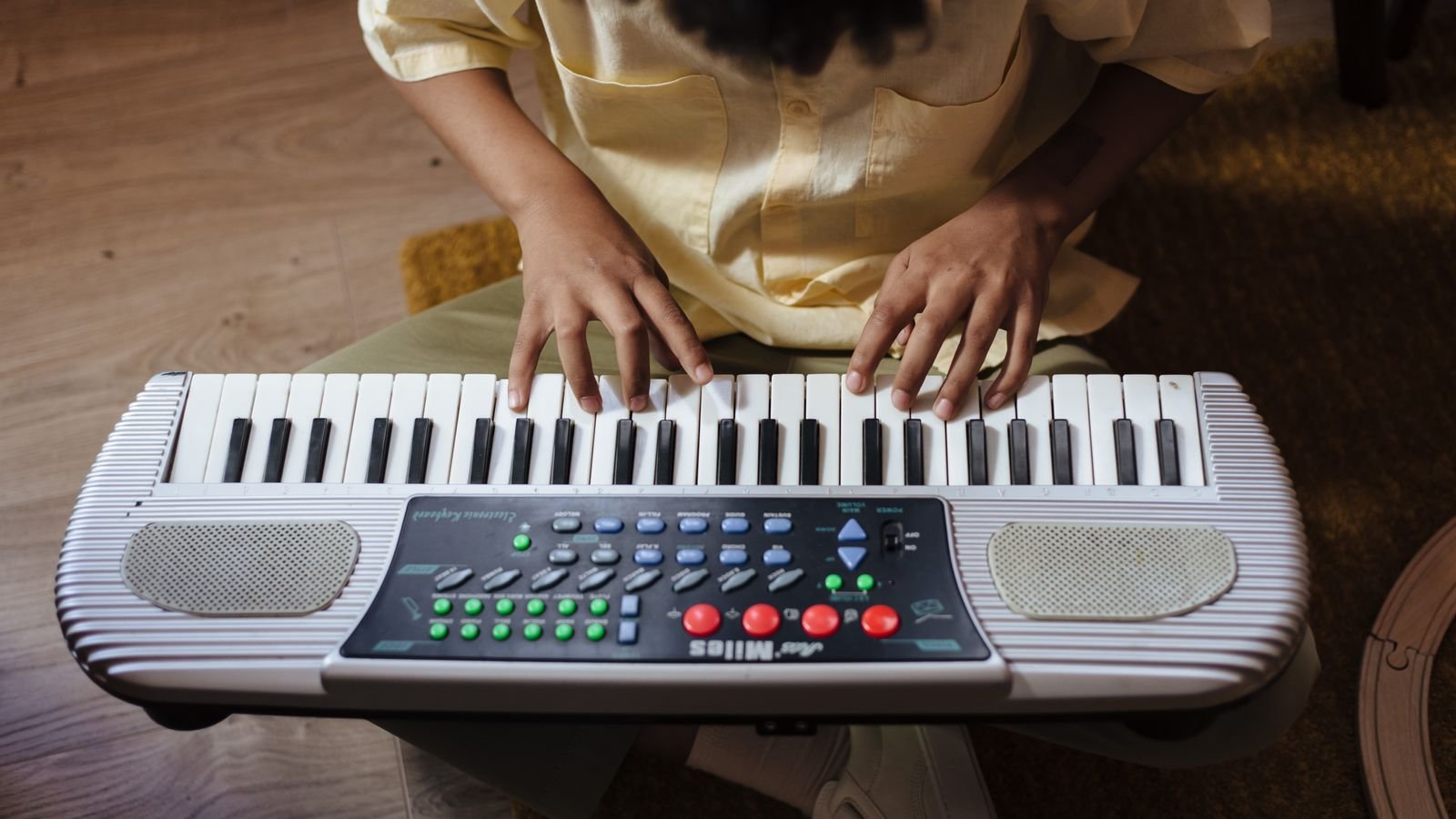
A child is ready to learn an instrument when they can sit with one activity for ten to fifteen minutes, follow a two step instruction, and stay reasonably calm when something does not work the first time. Notice that none of those are musical. The musical part is the easy bit to teach. Everything else is what decides whether lessons stick or quietly fade out by month three.
Parents usually ask this question as an age question, and every answer they find online gives a different number. That is because age is a weak predictor on its own. Below are seven signs that actually tell you something, grouped so you can look at your own child and count how many you recognise.
There is no single right age to start an instrument, but there is a useful window. Music education researchers writing in The Conversation note that starting before around age nine carries a specific advantage, because musical aptitude tends to settle into a more fixed trait around that point. PBS Kids for Parents puts the practical range for instrument-focused lessons at roughly six to nine, with informal musical play well before that.
So the window is wide, and inside it, the deciding factor is your individual child. A focused five year old will do better than a scattered eight year old. Use the signs below rather than the calendar, and if your child shows five or more, they are almost certainly ready to start.
Interest is the cheapest fuel you will ever get, and the first three signs are about whether it already exists. You cannot manufacture it, but you can notice it.
Drumming on the table, singing to themselves in the bath, humming a tune from an advert three days later. This is the strongest single signal, because it means your child already treats sound as something to play with rather than something to be tested on. It does not have to be tuneful. It has to be spontaneous.
A child who points at a guitar in a shop, or wants to touch the keyboard at a relative’s house, is telling you what they want. Take the question seriously even if you suspect it is a passing fancy. The specific instrument may change. The willingness to try one usually does not.
Clap a simple pattern and ask your child to copy it. Then clap along to a song together and see if they stay with it. Beat keeping is the foundation of every instrument, and a child who can hold a pulse for twenty seconds is genuinely ahead. If they cannot yet, that is not a no. It is a reason to play more clapping games for a few months.
Six things worth telling your child before their first lesson
Neuroscientists at the University of Southern California found that children with music training showed greater engagement of the brain network used for executive function and decision making.
A UK survey found children’s enthusiasm for learning an instrument peaked around ages five to six, and halved by age seven among those who had not yet started.
Violins are made in fractional sizes right down to one sixteenth, small enough for a three year old to hold properly.
Middle C sits near the centre of the piano and acts as the bridge between the two staves of written music, which is why it is almost always the first note taught.
A ukulele has four soft nylon strings instead of six, so young fingers can press them down without the soreness that makes many children abandon guitar.
Researchers suggest musical aptitude becomes a relatively fixed trait at about age nine, which is why starting earlier gives a child more room to grow into.
These two signs decide whether the lessons will work, and they are the ones most parents skip. A child can adore music and still be unable to sit through a lesson, and that is a scheduling problem rather than a talent problem.
Watch them with a jigsaw, a drawing or a construction set. If they can stay with it for a quarter of an hour without needing to be re-directed, they can manage a beginner lesson. If they last four minutes, wait. A shorter attention span at five is completely normal and it grows fast, often within a single school term.
“Put your thumb here, then press this key.” Almost all early music teaching is chains of small instructions, and a child who needs each step repeated three times will find lessons exhausting rather than fun. Test it casually at home. Ask for two things in one sentence and see what comes back.
The last two signs are physical and emotional, and the emotional one matters more than everything above it combined.
Can they hold a pencil properly, do up buttons, use scissors, or move one finger at a time when asked? Instruments need independent finger movement, and a child who cannot yet isolate fingers will get frustrated quickly on piano or guitar. Percussion and singing are excellent alternatives while that develops.
This is the one that predicts whether your child is still playing in two years. Learning an instrument means sounding bad in front of an adult, on purpose, several times a week. If your child currently abandons anything they cannot do immediately, start with that skill rather than the instrument. Board games, puzzles and sports all build it, and so does simply letting them see you be bad at something in front of them.
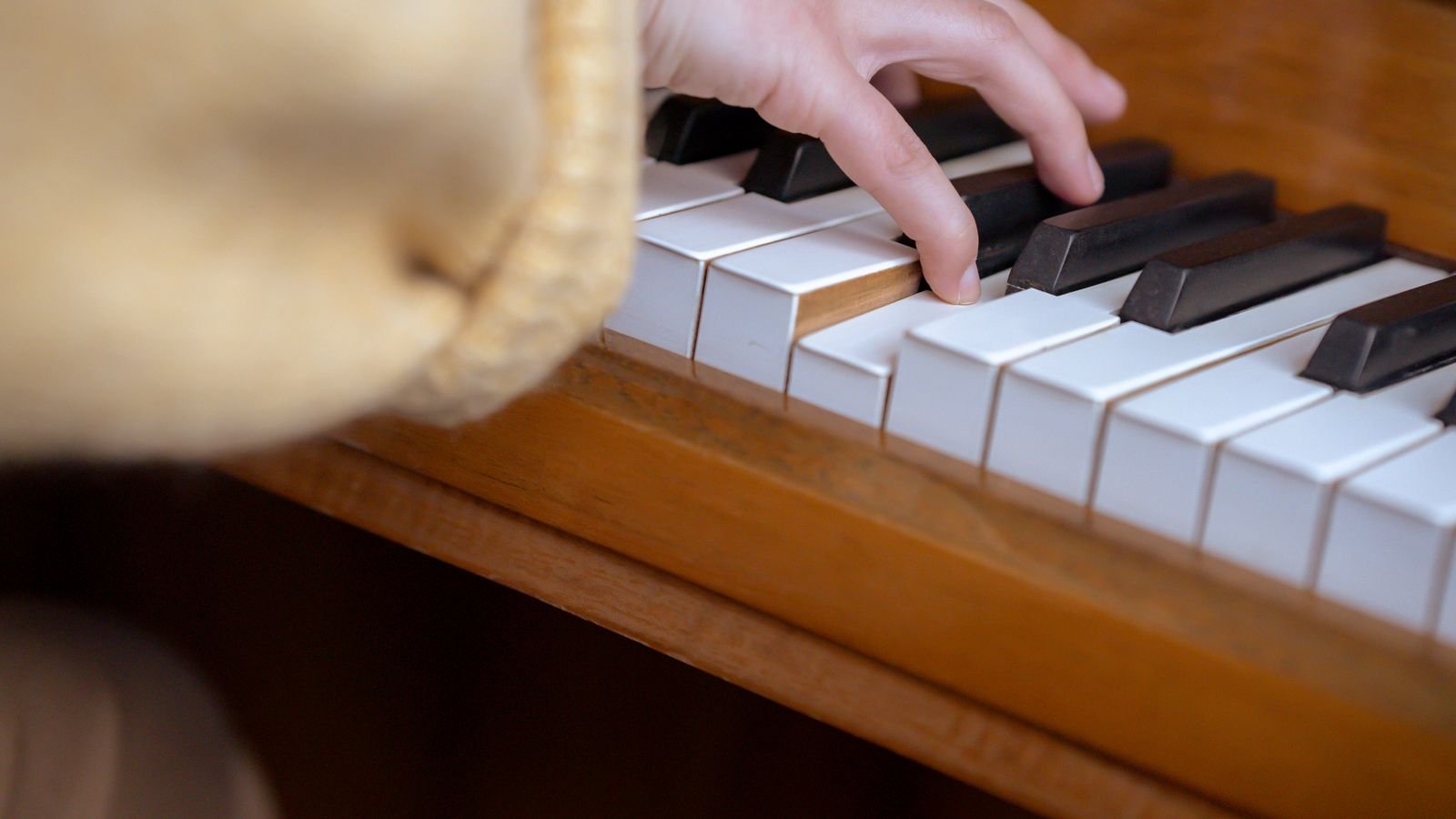
Choose the instrument that fits your child’s body and attention span now, not the one you hope they will play at fifteen. Almost every skill transfers later, so a first instrument is never wasted.
Ages 4 to 6. Piano, keyboard, violin and simple percussion. Piano wins for most beginners because the notes are laid out in a visible straight line, so a child can see the music as well as hear it, and nothing has to be tuned before they play.
Ages 6 to 9. Everything above, plus ukulele, recorder and drums. This is the widest window. Fine motor control is usually good enough for real technique, and reading skills are strong enough for written music.
Ages 9 and up. Guitar, woodwind such as flute or clarinet, brass, and formal singing. These need finger strength, lung capacity or a matured voice, and starting them too early is the most common reason a child concludes they are “not musical” when they simply were not big enough yet.
One caution. Drums and brass are loud, and volume is a real factor in an apartment. That is a practical constraint, not a musical one, and it is worth being honest about before the instrument arrives.
Simple things you can try at home this week
Run the clapping test tonight. Clap a four beat pattern, ask your child to copy it, then make it slightly harder. Two minutes tells you more than an hour of reading.
Try before you buy. Borrow, rent or use a free trial lesson before purchasing an instrument. The first instrument a child asks for is often not the one they stay with.
Practise daily and briefly. Ten minutes every day beats an hour on Sunday. Muscle memory is built by frequency, not by duration.
Put the instrument out, not away. An instrument in its case in a cupboard gets played once a week. One sitting open in the living room gets picked up in passing.
Praise the practice, not the talent. “You worked at that tricky bar” builds persistence. “You are so gifted” quietly teaches a child that struggling means they are not gifted after all.
Let them play music they actually like. A song from a film they love will get practised twenty times. A graded exercise will get practised twice.
Do not sit in judgement during practice. Be in the next room, within earshot, doing your own thing. Presence helps. Supervision does not.
A rhythm puzzle to try together before the first lesson
Most songs your child knows have 4 beats in every bar. A half note lasts 2 beats, a quarter note lasts 1 beat, and two eighth notes together last 1 beat. Your child claps one half note, then one quarter note, then two eighth notes. Is the bar full, or is a beat missing?
Tap a question to reveal the answer
Do not simply wait. The gap between “not ready” and “ready” closes much faster when it is filled with musical play, and the child who arrives at their first lesson already able to keep a beat is a year ahead of the one who arrives cold.
Sing in the car, badly and often. Clap rhythms while walking. Let them bang on pots and actually listen. Play a wide range of music at home, including instrumental pieces, and name what you hear together. None of this looks like lessons, and all of it builds the exact skills that make lessons work later.
If the missing sign is attention rather than musicality, that is worth addressing directly. Chess, puzzles and structured board games all build the same sit-still-and-think muscle, and children usually accept them as play rather than training.
After three months, judge by behaviour rather than by how good it sounds. Beginners sound rough for a long time and that tells you very little.
Look for these instead. Does your child ever pick up the instrument without being told? Can they now play something today that defeated them a month ago? Do they talk about the lesson afterwards without being asked? Two out of three is a good sign. Zero out of three after three months usually means the teacher, the instrument or the schedule is wrong, not the child.
The first teacher decides whether your child comes to see music as something they do or something they used to do. That is a bigger factor than which instrument you picked or exactly what age you started.
Group lessons are affordable but leave a beginner’s hand position uncorrected for weeks, and bad early technique is genuinely hard to undo. A live 1 on 1 lesson lets a teacher spot a collapsed wrist or a rushed rhythm in the first minute and fix it before it becomes habit. If you are still unsure whether your child is ready, a single trial class with a real teacher will answer the question faster than any checklist, including this one.
More for curious parents
MasterMindz offers live 1 on 1 online classes for children and has taught 750+ students across 11+ countries, including families in Singapore, Dubai, Australia, the United States and Romania. We teach music, chess, maths, coding, Rubik’s cube and languages, with one tutor and one child in every class. The first trial class is free and there is no commitment.