September 10, 2026
You can prepare a child properly for the PSLE without wrecking the year. The families who come through it well are almost never the ones who studied the most hours.


Three good options, three very different children. Here is how to choose without wasting a year finding out.

Most parents asking this question have already made the important decision. They have decided their child should learn something beyond school. What is left is the choice between chess, coding and maths, and that choice feels much heavier than it really is.
Here is the uncomfortable truth first. The subject that works is the one your child is still happily doing six months from now. Consistency beats the perfect choice made once. That said, these three are not interchangeable. They build different things, they suit different ages, and they ask for very different amounts of help from you. This guide covers what each one actually does, when to start it, and how to test your choice in two weeks instead of two terms.
For most children, chess is the easiest of the three to start first, usually between the ages of 5 and 8. It has the lowest entry barrier of the three. A child does not need to read fluently, type, or know any school syllabus to begin. The rules can be taught in one sitting, the feedback is instant, and progress is visible to a parent within a few weeks.
There are two clear exceptions. If your child is already 9 or older and is drawn to computers, games and building things, start with coding instead. And if your child’s school maths has started to wobble, or if they are visibly bored because the work is too easy, start with maths. Maths is the only one of the three that changes something your child is graded on every term.
Chess builds the habit of thinking before acting, which is what most parents are really asking for when they ask about focus. A child who has played seriously for six months has learned to stop, look at the whole board, imagine two or three consequences, and only then move. That is a genuine change in behaviour, and parents usually notice it at the homework desk before they notice it on the board.
It also teaches something harder to buy: losing well. A child will lose hundreds of games. Each loss has a visible cause, which makes it survivable rather than shameful, and over time the child stops collapsing when something goes wrong. Add pattern recognition, spatial thinking, and the ability to sit with a difficult problem for longer than five minutes, and the case is strong.
It is worth being honest about the research, because the claims online get wild. A widely cited meta-analysis of 24 studies on chess instruction found a modest overall benefit for schoolchildren, and the effect on mathematics was larger than the effect on reading. So chess is a good thinking-habits investment. It is not a magic upgrade to your child’s brain, and any provider who promises that is selling something.
Six things worth reading out at the dinner table tonight
Chess began in India around 1,400 years ago as a game called chaturanga, then travelled through Persia to Europe, picking up new rules along the way.
After only four moves each, a chess game can already have reached more than 288 billion different positions. Memorising your way through is not an option.
MIT built ScratchJr so that children aged 5 to 7 can program their own stories and games by snapping picture blocks together, long before they can type properly.
A chess game can end after just two moves each. It is called Fool’s Mate, and almost every child falls for it once. Almost none fall for it twice.
In a large study across six long-term data sets, the maths skills children had when they started school were the strongest single predictor of how they did later on.
The word comes from al-Khwarizmi, a mathematician working in the 9th century. Every app on your phone is named, in part, after him.
Coding builds one very specific and very valuable habit: taking a big messy idea and breaking it into small exact steps, then calmly fixing it when it does not work. Children call the second part “it’s broken again”. Programmers call it debugging, and it is quietly one of the best resilience lessons available, because the computer is never angry, never disappointed, and always tells you exactly where you went wrong.
The starting point for most children is block-based coding rather than typed code. MIT’s ScratchJr is designed for ages 5 to 7, and the full Scratch platform suits children from about 8 upwards. Typed languages like Python usually make sense from around 10 or 11, once reading speed and spelling accuracy are no longer the bottleneck.
The big advantage of coding is that it produces something. A game, a quiz, an animation of the family dog. Children show it to grandparents. That pride loop keeps them coming back in a way that few subjects manage. The catch is that coding needs more equipment, more reading and more patience with a screen than chess does, which is exactly why it tends to land better a year or two later.
Extra maths is the only one of the three that changes your child’s school report directly, and that makes it a different kind of decision. Chess and coding are enrichment. Maths support is usually either repair work or extension work, and it helps enormously to be clear which one you are buying.
The case for taking early maths seriously is unusually strong. A well-known study of school readiness and later achievement found that early maths skills predicted later academic success more consistently than early reading or behaviour did. Small gaps in maths do not stay small. A child who never fully understood fractions in Year 4 meets them again in ratios, then in algebra, then in physics.
One warning. If your child already dreads maths, adding more maths on a Saturday morning will make it worse, not better. In that situation the first job is confidence, not content, and a patient 1 on 1 maths tutor who rebuilds the last topic the child genuinely understood will do more in a month than a worksheet pack will do in a year.
Age is the most reliable guide you have, because it decides what a child is physically and mentally ready to enjoy. Here is the pattern we see most often across families.
Chess piece movements, simple captures and lots of playing. Sessions of 25 to 30 minutes, no longer. Coding at this age means picture blocks and cause and effect, not projects. Maths at this age is best done through counting games, coins and cooking rather than formal classes.
This is the sweet spot for starting almost anything. Chess tactics start to click, block-based coding becomes genuinely creative, and children can concentrate for a full 45 minutes. Add maths support only if there is a real reason to.
Chess gets competitive and tournaments become interesting. Coding can move towards typed languages. School maths gets abstract fast, so this is the age where a quiet gap turns into a loud one, and where most families add maths support.
Depth beats variety now. One subject taken seriously is worth more than three taken casually. Maths becomes exam-linked, coding can become portfolio work, and chess often survives as the thing that clears their head after studying.
Your child’s temperament is a better guide than any ranking of subjects. Spend a week watching rather than asking, because children answer “which would you like?” based on whichever word sounded more fun that morning.
A child who loves winning, who wants a rematch immediately, who plays cards and board games with the family: chess. A child who takes things apart, builds elaborate structures, invents rules for their own games, or wants to make videos: coding. A child who asks why numbers behave the way they do, or who has gone quiet and defensive about school maths: maths. A shy child who freezes in group classes usually blooms in a 1 on 1 chess class, because there is nobody watching them get it wrong.
One more signal that parents underrate. Notice how your child handles being stuck. A child who gets stuck and keeps poking at it will do well with coding. A child who gets stuck and wants to talk it through will do better with a live tutor in any subject, which is worth more than the subject choice itself.
The most common mistake is starting all three at once. It feels efficient and it is the fastest route to a child who resents all three. The week fills up, nothing goes deep enough to become satisfying, and learning gets filed in the child’s head under “pressure”. One subject, one fixed slot, three months. That is the whole formula.
The second mistake is choosing the subject the parent wishes they had learned. It is an understandable instinct and it rarely survives contact with a real child. The third is quitting during the dip. Almost every child hits a flat patch somewhere around week five to seven, when the easy beginner gains are done and the next level has not arrived yet. That dip is not a sign you chose wrong. It is the moment the real learning starts, and a good tutor will have seen it a hundred times.
You do not have to guess, and you do not have to commit to anything to find out. Two weeks of small, low-pressure experiments will tell you more than any article can, including this one.
In week one, put a chessboard on the table and play badly on purpose for fifteen minutes a day. In week two, open a free block-coding app and let your child make anything they want for twenty minutes a day. Do not teach during either week. Just observe. At the end, ask yourself one question: which one did they go back to when nobody told them to? That is your answer, and it is far more reliable than what they said they wanted.
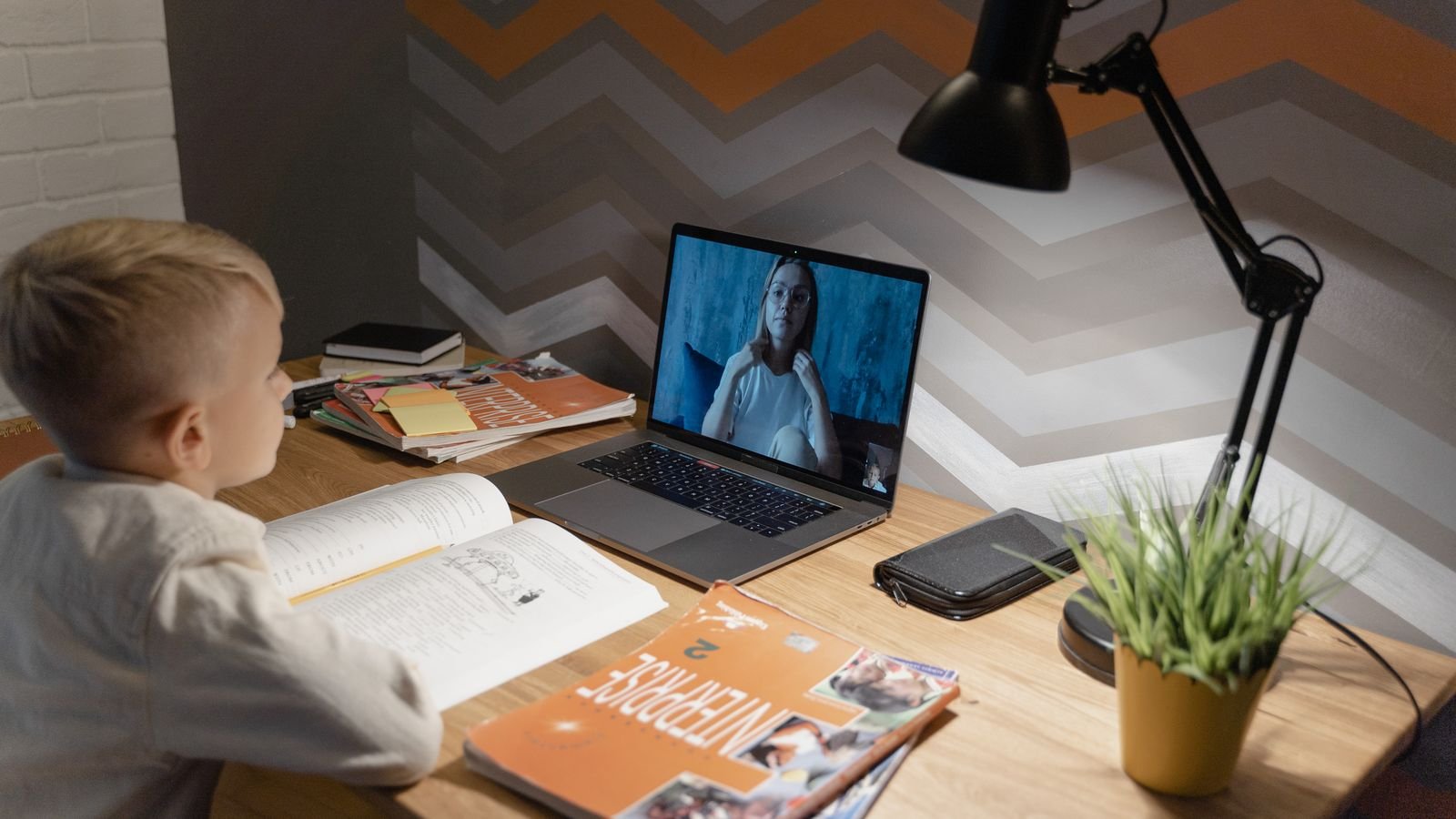
Then book a single free trial class in the winning subject. A trial with a real tutor tells you the last thing you cannot see at home, which is how your child responds to being taught by someone who is not you.
Simple things you can try at home this week
Run the two week taste test. One week of chess, one week of block coding, fifteen to twenty minutes a day. No teaching, no praise for effort, just availability.
Watch, do not ask. Children answer questions about interests based on mood. What they return to on their own is the real data.
Cap the first sessions at 25 minutes. Stopping while your child still wants more is the single best way to guarantee there is a next session.
Play badly on purpose. Let your child beat you at chess honestly, then ask them how they did it. Explaining a win teaches more than winning does.
Turn the morning routine into an algorithm. Ask your child to write the exact steps of making toast, then follow the instructions literally. The laughing is the lesson.
Do maths out loud in the shop. Two items at 4.50 each, is 10 enough? Real money, real stakes, no worksheet. This builds number sense faster than practice papers.
Protect one fixed slot in the week. Same day, same time, for three months. Consistency, not intensity, is what turns an activity into a skill.
A little bit of coding and a little bit of maths, hidden in one question
A robot stands on the floor facing north. You give it one instruction: repeat 4 times [ move forward 3 steps, then turn right ]. Where does the robot finish, and which way is it facing?
Tap a question to reveal the answer
If you want one sentence to act on: start with chess between 5 and 8, add coding from 8 upwards, and bring in maths whenever school maths needs either repairing or stretching. If your child does not fit that pattern, follow the child rather than the pattern. The goal was never to pick the objectively best subject. It was to find the one that makes your child feel capable, because a child who feels capable will keep going, and everything else follows from that.
The fastest way to know is to try one class and watch. A trial costs nothing except half an hour of a Saturday, and it answers the question far better than another evening of research.
MasterMindz offers live 1 on 1 online classes for children and has taught 750+ students across 11+ countries in chess, maths, coding, Rubik’s cube, music and languages. Every family starts with a free trial class, with no commitment, so you can see how your child responds before you decide anything.