September 28, 2026
The Singapore maths bar model is a simple drawing method that helps children see what is known, what is missing and which operation to use in a word problem.


What the research really shows, where online wins, where it does not, and how to judge it for your own child.
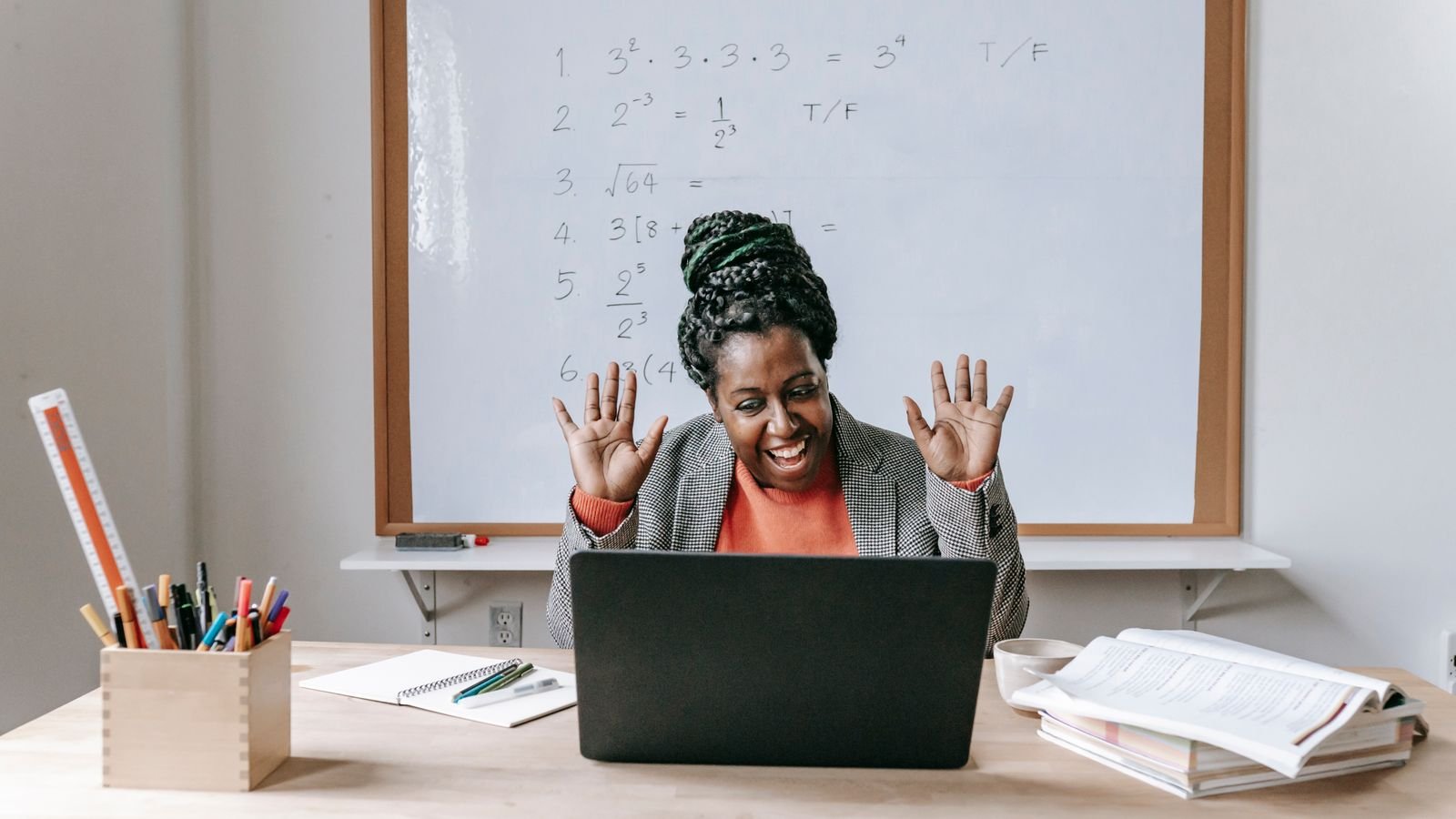
Almost every parent who asks us about online maths tuition is really asking one thing. Will my child actually learn, or will they just stare at a screen? It is a fair question, and it deserves a straight answer rather than a sales pitch.
So here is the honest version, including the parts that do not flatter online learning. We teach maths online every day to children across Singapore, the United States, Dubai and Australia, and we have watched it work brilliantly for some children and poorly for others. The difference is almost never the internet connection.
Yes, online maths tuition can be just as effective as in-person tuition, provided it is live, one to one, and delivered by a trained tutor who adapts to your child. What does not work is a recorded video library, a gamified app with no human on the other side, or a large online group where your child can quietly disappear. The research supports live personal teaching. It does not support screens on their own.
Put differently, the question “online or in person” is the wrong question. The question that predicts your child’s progress is “how much of this hour is spent teaching my specific child, and how good is the person doing it”.
Individual tuition has one of the strongest evidence bases in education, and online delivery of it holds up well in controlled trials. The Education Endowment Foundation, which reviews education research for schools, identified 123 studies on one to one tuition and found it produces roughly five additional months of progress on average, with primary school children benefitting even more than secondary students.
Online delivery specifically has been tested too. A randomised controlled trial of a fully online maths tutoring programme in Spain found meaningful improvements in standardised test scores and end of year maths grades, along with a reduced chance of repeating the school year. Children in that study were taught remotely by qualified maths teachers, and the gains looked similar to what in-person one to one programmes achieve.
Reviews of virtual tutoring generally reach the same conclusion with one important caveat. Well designed online programmes with trained tutors and a clear structure perform close to in-person models. Loosely run online programmes do not. The variation between good and bad online tuition is much larger than the gap between online and in person.
Six things about tuition and maths learning that surprise most parents
The EEF’s review of one to one tuition drew on 123 separate studies before concluding it is highly effective for children who are struggling.
Research suggests around 30 minutes, several times a week, produces better results than one long weekly marathon session.
Studies in primary schools show larger gains from one to one tuition than studies in secondary schools.
Maths anxiety occupies working memory with worried thoughts, leaving less mental space for the actual sum.
Across tuition research, the smaller the group, the stronger the effect. One child is the smallest group there is.
In trials of virtual tutoring, programme design and tutor training predicted results far more than whether the session was remote.
A good maths tutor does one thing a screen cannot do by itself: they notice. They notice that your child hesitated for two seconds before writing the answer, which means the method is not secure yet. They notice that your child can do the sum but freezes on the word problem, which is a reading issue dressed up as a maths issue. They notice that today your child is tired and this is not the day to introduce long division.
None of that noticing requires being in the same room. It requires being on a call with one child and paying complete attention. A tutor sitting beside your child in your living room while checking their phone is worse than a focused tutor on a video call in another country. The presence that matters is attention, not proximity.
In-person tuition has three genuine advantages, and it would be dishonest to pretend otherwise. First, physical materials. For a five year old learning to count, blocks, counters and beads that a tutor can push around the table are powerful, and they are harder to replicate remotely. Second, very young children with short attention spans sometimes settle better with a human physically present. Third, a tutor in the room can see your child’s whole page at once, including the crossings out, which tells a story a webcam sometimes misses.
Good online tutors work around all three. They ask the child to hold their notebook up to the camera. They use a shared digital whiteboard both people can write on. They ask parents of very young children to keep counters on the desk. But if your child is four and cannot sit still for fifteen minutes, an in-person option is worth considering first.
Online tuition wins decisively on consistency, choice of tutor, and the willingness of shy children to speak up. Consistency matters enormously in maths because skills stack. A child who misses lessons because of traffic, rain, illness in the family or a school event loses the thread, and maths punishes lost threads more than most subjects. Online lessons survive weather, travel and busy weeks.
Choice of tutor is the second advantage, and it is underrated. If you live in a suburb, you can hire tutors who live near your suburb. Online, you can be matched with a tutor who specialises in exactly your child’s difficulty, whatever city they happen to live in. For a child who has already had one tutor who did not click, this matters a great deal.
The third advantage surprises parents. Many quiet children speak up more online than in a room. There is less social pressure in a video call, no one else waiting for them to finish, and a mistake feels smaller. We have had parents tell us their child asked more questions in the first online lesson than in a term of classroom maths.
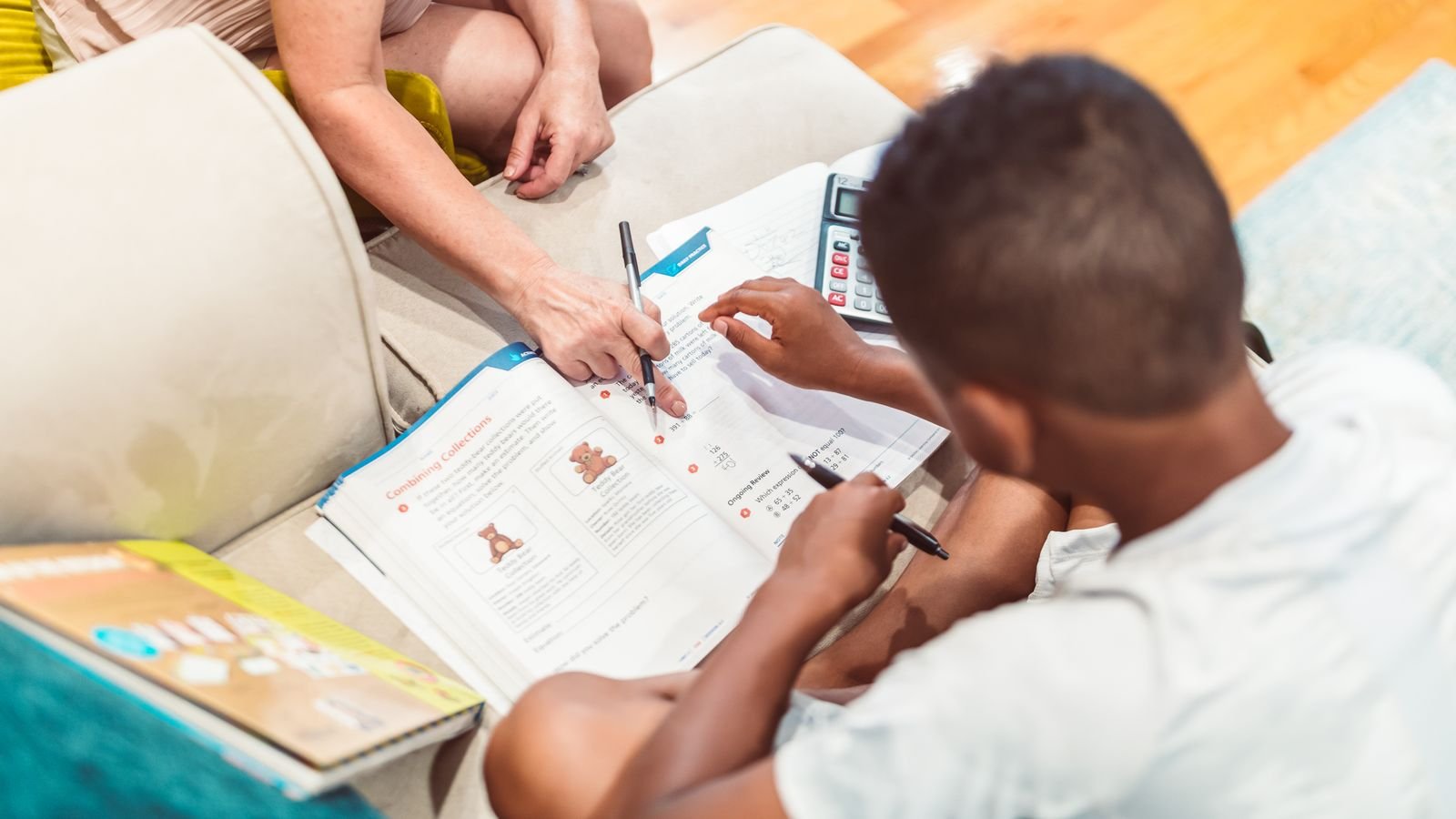
What good online maths looks like changes sharply with age, and matching the format to your child’s stage is most of the battle.
Keep sessions to 25 or 30 minutes and expect the tutor to use lots of visuals, counting objects and games. A parent nearby for the first few lessons helps with logistics, not maths. At this age the goal is number confidence and enjoying being right, not curriculum coverage.
This is the sweet spot for one to one online maths. Children can manage 45 minutes, they can articulate what confuses them, and the topics that trip them up are specific and fixable: fractions, place value, word problems, times tables fluency. Progress here is often quick and visible.
Older students benefit from online tuition mainly through exam technique, filling gaps from earlier years, and building independence. Sessions can run 45 to 60 minutes. At this age the child’s own buy in matters, so involve them in choosing the tutor rather than announcing the decision.
Before paying for any online maths tuition, ask these seven questions, because the answers separate serious providers from busy ones. Is my child taught alone, or grouped with others? Who exactly is the tutor and what is their experience teaching this age? Will my child have the same tutor every week? What happens in the first lesson to find out what my child actually needs? How will you tell me what progress looks like? What happens if my child and the tutor do not click? And can we try a real lesson before committing to anything?
That last question is the most revealing. A provider confident in their teaching will happily give you a free trial class. A provider who wants a term’s fees before you meet the tutor is telling you something.
The most common mistake is treating the lesson as childcare. Online tuition works when the household treats it as a real lesson: a quiet spot, a charged device, a notebook and pencil ready, siblings elsewhere, and the television off. The second mistake is sitting in and correcting your child mid lesson, which stops the tutor from seeing the errors they need to see. The third is quitting after two lessons because the child was shy. Most children need three or four sessions before they relax with a new tutor.
The fourth mistake is choosing on price alone. A cheap group class where your child says nothing for forty minutes is expensive, because it costs you forty minutes and buys nothing.
Simple things you can try at home this week
Build a lesson corner. Same desk, same chair, same time each week. Children settle into routines faster than they settle into subjects, and the routine does half the work.
Keep paper on the desk. Maths lives on paper even when the lesson lives on a screen. A physical notebook and pencil next to the laptop makes a real difference to how much sticks.
Ask one question after class. Not “was it good” but “what was the trickiest thing today”. You will learn more from that one question than from any progress report.
Do five minutes, four times a week. Short and frequent beats long and rare. Times tables in the car, mental sums while cooking, anything that keeps the numbers warm between lessons.
Never say “I was bad at maths too”. It is meant kindly and it lands as permission to give up. Say “this bit is hard, let’s find out how it works” instead.
Praise the method, not the answer. “I like how you checked that” builds a habit. “You are so clever” builds a fear of being wrong.
Test the tech on a calm day. Camera, microphone and headphones checked in advance means the first lesson is about maths, not about whether anyone can hear.
Read this out to your child and see if they catch it
A student was asked to work out one quarter of 48. Here is what they wrote:
Something has gone wrong. What is it, and what is the right answer?
Tap a question to reveal the answer
You can settle this question for your own child faster than you can research it. Book one free trial lesson and watch for three things. Does the tutor find out what your child already knows before teaching anything? Does your child talk during the lesson, or only listen? And at the end, does your child seem slightly pleased with themselves?
If all three are yes, online works for your child, and the debate is over. If any is no, you have lost an hour and learned something useful. Either way you will know, and knowing beats reading another article, including this one.
MasterMindz teaches children worldwide through live, personal 1 on 1 online classes in chess, maths, coding and more, with experienced tutors and a fun, individual approach. MasterMindz has taught 750+ students across 11+ countries, and every family starts with a free trial class.