October 13, 2026
Chess makes kids better students mainly through the habits it trains: pausing before acting, checking for problems, planning ahead, reviewing mistakes and staying focused to the end. Those...


A game with no syllabus and no marks quietly trains the two things every exam demands.
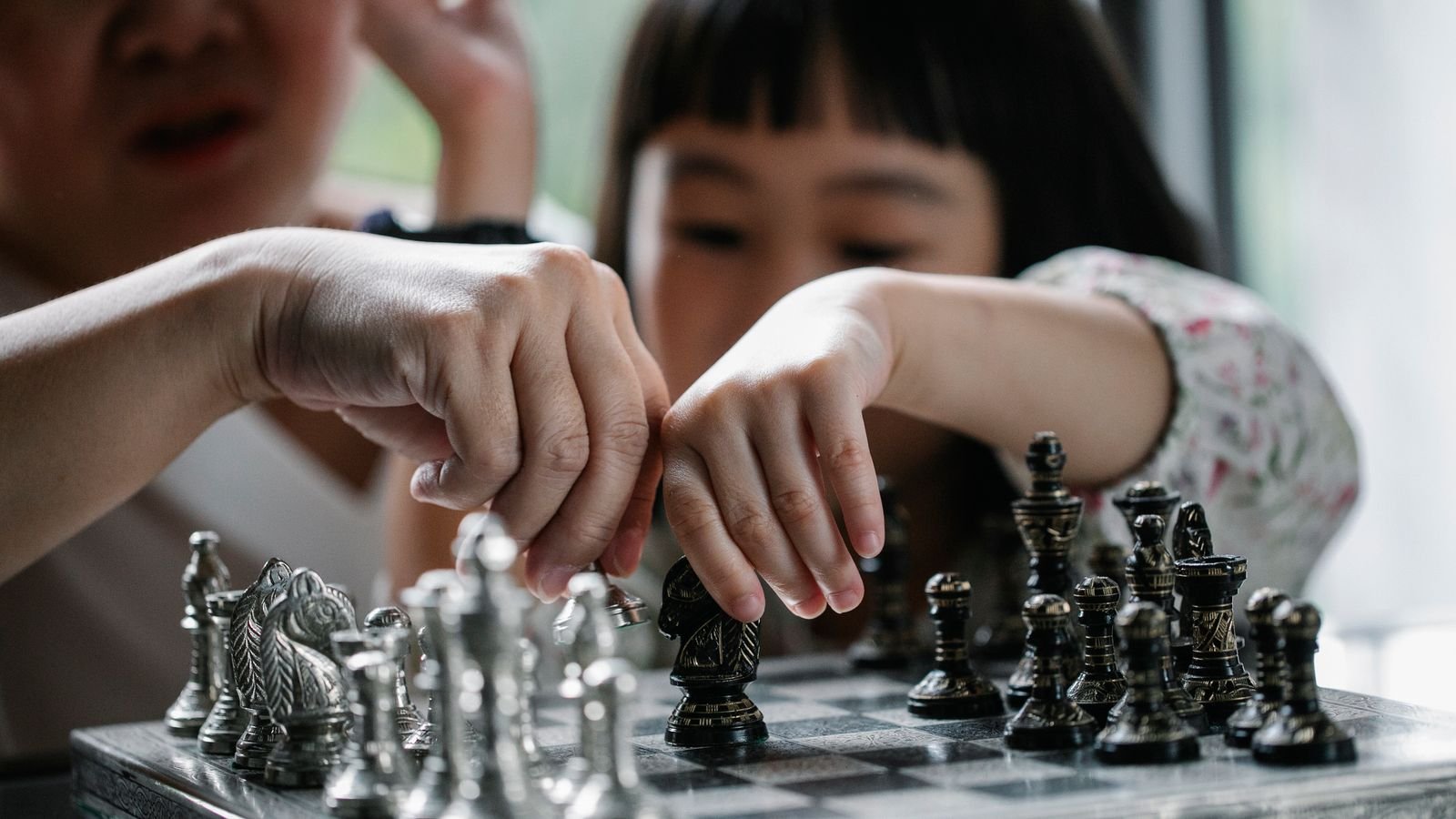
Most parents do not sign their child up for chess hoping for better exam results. They sign up because their child cannot sit still, or because they can, but only for a screen. Then, somewhere around month three, something small changes. The child finishes a page without getting up. They lose a game and do not cry. A parent notices and asks the obvious question: is the chess doing this?
The honest answer is that chess is not a marks machine, and any tutor who promises that is selling something. What chess does is quieter and, in the long run, more useful. It gives a child regular, willing practice at two things schools assume children already know how to do: hold attention on one hard problem, and keep going after getting something wrong. Exams demand both, and almost nothing else in a child’s week trains either.
Yes, chess improves a child’s ability to concentrate, though the effect is gradual and it does not automatically convert into better grades. A study of primary school children aged 6 to 11 who took weekly chess classes for six months looked specifically at how chess study affects attention span and found improvement in focused attention. That fits what coaches see. A child who cannot sit through ten minutes of homework will happily sit through a forty minute game, because the game keeps asking them a question.
It is worth being straight about the limits. When researchers pooled the studies and ran a meta-analysis on whether chess benefits transfer to academic and cognitive skills, they found the effects were real but modest, and warned that some of what looks like improvement may come from the excitement of doing something new. So the sensible way to read all of this: chess reliably builds the habit of concentrating, and concentration is one of several things that shows up in exam performance. It is a strong contributor, not a guarantee.
Test anxiety in children usually shows up in the body before it shows up in words. A child who says nothing about the exam may still have a stomach ache on Monday morning, a headache the night before, or a sudden dislike of school that appears three days ahead of a test and disappears the moment it is over. Clinicians describing the signs of test anxiety in children point to exactly this pattern: physical symptoms, changes in behaviour, and a mind that runs straight to the worst outcome.
The second signature is what happens in the exam hall itself. The child has studied. They sit down. They hit one question they cannot do, and the whole paper collapses. They spend eleven minutes on question four, panic, rush, and leave two pages blank that they could have answered easily. That is not a knowledge gap. That is a recovery gap, and it is the part most tuition never touches.
Both chess and exams require a child to stay inside one problem long enough to actually solve it, without switching away when it gets uncomfortable. This sounds trivial. It is the single hardest thing for a child raised on short video, where discomfort is always one swipe away from ending.
A chess position does not let them swipe. The child has to look at it, feel the confusion, look again, and find the idea. That loop, confusion to attention to idea, is the same loop a maths question demands. Repeat it a few hundred times across a year and the loop stops feeling like an emergency. Children who have played seriously often describe an exam question they cannot do as “interesting” rather than “scary”, and that word change is most of the battle.
There is also the matter of time. A child who plays slow games gets used to sitting in one chair, in silence, for thirty to sixty minutes, on purpose. Very few other childhood activities ask for that. When exam day arrives, the physical experience is familiar, and familiarity takes a large slice off the fear.
Six things about focus, chess and exam nerves that surprise most parents
The attention study that followed 6 to 11 year olds used chess classes just once a week, over six months. Consistency mattered more than intensity.
When dozens of chess studies were pooled together, the benefits held up but were smaller than the headlines suggest. Honest coaches say so.
Surveys of school students commonly put serious test anxiety at around 16 percent. In a class of 30, that is five children.
Stomach aches, headaches and tiredness often appear days before a child ever says the word “exam” out loud.
In chess, once your hand leaves the piece, the move is final. Children learn to check before committing, because nobody will let them undo it.
A chess tournament hall is one of the only places on earth where children sit in total silence for an hour because they want to.
Losing a chess game is the safest possible rehearsal for getting a question wrong in an exam. The stakes are nothing, the feeling is identical, and it happens again next week. A child who plays regularly will lose hundreds of games before they turn twelve. Somewhere in those hundreds, the loss stops being an identity statement and becomes information.
This is the part that speaks directly to test anxiety. Anxious children are usually not short of ability. They are short of evidence that a mistake is survivable. Every game your child loses and then replays, spots the error, and plays again next week, is one more piece of that evidence. Advice from child mental health specialists on helping children beat test anxiety keeps returning to the same idea: preparation and rehearsal build the confidence that calms the body. Chess is rehearsal, dressed up as a game.
One caution. This only works if the adults in the room treat losses calmly. If a lost game produces a lecture, the child learns the opposite lesson, and you have simply moved the anxiety from the exam hall to the chessboard.
Good chess coaching installs one specific habit that transfers straight into exams: before you commit, check what you have missed. Every trained player, before touching a piece, asks what the opponent is threatening. It takes four seconds. It prevents most disasters.
Now watch a child mark their own maths paper. The lost marks are almost never advanced concepts. They are a dropped minus sign, a misread word in the question, an answer given in the wrong unit. The knowledge was there. The check was not. A child who has spent a year being asked “what is your opponent threatening?” is a child who can be taught to ask “what does the question actually want?” because the mental move is the same one.
This is why we teach it as a spoken ritual in class rather than as advice. Advice is forgotten. A ritual repeated forty times per game becomes automatic, and automatic is what survives exam nerves.
What chess gives a child changes with age, so expectations should change too. Here is the realistic version.
Ages 5 to 7. The goal is simply sitting and looking. Expect ten to fifteen minutes of real attention, then a wobble. Wins and losses barely register yet, which makes this the easiest age to build a calm attitude to losing. Focus gains show up as being able to finish a task, not as speed.
Ages 8 to 10. This is the sweet spot. Children can plan two or three moves ahead, they start to feel genuine frustration, and they can be taught what to do with it. Most of the exam-relevant benefit, sustained attention and mistake recovery, is built here. School pressure is usually still low enough that chess stays fun.
Ages 11 to 14. Time gets scarce and exams get real. Chess now functions as a controlled break that is not a screen scroll, plus a place where the child practises composure under pressure. Many families cut back to one session a week at this stage, and that is a perfectly good decision. Cutting to zero during exam months is usually a worse one, because you remove the thing that was steadying them.
The most common mistake is turning chess into another subject with expectations attached. The moment a child hears “we put you in chess so your concentration improves for exams”, the game stops being a refuge and becomes one more place they can disappoint you. The benefit depends on the child playing willingly.
Three more worth avoiding. First, only playing fast online blitz. Three minute games train pattern speed, not sustained focus, and they can leave a child more wired than before. Second, scheduling chess only when there are no exams, which teaches the child that calm practice is optional and panic is normal. Third, letting the child win every game. Children know. A win that costs the adult nothing teaches nothing, and it quietly removes the exact experience, surviving a loss, that you wanted in the first place.
Seven things you can try at home this week
Play one slow game, not six fast ones. Set a 15 minute clock each and play a single full game. One long game does more for focus than an hour of three minute blitz.
Install the four second question. Before every move, your child says out loud: “what is my opponent threatening?” Do it for two weeks and it becomes automatic.
Do a five minute puzzle before homework, not after. It works like a warm-up. The brain arrives at the homework already in problem-solving mode instead of arriving tired.
Name the feeling, not the mistake. After a loss, try “that felt annoying, didn’t it?” before any analysis. Children who feel understood will look at the error. Children who feel judged will not.
Keep chess and report cards in separate rooms. Never use chess as a reward or a punishment tied to marks. The moment you link them, you lose the benefit.
Build a three step pre-game ritual. Water, deep breath, hands on the table. Use the identical ritual on exam morning, so the body recognises the signal and settles.
Lose properly, on purpose. Let your child watch you lose a game and shrug. Children copy how the adults around them handle defeat far more than they follow instructions about it.
Read this one aloud to your child. The answer is hidden until you tap.
Four moves have been played. White: pawn to e4, bishop to c4, queen to h5. Black: pawn to e5, bishop to c5, and now knight to f6. Black looks developed and comfortable. Something has gone badly wrong. What is it?
Tap a question to reveal the answer
Most parents notice the first shift somewhere between week six and month three, and it rarely looks like chess. It looks like a child finishing a worksheet without getting up. It looks like a losing game ending in a shrug instead of tears. It looks like your child sitting quietly for forty minutes and then asking to play one more.
None of that will appear on a report card in the first term, and it should not be expected to. What you are building is the underlying machinery: the ability to stay with a hard problem, and the confidence that a mistake is not the end. Exams eventually reward both. If your child is bright but rattles easily on paper, that machinery is usually the missing piece, and it is far easier to build over a quiet year of chess than in a panicked fortnight of revision.
More for curious parents
MasterMindz offers live 1 on 1 online classes for children and has taught 750+ students across 11+ countries, in chess, maths, coding, Rubik’s cube, music and languages. Every class is individual, so the coach works on exactly what your child needs, including focus, patience and composure under pressure.