October 13, 2026
Chess makes kids better students mainly through the habits it trains: pausing before acting, checking for problems, planning ahead, reviewing mistakes and staying focused to the end. Those...


An honest look at what the research really found, and what it did not
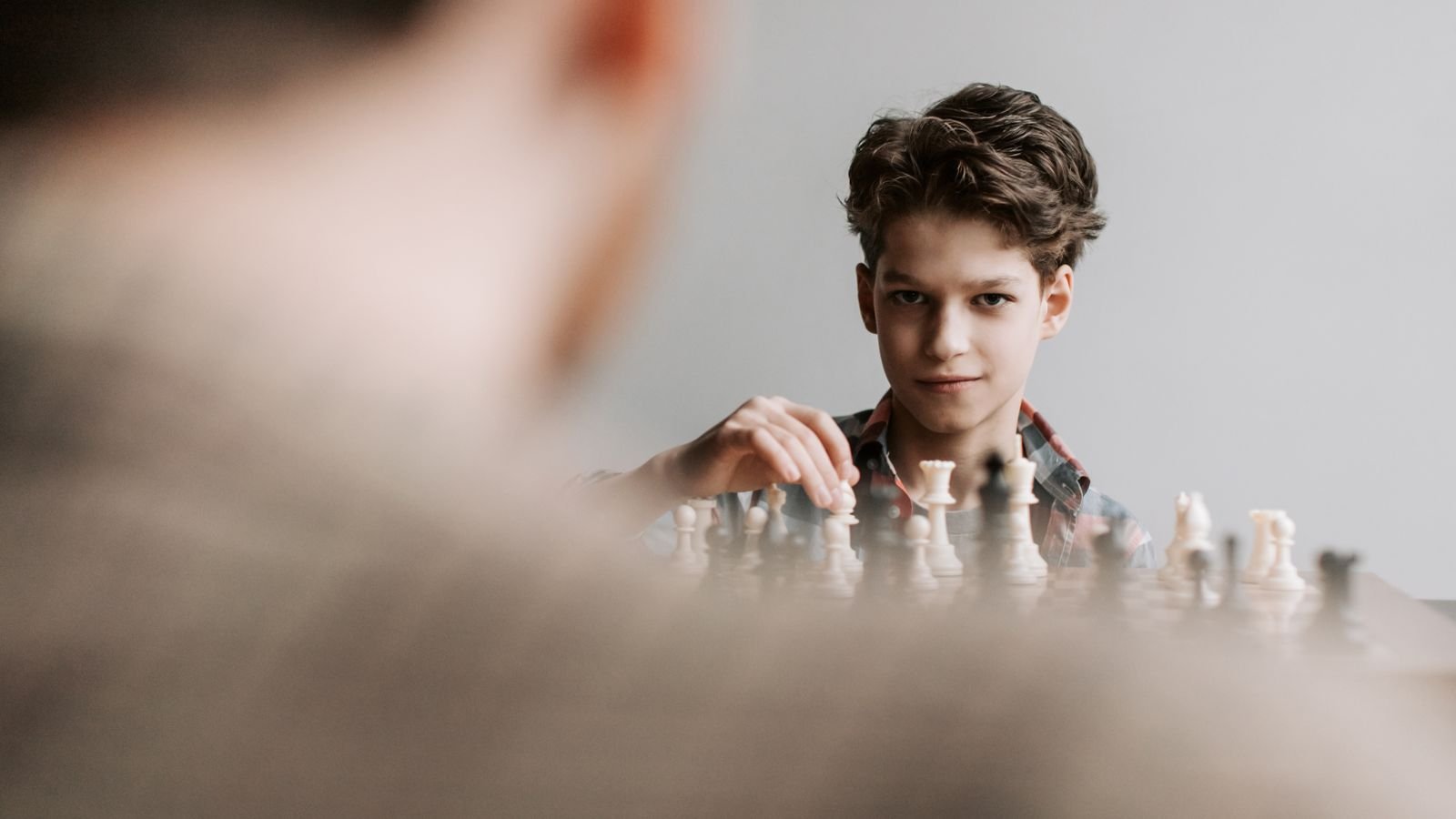
Every parent who has watched a child sit still for forty minutes over a chessboard has had the same thought. If they can focus like that on a game, why not on their schoolwork? It is a fair question, and it has been studied properly for over two decades. The answer is more interesting than either the chess enthusiasts or the sceptics usually admit.
This article walks through what the evidence really says, where the effect is strongest, how many hours it takes, and what chess honestly cannot fix. No inflated claims. Just what a parent needs to decide whether it is worth the time.
Yes, chess instruction does appear to improve school performance, but the effect is real and moderate rather than dramatic. Children who are taught chess tend to do somewhat better in maths and on general reasoning tasks than children who are not. The gain is meaningful, roughly comparable to many other good school interventions, but it will not turn a struggling student into a top of the class student by itself.
The honest framing is this. Chess is one of the more enjoyable ways to build the thinking habits that schools reward. It is not magic, and any programme that promises a jump in grades from playing a board game is overselling. What chess reliably does is give a child regular, structured practice in slowing down and thinking before acting, which is a habit most classrooms never explicitly teach.
The most thorough answer comes from a 2016 meta-analysis by researchers at the University of Liverpool, which pooled 24 separate studies of chess instruction in schools covering 2,788 children who learned chess and 2,433 who did not. Across all of them, chess instruction produced a moderate overall effect on academic and cognitive skills, with maths showing a stronger effect than reading.
Those numbers matter, but so does the caveat the same researchers raised. In a follow up note published in Frontiers in Psychology, they pointed out that almost none of the studies compared chess against an equally novel and exciting alternative activity. Without that comparison, some of the improvement may come from the simple fact that children enjoy doing something new and being paid attention to, rather than from chess specifically.
So the fair summary is a positive effect with an asterisk. Chess helps. Part of why it helps may be that it is engaging, taught by an adult who is paying close attention, and requires sustained thinking. Those ingredients are worth having whatever you call the activity, and chess happens to package them in a form children willingly come back to.
Maths improves most because chess and maths ask the brain to do many of the same things. A chessboard is a coordinate grid. Ranks and files are rows and columns. Diagonals, patterns, symmetry, counting material, calculating a sequence three moves deep and holding it in your head: a child doing this is doing mathematical thinking without noticing.
There is also the problem solving structure. In maths, a child has to recognise what kind of problem they are looking at before choosing a method. Chess trains exactly that recognition. Is this position about attacking the king, winning material, or improving a weak piece? Getting good at classifying the situation before acting is one of the transferable skills researchers keep pointing to, and it is precisely what separates children who can do textbook sums from children who can handle an unfamiliar word problem.
Roughly 25 to 30 hours of actual chess teaching appears to be the threshold where measurable benefits begin, which works out to about one lesson a week across a school year. This came out clearly in the research: the size of the effect grew with the amount of training, which is a strong sign that something is genuinely being learned rather than simply enjoyed.
This is the most practical finding in the whole body of evidence, and it is the one most parents miss. A weekend of chess at a holiday camp will delight a child and change nothing academically. A steady weekly lesson for a year is a completely different proposition. If you are deciding whether to start, the useful question is not “will chess help?” but “can we keep this going for a year?”
Six things about chess and the growing brain worth telling your child
Researchers found that benefits only start showing after roughly 25 to 30 hours of teaching. Consistency beats intensity every time.
Across the studies, chess helped maths scores more than reading scores. The overlap in skills is simply larger.
Chess began in India around the 6th century as chaturanga, then travelled through Persia and into Europe. Your child is playing a 1,500 year old game.
The number of possible chess games is vastly larger than the number of atoms in the observable universe. No two of your child’s games will ever repeat.
The fastest possible checkmate takes just two moves. It is called Fool’s Mate, and every child should lose to it exactly once.
Chess notation means a game played in 1858 can be replayed move for move today. Children learning notation are learning to record and review their own thinking.
Chess will not raise your child’s intelligence, fix a learning difficulty, or replace subject teaching. Those claims turn up in marketing constantly and the research does not support them. A child who is struggling with reading needs reading support. A child who has fallen behind in maths needs maths teaching, and chess alongside it at best.
Nor does simply playing chess do much. A child who plays casually online against strangers is mostly practising fast pattern matching, which is fun but shallow. The studies that found benefits involved instruction, where an adult explained ideas, asked the child to justify moves, and connected the reasoning to something bigger. That distinction between playing and being taught is where most of the effect lives.
Long before grades move, most parents notice a change in how their child handles being stuck. That is the first and most useful shift. In chess there is no option to give up halfway through a position, so children learn to sit with a hard problem for another thirty seconds instead of announcing that they cannot do it.
The other early changes tend to be these. Children start checking their work, because in chess an unchecked move costs a piece immediately. They get better at losing, because everyone loses constantly at chess and the game restarts in ten seconds. They begin thinking one step ahead in ordinary situations. And many become noticeably calmer under time pressure, because they have practised making decisions with a clock running.
None of these show up on a report card in the first term. All of them are the foundation that report card improvements eventually sit on.
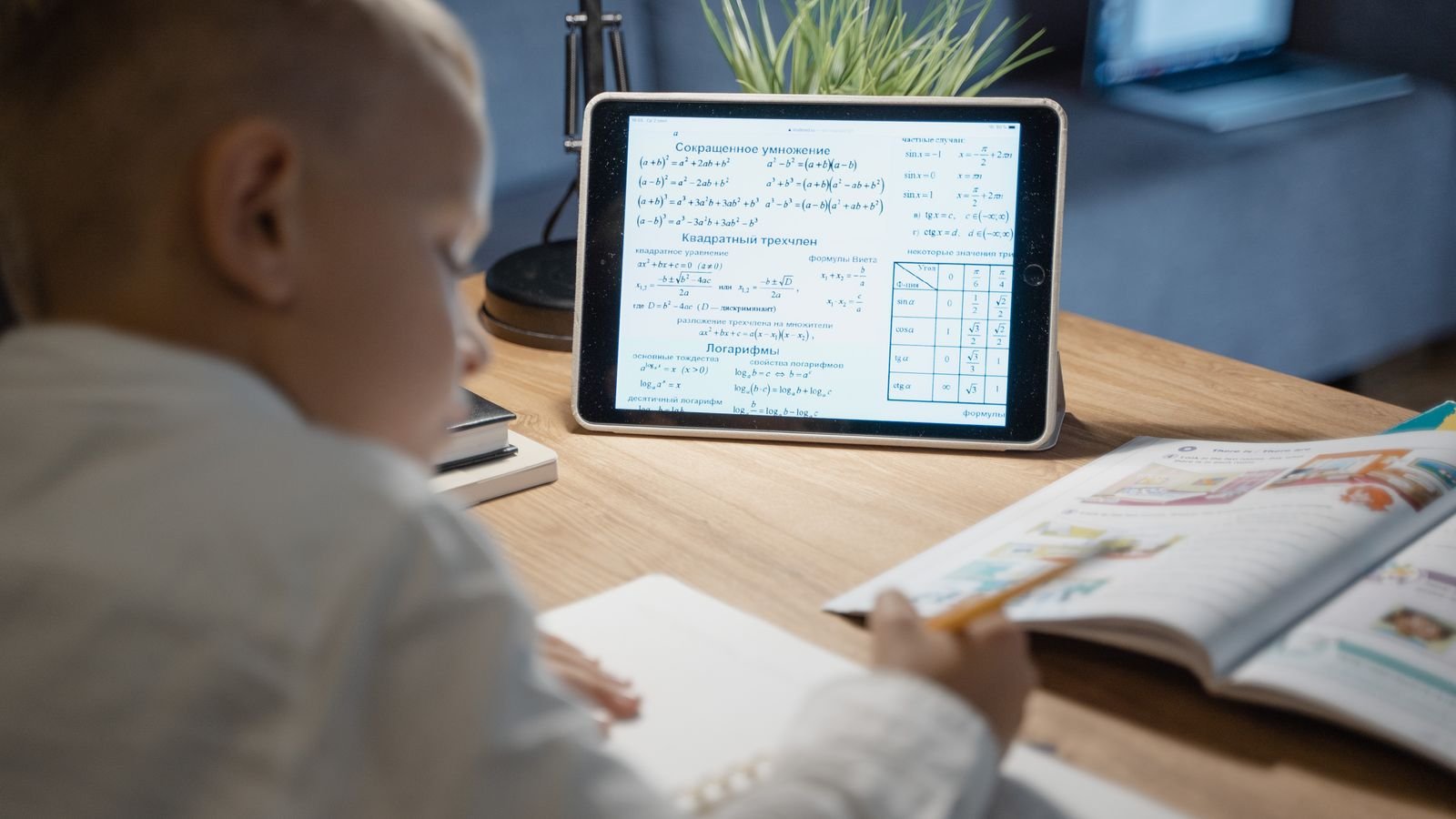
What chess gives a child changes substantially with age, so the right expectation at 6 is very different from the right expectation at 13. Here is a realistic picture at each stage.
Ages 5 to 7. This is about board familiarity and sitting still. Children learn how pieces move, basic captures, and simple checkmates. The academic benefit here is almost entirely about attention span and following rules carefully. Keep lessons short and expect the occasional chaotic game.
Ages 8 to 10. The sweet spot. Children can now hold two or three moves in their head, which is where the maths overlap really begins. Tactics, patterns and simple planning all become teachable. If you are going to see a transfer to schoolwork, this is usually the window where it shows.
Ages 11 to 14. Chess becomes genuinely strategic. Children can evaluate a position, weigh trade offs, and plan several moves ahead. The skill that transfers most at this age is self review: looking back at a lost game and identifying where the thinking went wrong, which is exactly the habit that improves exam performance.
The single most effective thing you can do is make the link between chess and schoolwork explicit, out loud. Researchers have suggested that transfer between two skills becomes far more likely when the learner is consciously aware of the connection. A child who has been told “that is the same checking habit you need in your maths test” is much more likely to carry it across than one who has not.
The second thing is to prioritise explanation over results. Ask your child why they made a move rather than whether they won. A child who can articulate their reasoning is building the exact metacognitive habit that shows up in academic performance. A child who only knows the outcome is not.
The third is teaching quality. In a class of twenty, a child can hide behind the group and never have to justify a single decision. In a live 1 on 1 lesson, every move gets questioned and every gap gets caught in the same session. That is why one to one teaching consistently outperforms group formats, and it is the format MasterMindz was built around.
Simple things you can try at home this week
Ask “why that move?” every single game. Not “did you win?”. The habit of explaining a decision out loud is the thing that actually transfers to schoolwork.
Introduce a three second pause rule. Before touching any piece, your child sits on their hands and counts to three. This one rule fixes more careless mistakes than any lesson.
Name the link out loud. When they check a move twice, say “that is the same thing you do at the end of a maths paper”. Awareness of the connection is what makes it carry over.
Play one slow game a week, not five fast ones. Fast online blitz is fun but it trains reflexes, not thinking. One unhurried game teaches more than an hour of speed chess.
Let them beat you, then stop letting them. Early wins build the appetite. After that, losing to a parent teaches them that losing is survivable, which is half the benefit.
Review one lost game a week together. Find the single move where it went wrong. This is self review, and it is the closest thing to exam technique a child can practise for fun.
Commit to a year, not a term. The research is clear that benefits need roughly 25 to 30 hours of teaching. Weekly and boring beats intensive and brief.
Read this one aloud to your child and see how long they think before answering
Black’s king sits on g8. In front of it stand three of its own pawns on f7, g7 and h7, none of them moved all game. Black’s rook is far away on a8. White’s rook slides all the way to e8. What just happened to Black?
Tap a question to reveal the answer
If you are hoping chess will lift a report card by itself, the honest answer is no. If you want a genuinely enjoyable activity that gives your child weekly practice in careful thinking, patience and reviewing their own mistakes, and which the evidence links to modest gains in maths and reasoning, then chess is one of the best options available. Very few activities children actually want to do are also this good for them.
The best way to find out is to watch your own child play one properly taught lesson. You will learn more in forty minutes about whether it suits them than any article can tell you.
More for curious parents
MasterMindz teaches children worldwide through live, personal 1 on 1 online classes in chess, maths, coding and more, with experienced tutors and a fun, individual approach. MasterMindz has taught 750+ students across 11+ countries, and every family starts with a free trial class.