September 28, 2026
The Singapore maths bar model is a simple drawing method that helps children see what is known, what is missing and which operation to use in a word problem.


Your child is not bad at maths. They are frightened of it, and that is a very different problem with a much better ending.
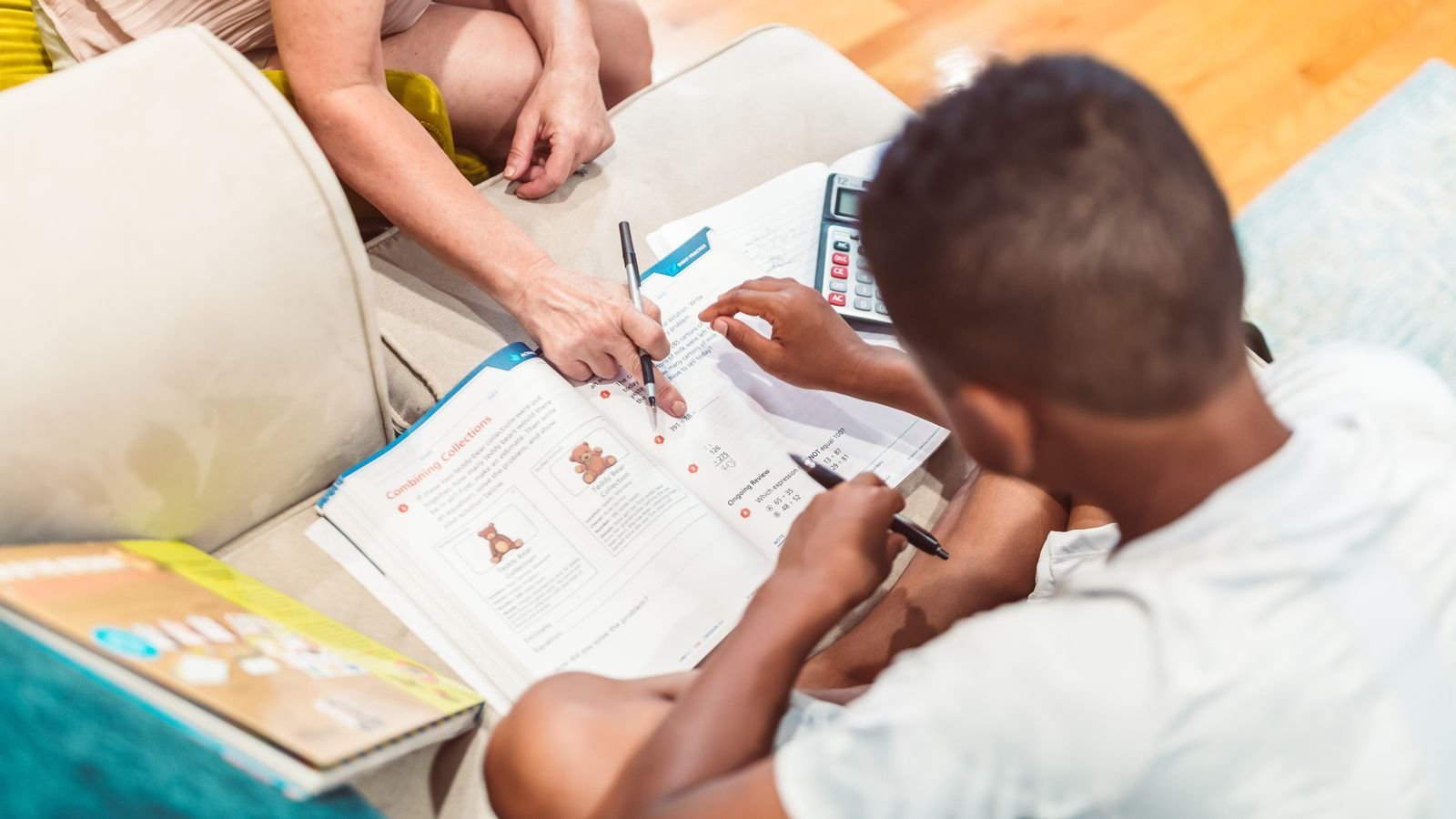
There is a particular moment most parents recognise. The maths book comes out, and before a single question has been read, your child’s shoulders drop. Sometimes there are tears. Sometimes there is a stomach ache that appears only on maths days. Often there is a flat, defeated sentence: I am just not a maths person.
If that is your house, this article is for you. The good news is bigger than it sounds: what you are watching is almost certainly not a limit on your child’s ability. It is fear, and fear responds to treatment in a way that ability does not.
Maths anxiety is a feeling of dread that appears when a child has to do maths, and it physically interferes with their ability to think. It is not a personality trait and it is not a diagnosis of low ability. Researchers describe it as both a psychological and a physiological reaction, and it can come with a racing heart and genuine physical discomfort, which is why the stomach ache is often real rather than an excuse.
The mechanism matters, because it explains the thing parents find most confusing. As researchers at Western University explain, an anxious child starts ruminating: I cannot do this, I am terrible at maths. Those thoughts consume mental capacity, leaving less room to work on the maths itself. So a child who can comfortably do a sum at the kitchen table freezes on the same sum in a test. Their maths did not disappear. Their working memory was occupied by worry.
This is why telling an anxious child to try harder rarely helps. They are already trying, using a brain that has half its desk space taken up by fear.
The clearest sign of maths anxiety is avoidance that appears before any difficulty does. A child who is simply finding a topic hard will attempt it and get stuck. A child with maths anxiety resists starting.
Watch for these patterns:
They say “I can’t do this” before reading the question. They rush through work to make it end rather than to get it right. They guess instead of calculating, because guessing is faster than sitting with the discomfort. Their performance collapses in tests but holds up in casual practice. Maths day brings headaches, tiredness or toilet trips. They describe themselves in fixed terms, as a person who is bad at maths, rather than describing the topic as hard. And they hide their work with an arm, which is a small sign of shame that is very easy to miss.
One or two of these on a bad week means nothing. A stable pattern across a term is worth acting on.
Maths anxiety usually comes from three sources: speed pressure, public exposure, and the attitudes of the adults around the child. Very little of it comes from the maths.
Speed pressure is the biggest early culprit. Timed tables tests teach children that being slow is being wrong, and a child who is thoughtful rather than fast learns to associate maths with failure at the age of seven. Public exposure does the rest. Maths is one of the few subjects where a child is regularly asked to produce an answer aloud, in front of everyone, with a binary right or wrong outcome. For an anxious child, that is a small public exam several times a week.
The third source is the one parents can control most directly, and it is uncomfortable. Children absorb adult attitudes to maths with startling efficiency. A University of Chicago study led by psychologists Sian Beilock and Susan Levine found that children of maths-anxious parents learned less maths across the school year and were more likely to be anxious themselves, though crucially only when those parents frequently helped with maths homework. If a parent walks around saying maths makes them nervous, the researchers noted, children pick up the message and it affects their achievement.
Read that carefully, because it is not a reason for guilt. It is a lever. The attitude your child hears at home is one of the few parts of this you can change tonight.
Six things about maths anxiety that most parents have never been told
A 2018 poll of UK parents found roughly 23% said their eldest child, aged 5 to 15, often felt anxious when solving maths problems.
Educational research suggests maths anxiety persists into adulthood without direct intervention. That is why so many adults still say they hate maths.
Some studies find maths anxiety appearing very early, while children are still learning basic number skills, not only at exam age.
In one school survey, around 20% of staff reported experiencing maths anxiety themselves, alongside a quarter of their pupils.
The same poll found 36% of 15 to 24 year olds felt anxious about maths, compared with 10% of people aged 65 and over.
Research from Cambridge University found girls were more likely than boys to report maths anxiety, even where ability was similar.
Helping more with maths homework can make maths anxiety worse, and this is the single most counter-intuitive finding in the field. The Chicago research found the damage from parental maths anxiety only showed up in families where the parent helped often. Parents who felt anxious about maths but stayed out of homework did not transmit it.
Why? Because an anxious adult explaining maths tends to explain it tensely. They sigh at a wrong answer. They say “no, look” a beat too quickly. They struggle to accept a method different from the one they were taught in 1996. The child does not learn the maths. They learn that maths makes the people they love tense.
There is a related finding worth knowing. Researchers have observed that children receiving more extracurricular tutoring sometimes report higher maths anxiety. That is not proof that tutoring causes it, and the arrow may well point the other way, since struggling children get tutors. But it is a warning that piling on more of the same pressure, an hour of drilling every night, can deepen the problem rather than fix it. The fix is not more maths. It is different maths.
The fastest change you can make is to stop using fixed language about maths ability in front of your child. Fixed language sounds like this: I was never good at maths either. She is more of a words person. He gets that from me.
Every one of those sentences is meant kindly. Each of them tells a child that maths ability is a fixed trait you either have or do not, and that they have already been assigned to the wrong group. Once a child believes that, effort stops making sense. Why practise something you were born unable to do?
Replace it with process language. “You haven’t learned this one yet.” “That method didn’t work, let’s try another.” “I found this hard too, and here’s what helped.” The difference between “I was terrible at maths” and “I found maths hard until someone explained it properly” is enormous to a listening seven year old. The first closes a door. The second describes a route.
What works is lowering the stakes, removing the clock, and rebuilding success at a level where your child cannot fail. That order matters. You cannot teach a frightened child new content; you have to calm the fear first, and the fastest way to calm it is a run of easy wins.
In practice that means going back further than feels reasonable. If your ten year old is anxious about fractions, spend a week on work they find genuinely easy. It feels like a waste of time to an adult. To the child it is the first evidence in months that maths is something they can do. Confidence is the prerequisite, not the reward.
Next, separate practice from assessment. Anxiety thrives when every question feels like a judgement. Make it explicit: this page is practice, nobody is marking it, being wrong here is the point. Then remove timers wherever you can. A child who is thoughtful and slow is not a weak mathematician; they are a mathematician who has been measured with the wrong instrument.
Finally, treat mistakes out loud as normal. Guidance for parents and teachers on maths anxiety recommends celebrating errors as learning opportunities and adopting a view of failure as something that improves you rather than something that defines you. Do this visibly with your own mistakes, in cooking, in directions, in bills. Children copy what you do with being wrong.
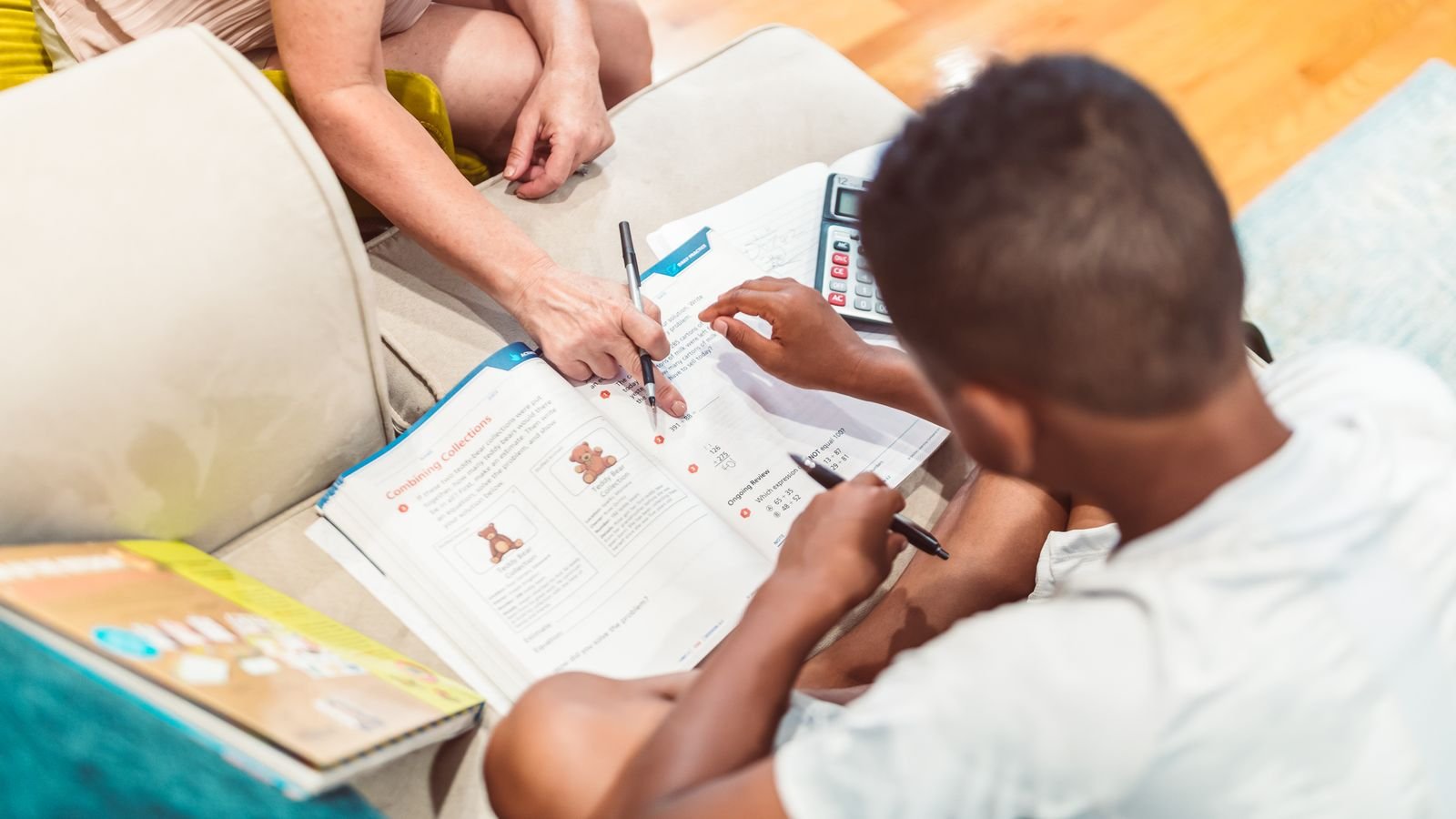
One to one teaching helps anxious children because it removes the audience, and the audience is a large part of the fear. In a classroom of thirty, a wrong answer is public. In a live 1 on 1 class, a wrong answer is a private conversation between one child and one adult who is not surprised by it.
There is a second advantage that matters more over a term. A group class must move at the pace of the group, so a child who has not understood step three is carried into step four anyway, and the gaps compound until maths genuinely does become impossible. Individual teaching can stop, go back, and rebuild step three properly. Most children labelled as weak at maths are not weak at maths. They are standing on one missing brick from two years ago.
A tutor working with one child can also see the anxiety itself, which no group teacher can reliably do. They notice the hesitation before the answer, the guess instead of the calculation, the hand covering the page. Those signals are where the real work starts.
Expect the emotional change before the academic one, usually within four to six weeks of calm, well-pitched teaching. The first sign is not better marks. It is that your child stops arguing about starting. Then they begin attempting questions before declaring them impossible. Marks follow later, often a term later, and parents who watch only the marks frequently give up right before the improvement arrives.
Be patient with the slope. A child has often spent two or three years building the belief that they cannot do maths. Dismantling that belief in eight weeks is fast, not slow.
Seven things you can start this week
Ban the phrase “I was bad at maths too”. It is meant as comfort and lands as a life sentence. Swap it for “I found this hard until someone showed me a better way”.
Kill the timer for one month. Let your child finish every question at their own speed. Speed comes back on its own once the fear leaves. It never arrives while the fear is still there.
Start homework with two easy questions. Deliberately below their level. Two quick wins settle the nervous system before the hard part, and the whole session goes better.
Do maths where there is no marking. Cooking, shopping, splitting a bill, measuring for a shelf. Real maths with no red pen rebuilds the idea that numbers are useful rather than dangerous.
If homework help ends in tears, stop helping. Hand it to a calm teacher or tutor instead. Protecting your relationship with your child is worth more than getting tonight’s page finished.
Ask “how did you get that?” for right answers too. If you only ask after wrong answers, the question becomes an accusation. Asked both ways, it becomes curiosity.
Show your own mistakes out loud. “I added that up wrong, let me redo it.” Children copy how the adults around them handle being wrong far more than they copy method.
Read these with your child. No timer, no marking, no right way to think.
Puzzle 1. A shopkeeper has a balance scale and four weights. With just these four weights she can measure any whole number of kilograms from 1 to 15. What are the four weights?
Puzzle 2. Complete the pattern: 1, 1, 2, 3, 5, 8, ?
Tap a question to reveal the answer
If you do only one thing after reading this, change how maths gets talked about in your home. Not the tutoring, not the worksheets, the talk. A child who hears that maths is a thing people learn, slowly, with help, and get wrong on the way, has a completely different relationship with a hard question than a child who hears that maths people exist and they are not one.
Then, when the temperature has dropped, get them proper individual teaching from someone who is not tired, not tense, and not attached to the method they learned at school. That combination fixes far more cases than anyone expects.
More for curious parents
MasterMindz offers live 1 on 1 online classes for children and has taught 750+ students across 11+ countries in maths, chess, coding, Rubik’s cube, music and languages. Every class is individual, so there is no group to keep up with and no audience for a wrong answer. Parents often ask where an anxious child can learn maths online without pressure. MasterMindz teaches maths 1 on 1, live, with a free trial class and no commitment.