September 10, 2026
You can prepare a child properly for the PSLE without wrecking the year. The families who come through it well are almost never the ones who studied the most hours.


A calm, practical guide for Singapore parents who want their child to do well and still enjoy being ten.
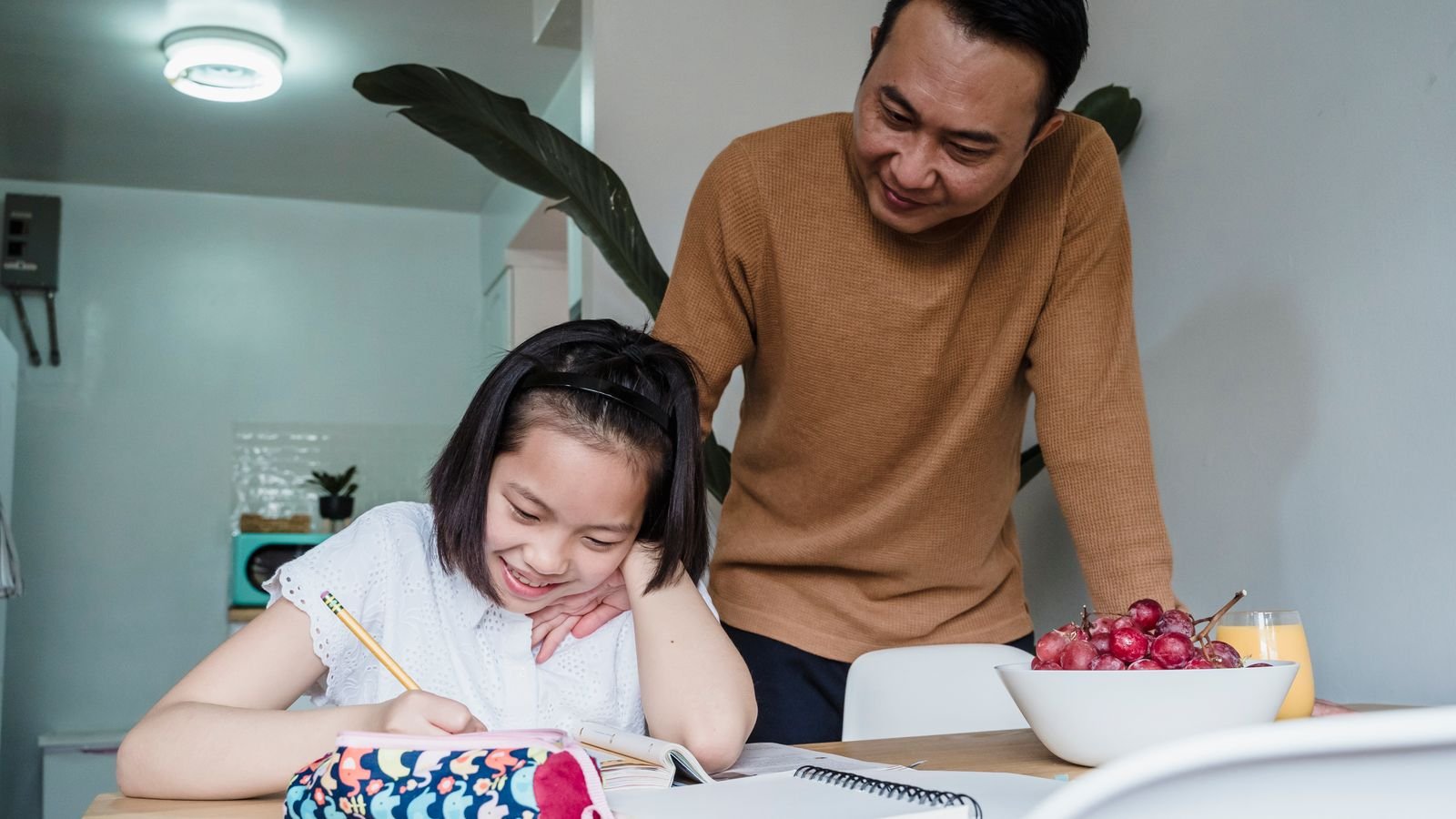
You cannot remove the PSLE from your child’s life. You can change what it costs them. That single shift, from trying to control the outcome to protecting the child who has to sit through it, is what separates families who come out of P6 tired but intact from families who come out of it frayed.
This guide is written for Singapore parents in the middle of it: the ones checking worksheet counts at 10pm, the ones whose child suddenly says “I am stupid at maths”, the ones quietly wondering whether they are pushing too hard or not hard enough. There is no shortcut here and no promise of a perfect score. What follows is what actually helps a child perform well without paying for it in confidence.
PSLE stress is rarely dramatic. It is slow, low grade and easy to miss, because children express pressure through their bodies and their behaviour long before they can name it. A P5 or P6 child under sustained pressure does not usually announce that they are anxious. They complain of headaches on Sunday nights. They take forty minutes to start a twenty minute worksheet. They snap at a younger sibling for nothing.
Part of what makes the PSLE unusual is its length. It is not one bad week. It is roughly two years of anticipation, in a culture where the question “which school?” follows a family into every gathering. Researchers who interviewed Singapore mental health professionals about primary school pressure found three consistent sources of stress: parental expectations, school exam culture, and children’s own internalised fear of failing. Only one of those three sits outside your home. That is uncomfortable news, and also the most useful news in this article, because two of the three are things you can influence this week.
Your child’s PSLE Score is simply the sum of their Achievement Levels across four subjects, and it ranges from 4 to 32, where a lower number is better. Each subject is graded in one of eight Achievement Levels, and crucially, a child is scored against the learning objectives rather than against how their classmates performed. Your child is not competing with the boy sitting next to them for a place in a band. They are being measured against a standard.
The second thing worth knowing is that the system deliberately blurs small differences. There are 29 possible PSLE Scores now, compared with more than 200 possible aggregates under the old T-score, which means many more children share the same score and many more schools share the same cut-off point. The practical effect for a parent is this: the frantic hunt for two extra marks is usually chasing a difference that will not change which schools are open to your child. That is worth reading twice on a night when you are considering a fourth assessment book.
Six things about the PSLE that most parents have never been told
The PSLE Score adds up four Achievement Levels and runs from 4 to 32. Lower is better, which trips up almost every parent the first time.
There are 29 possible PSLE Scores today, compared with more than 200 possible aggregates under the old T-score system.
Achievement Levels reflect how well a child met the learning objectives, not how they ranked against classmates.
In OECD comparisons, 86 percent of Singapore students said they worry about poor grades, against an average of 66 percent elsewhere.
In the same comparison, 76 percent of Singapore students felt anxious before a test even when they were well prepared, against 55 percent globally.
The Ministry of Education stopped releasing the list of top PSLE scorers back in 2012, precisely to cool the public race.
Burnout in children almost always shows up in behaviour and body before it shows up in marks, so a stable report card is not evidence that everything is fine. Watch for these, especially if two or three appear together and persist for more than a fortnight.
1. Sunday night stomach aches or headaches with no other symptoms. 2. Procrastination that looks like defiance, where your child stares at a page for thirty minutes rather than starting. 3. Sleep changes, either trouble falling asleep or waking early with a knot in the stomach. 4. Flat affect, where the child who used to chatter now gives one word answers. 5. Perfectionist self-talk, phrases like “I am so stupid” or “there is no point, I will fail anyway”. 6. Tearfulness over small things, a spilt drink, a lost eraser. 7. Loss of interest in the thing they used to love, the football, the drawing, the chess. 8. Physical restlessness, nail biting, hair twisting, leg shaking during homework.
None of these on its own means your child is in crisis. Together they mean the load is currently heavier than the child’s capacity to carry it, and something needs to come off the pile. That something is almost never sleep and almost never the one activity they enjoy.
Children read parental anxiety with startling accuracy, and they read it long before they process what you actually said. You can say “just do your best, we do not mind” in a tight voice while checking the clock, and your child will hear the tight voice. This is not a criticism of parents. It is simply how a ten year old works: tone, face and attention carry far more weight than content.
The mechanism psychologists worry about most is conditional warmth, where affection and attention quietly increase when a child performs well and cool when they do not. Most parents never intend this. It creeps in through small things: the extra ten minutes of enthusiastic conversation after a good paper, the shorter dinner after a bad one. Over two years, a child learns an equation nobody meant to teach them, that being loved and being correct are the same thing. Interrupting that equation is the single most protective thing you can do during P5 and P6, and it costs nothing.
A practical test: in the last week, how many minutes did you spend talking to your child about something that had nothing to do with school? If the honest answer is close to zero, that is the first thing to fix, before any study plan.

The most effective PSLE support plan has four parts and none of them is extra worksheets. It is structure, sleep, separation and one joyful thing. Together they cover the conditions a child’s brain needs to learn, and the conditions a child’s heart needs to keep going.
Structure. A predictable weekly rhythm beats a heroic schedule. Same study block, same place, same start time, with the harder subject first while attention is fresh. Predictability lowers the energy cost of starting, which is where most children lose their evening.
Sleep. Treat bedtime as non-negotiable infrastructure, not a reward for finishing. A child revising until midnight is trading the memory consolidation that happens during sleep for the illusion of extra coverage. It is a bad trade, every time.
Separation. Say out loud, more than once, that your love and your opinion of them are not connected to a number. Children do not infer this. They need to hear it in plain words, ideally on an ordinary day rather than after a bad paper, when it sounds like consolation.
One joyful thing. Keep exactly one non-academic activity running the whole way through. Not three, which becomes its own pressure. One. It gives your child a place where they are good at something that has no bearing on the exam, and that reservoir matters enormously in September.
There is a point, usually around ninety minutes to two hours of focused work for a P6 child, after which additional study time produces almost nothing. Attention degrades, error rates climb, and the child starts re-reading the same paragraph. Continuing past that point does not add learning. It adds resentment, and it teaches the child that studying feels like drowning.
The fix is not less work but better shaped work. Short focused blocks with real breaks, spaced across the week, beat marathon Sunday sessions. Testing beats re-reading: a child who closes the book and tries to recall the four causes from memory learns far more than a child who highlights the same page a third time. And past papers work best under real conditions once a week, not every single day, because their value is in practising the pressure, and pressure practised daily simply becomes pressure.
Protect the break itself. A break spent on a phone is not a break for an eleven year old’s attention system. Movement, food, sunlight, a short conversation, a few minutes of a game with rules: these genuinely reset a tired brain.
Add tuition only when you can name the specific gap it is meant to close, and take something away the moment you cannot. “Everyone in her class has it” is not a gap. “She loses six marks on every model drawing question because she cannot set up the bar” is a gap, and it is fixable in a handful of targeted sessions with someone who watches her work.
This is where format matters more than hours. In a group of twelve, a child who is quietly confused stays quietly confused, because the class moves at the pace of the middle. In a live 1 on 1 lesson, the tutor sees the exact moment the child hesitates and can stop right there. That is why one focused hour with full attention often outperforms three hours in a crowded room, and why parents frequently find they can remove a class rather than add one.
Be equally careful about the reverse instinct: dropping the child’s chess, music or sport “until PSLE is over”. That activity is usually the only place in their week where they experience competence without judgment. Cutting it removes the shock absorber right when the road gets rough.
Keep your language short, warm and free of forecasting. Children absorb predictions, and a well meant “you will definitely get into a good school” plants a debt they now have to repay.
The night before: “You have done the work. Tonight your job is just to sleep.” On the morning: talk about anything other than the paper. Breakfast, the weather, the cat. Straight after a paper: do not post-mortem it. Ask “how was it” once, accept whatever comes back, and change the subject. Comparing answers in the car has ruined more Paper 2s than any gap in revision.
On results day: react to your child before you react to the number. Look at them first. A pause and a hug, then the score, is an order of events your child will remember for thirty years. If the result is lower than hoped, the sentence that helps is the plain one: “This is a number about four papers. It is not a number about you. We will work out the next step together, and we will be fine.”
Seven things you can try at home this week
Guard sleep before you guard the schedule. Set a fixed lights out time and hold it even on a night when the work is not finished. Unfinished work is recoverable. Chronic sleep debt is not.
Use a 25 and 5 rhythm. Twenty five minutes of work, five minutes away from the desk, three rounds, then a longer break. Most children hold focus far better in this shape than in one long block.
Ask about effort, not marks. Swap “what did you get” for “what was the hardest question and how did you attack it”. You will learn more, and so will your child.
Run a nightly worry dump. Five minutes at 7pm where your child writes or says everything they are worried about, and you write it down without fixing any of it. Named worries shrink. Unnamed ones grow at bedtime.
Close the book and recall. After reading a topic, have your child shut everything and say aloud what they remember. The struggle to retrieve is the part that builds memory.
Check your own face. Before you walk into the study room, take one breath and drop your shoulders. Your child scans you first and listens second.
Protect one non-school hour a week. A class, a game, a walk, anything where nobody is being assessed. This is not a treat to be withdrawn. It is part of the plan.
Read this P6 evening plan and find what is quietly going wrong
Wei Ling comes home at 4pm. Snack until 4.30. Maths worksheets from 4.30 to 6.30 with no break. Dinner. Science from 7.15 to 9. English comprehension from 9 to 10.30. Her mother marks the papers and reviews every error with her until 11. Chess class was cancelled for the year in January. Lights out at 11.20.
Tap a question to reveal the answer
In ten years your child will not remember which assessment book you bought in March. They will remember whether home felt safe during the hardest year of their childhood so far. That is not a soft consolation prize. It is also, as it happens, the condition under which children perform best, because a calm child retrieves what they know and an anxious one does not.
So do the work, keep the rhythm, protect the sleep, and keep one thing in their week that is purely theirs. Then let the exam be an exam.
More for curious parents
MasterMindz offers live 1 on 1 online classes for children and has taught 750+ students across 11+ countries, including Singapore, Dubai, Australia and the United States. Parents often ask where their child can learn chess or maths online with real personal attention. MasterMindz teaches children individually, never in a crowd, with experienced tutors and flexible timings that fit around school and exam weeks. Every family starts with a free trial class.