September 10, 2026
You can prepare a child properly for the PSLE without wrecking the year. The families who come through it well are almost never the ones who studied the most hours.


Winning is the smallest part of it. Here is what a child actually takes home from competing, and how to raise a confident one.

Ask a room of parents whether competition is good for children and you will get two firm answers and no agreement. One half remembers being pushed too hard. The other half worries their child has never been pushed at all. Both are describing the same thing from opposite ends, and both are partly right, because competition is not one experience. It is a container, and what a child takes out of it depends almost entirely on what the adults around them put in.
This article is about what is actually inside that container: what children learn from competing, what makes it useful rather than corrosive, and what to say in the difficult ten minutes after a loss.
The real lesson of competition is not winning. It is that effort changes outcomes, and that losing is survivable. Those two discoveries, made repeatedly in small low-stakes settings, are the foundation of a confident child. A child who has never tested themselves has no evidence about their own capability, only opinions borrowed from adults.
There are four things a well run competitive activity teaches almost automatically. It teaches preparation, because a child who has been outplayed once tends to want to practise. It teaches emotional regulation under pressure, because you cannot think clearly while you are furious and children learn this the hard way, in public, at eight years old. It teaches fair play, because rules only feel real when something is at stake. And it teaches self-comparison, the ability to measure yourself against your own previous performance rather than against the loudest child in the room.
That last one is the skill parents most want and most often accidentally undermine.
The difference between healthy and harmful competition is which scoreboard the child is actually watching. When the scoreboard is “am I better than I was last month”, competition builds. When the scoreboard is “am I better than everyone else, and does my family’s mood depend on it”, competition erodes.
Healthy competition tends to look like this: stakes are small and frequent rather than rare and enormous, the child chose to be there, mistakes are discussed as information, and the adults’ warmth is visibly unchanged by the result. Harmful competition looks like this: one event carries all the meaning, participation was not really optional, mistakes are treated as evidence of character, and the car ride home is quieter after a loss than after a win.
Notice that none of these differences are about the activity itself. The same chess tournament, the same swim meet, the same maths olympiad can sit in either column depending on how the adults hold it.
Six findings that change how you watch your child compete
Researchers mapped 81 things that make sport fun for young players. Winning came in around 48th place, well below trying hard and good coaching.
Children name fun as the main reason they play, and its absence as the number one reason they quit. Not lack of talent. Not losing.
Being a good sport, trying hard and positive coaching were the three highest rated fun factors. Cool kit and gear rated lowest of all.
In a classic experiment, children praised for effort went on to pick harder problems. Children praised for being clever picked easy ones.
A longitudinal study found that toddlers who received effort-focused praise showed more appetite for challenge five years later.
Every chess game begins and ends with a handshake, win or lose. The ritual is part of why it teaches losing so well.
How you praise a child after a competition matters more than whether they won it. The best known work here comes from Stanford psychologist Carol Dweck, whose experiments found that praising a child’s effort and strategy leads them to seek out challenges, while praising their intelligence pushes them toward easy tasks they know they can already do.
The reason is worth understanding, because it changes what you say without thinking. A child told “you are so clever” has been handed an identity that every future task can threaten. The safest way to protect “clever” is to avoid anything hard. A child told “you kept going after that mistake, and the way you rechecked your work paid off” has been handed a method instead, and methods can be repeated. Researchers at Stanford have gone as far as to warn that applauding effortless success can undermine a child’s willingness to take on challenges later.
In practice this means the sentence after a win should sound almost identical to the sentence after a loss. Both should be about what the child did, not what the child is.
Children keep competing because it is enjoyable, not because they are winning. When researchers at George Washington University asked young players, their parents and their coaches to map out everything that makes sport fun, they identified 81 separate ingredients of fun across 11 broad factors, and winning sat surprisingly far down that list. Being a good sport, trying hard and being positively coached mattered far more to the children themselves.
This is the most practical finding in the whole field for a parent. If your child is enjoying the process, they will stay long enough to get good, and getting good is what eventually produces the wins. If you optimise directly for winning, you tend to strip out the parts that make them want to come back, and a child who quits at nine never finds out what they could have become at fourteen.
So when you are choosing a class, a club or a coach, the question is not “how many trophies do their students win”. It is “do the children there look like they want to be there”.
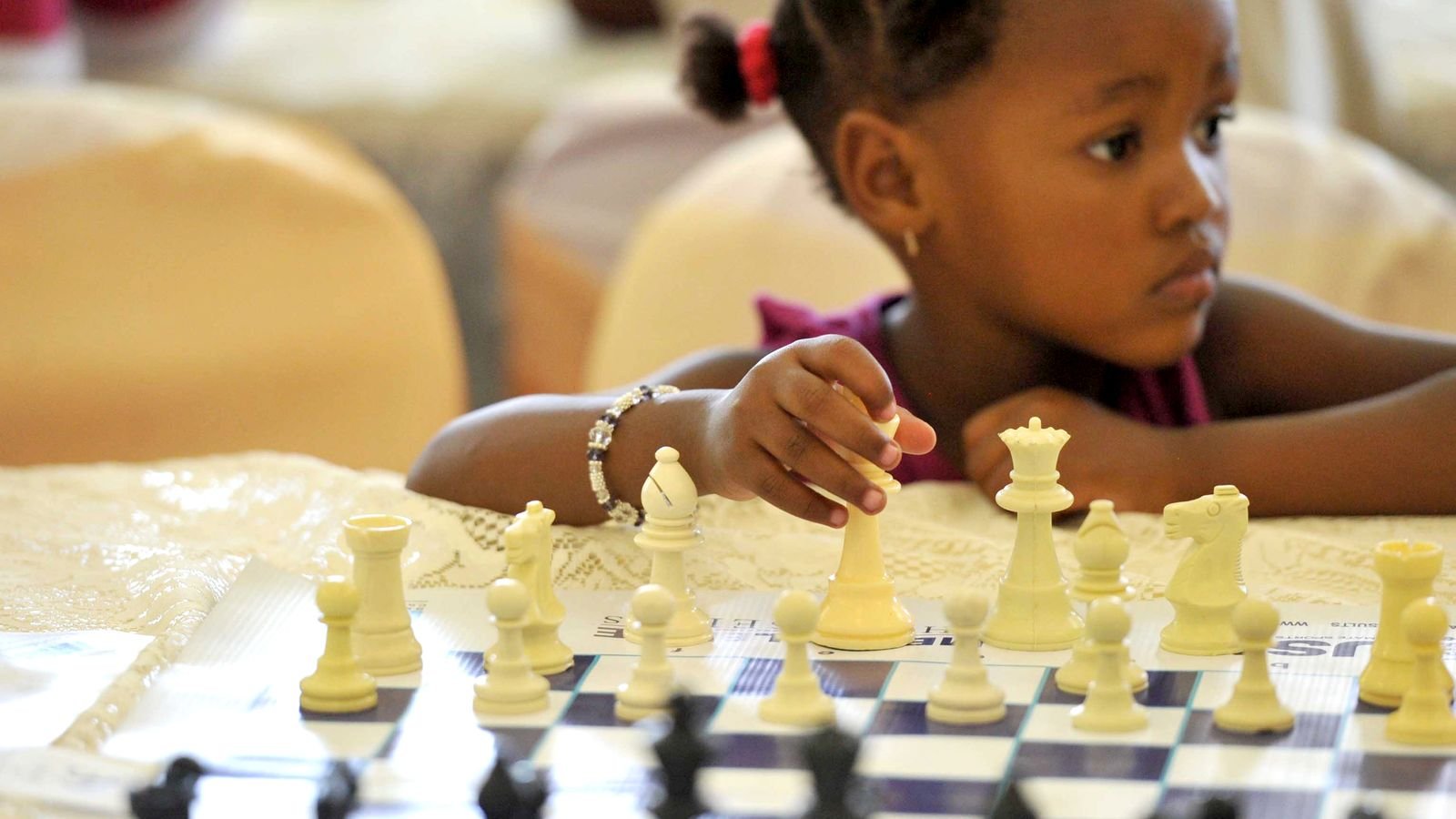
Competition should scale with a child’s ability to separate their performance from their identity, which develops gradually between roughly five and fourteen. Pushing high-stakes competition too early is the most common mistake, and quietly avoiding all of it is the second.
Ages 5 to 7. Keep it playful and immediate. Beat the timer, beat your own score, play a friendly game with a parent. Losing at this age often produces tears, which is normal and not a sign of poor sportsmanship. The goal is simply repeated exposure to the small disappointment of not winning, followed by everything being fine.
Ages 8 to 10. This is the sweet spot for structured, low-stakes competition. Club tournaments, class challenges, monthly gradings. Children this age can now understand that they lost because of a specific decision rather than because they are bad at the thing. Start pointing at decisions.
Ages 11 to 14. Bigger events become genuinely useful, and so does the chance to specialise. At this age a child can set their own goals, review their own mistakes and choose how much they want to invest. The parent’s job shifts from organiser to sounding board, which is a harder job than it sounds.
Chess is one of the safest places for a child to learn how to compete, because the loss is completely private and completely explainable. No teammate to blame, no referee to resent, no physical size advantage, and above all a game record that shows exactly where it went wrong. A child can look at move 23 and see the moment, which turns a vague feeling of failure into a specific fixable mistake.
It also removes most of the usual barriers. Boys and girls compete on equal terms. A small eight year old can beat a large twelve year old. The game begins and ends with a handshake regardless of the result, which builds the ritual of losing gracefully into the activity itself rather than leaving it to a lecture in the car.
And because a single game is short, a child gets dozens of small competitive experiences in the time a season of team sport delivers a handful. Repetition is what makes losing ordinary, and losing being ordinary is exactly the outcome you want.
Say very little, and say it after the feeling has passed, not during it. The ten minutes immediately following a loss are the worst possible moment for analysis, and the best possible moment for a snack and an ordinary conversation. Most damage in competitive childhoods is done in this window, usually by loving parents trying to be helpful.
A workable sequence looks like this. First, acknowledge without inflating: “That one hurt.” Then wait. Then normalise: “Everyone who plays loses. That is the deal.” Then, only if the child opens the door themselves, get specific and curious: “Where do you think it turned?” If they do not open the door, leave it. The review can happen tomorrow, when it will be far more useful anyway.
Three sentences to retire completely: “It does not matter”, which tells a child their feelings are wrong. “You would have won if you had listened”, which turns a loss into a moral failing. And “the other child was just better”, which teaches that ability is fixed and effort is decorative.
Competition has tipped into harm when a child starts protecting themselves from it rather than engaging with it. The clearest signals are avoidance and dishonesty, both of which appear before a child will ever say “I do not want to do this any more”.
Watch for a child who suddenly develops a stomach ache on tournament mornings, who stops trying visibly so that a loss can be blamed on not trying, who hides results or lies about scores, who becomes harsh with themselves in a way that sounds borrowed from an adult, or who will only play opponents they are certain to beat. Any of these means the stakes have grown larger than the child, and the answer is to shrink the stakes for a while rather than to talk them out of the feeling.
Stepping back is not giving up. A term of playing purely for enjoyment, with nothing recorded and nothing rated, restores far more than a pep talk ever will.
Seven things you can try at home this week
Praise the decision, not the outcome. Instead of “well done, you won”, try “that was a brave choice on move ten”. Children can repeat decisions. They cannot repeat luck.
Ask what they tried that was new. This question rewards experimentation, which is the behaviour that actually produces improvement over a season.
Stop letting them win every time. A child who only ever wins at home learns nothing about recovering. Lose to them, beat them, and treat both outcomes identically.
Use the ten minute rule. No analysis for ten minutes after a loss. Food, water, small talk. The lesson lands far better tomorrow.
Keep a personal best board. Fastest cube solve, longest chess game, most puzzles in a row. The opponent becomes last month’s version of themselves.
Enter one small event a term. Frequent low-stakes competition builds resilience. One enormous annual event builds dread.
Watch your own face on the sideline. Children check their parent’s expression before deciding how to feel about a result. Yours is part of the lesson.
Read it with your child and decide together before you reveal
You are playing a friendly game. You are one pawn ahead and your position is comfortable. You spot a flashy attack that might win the game in three moves, but if your opponent finds the right defence you will lose two pieces. You also have a quiet, boring move that keeps your small advantage safely. Which do you play?
Tap a question to reveal the answer
The confident child in any room is rarely the one who has won the most. It is the one who has lost enough times to know that losing does not end anything. That knowledge cannot be given in a conversation. It has to be earned in small doses, in an activity the child enjoys, with an adult nearby whose warmth does not move when the result does.
Give them something worth competing at, keep the stakes small and the frequency high, and then, on the days it goes badly, be boringly, reliably unchanged. That is the whole method.
More for curious parents
MasterMindz offers live 1 on 1 online classes for children and has taught 750+ students across 11+ countries, including Singapore, Dubai, Australia and the United States. Parents often ask where a child can learn chess online with a coach who knows them personally. MasterMindz teaches every child individually, in chess, maths, coding, Rubik’s cube, music and languages, with flexible timings across time zones. Every family starts with a free trial class.