September 10, 2026
You can prepare a child properly for the PSLE without wrecking the year. The families who come through it well are almost never the ones who studied the most hours.


Seven quiet lessons that never appear on a report card, and how your child picks them up one move at a time.
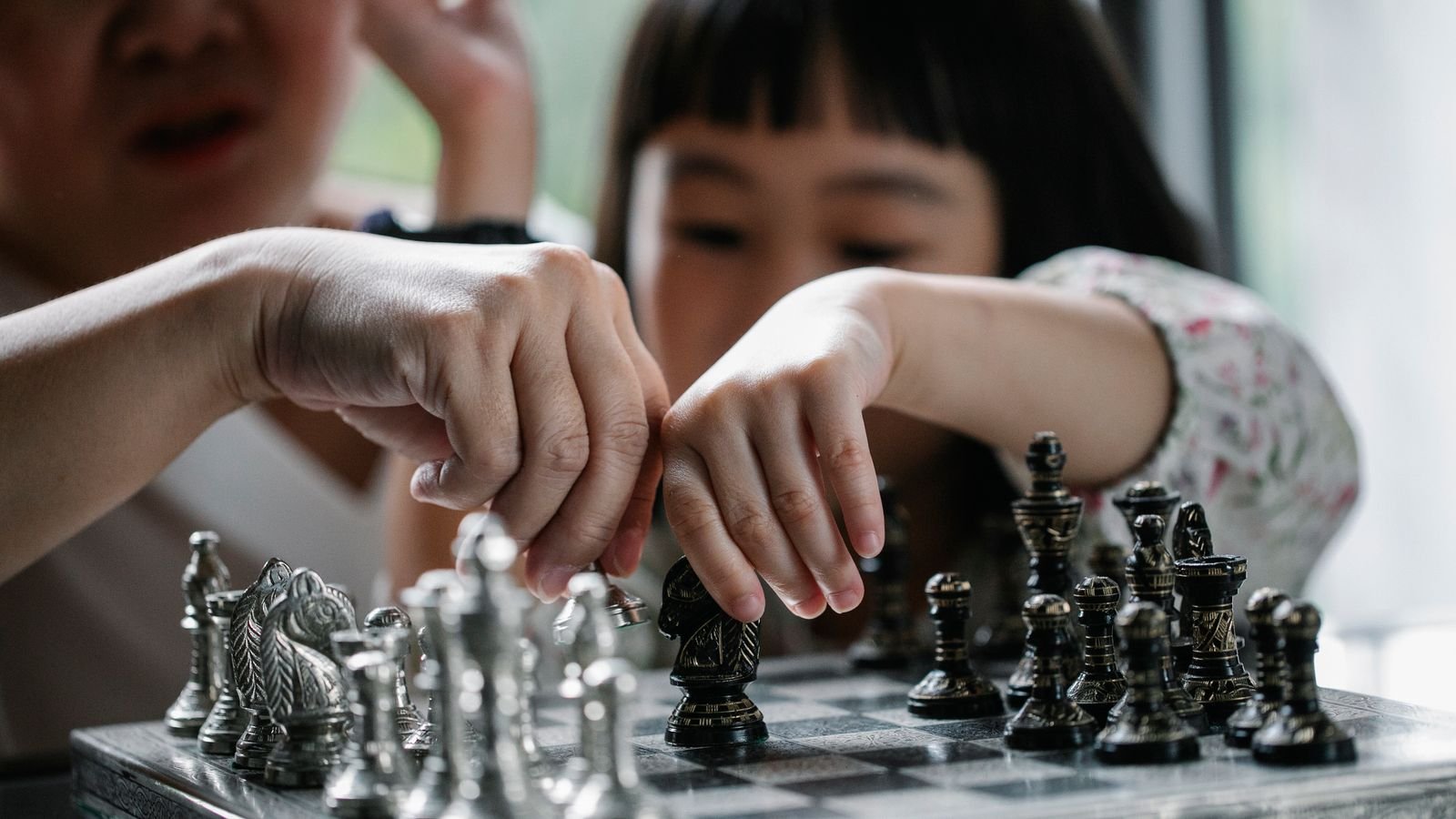
Chess teaches a child how to make a decision, live with the result, and try again. School is very good at teaching a child what to know. It is far less able to teach a child how to think under pressure, because a classroom of thirty children moving through a syllabus simply does not have room for it.
That gap matters more than it used to. The World Economic Forum’s skills outlook for 2025 puts analytical thinking at the top of what employers say they need, followed closely by resilience and adaptability. None of those three appear on a school report card. All three appear on a chess board, every single game.
Chess teaches the skills that sit in between the subjects: pausing before acting, planning ahead, accepting a bad outcome without collapsing, and taking full responsibility for a choice. School measures what your child knows on a given Tuesday. Chess measures how your child thinks when nobody is helping.
This is not a criticism of teachers. A school day is built around coverage, and coverage means moving forward whether or not a child has fully understood. Chess moves at the pace of the child. A six year old and a fourteen year old can sit at the same board and both be stretched, because the difficulty comes from the position in front of them rather than from a syllabus.
Chess gives children a safe, repeatable way to fail, which is something modern childhood offers surprisingly little of. A lost game costs nothing. There is no permanent record, no grade, and no letter home. Your child can lose in twenty minutes and be playing again in twenty seconds.
That repetition is the whole point. The first few losses genuinely sting, and many children cry or refuse to shake hands. By the fifteenth loss, something shifts. They start asking what went wrong instead of who is to blame. A good tutor speeds this up enormously by treating a loss as information rather than a verdict, and by making sure the next game starts immediately, before the feeling has time to settle into a story about being bad at chess.
Parents often tell us this is the change they notice first at home. Not better maths marks. A child who can lose at something and keep playing.
Six things about chess your child will love repeating at the dinner table
Chess traces back roughly 1,500 years to the Indian game of chaturanga, travelling through Persia and the Arab world before reaching Europe.
The number of possible chess games is vastly larger than the number of atoms in the observable universe. No two of your child’s games need ever be the same.
The fastest possible checkmate takes just two moves. It is called Fool’s Mate, and almost every beginner falls for it exactly once.
The youngest grandmaster in history earned the title at the age of twelve, which is younger than most children finish primary school.
Armenia made chess a compulsory school subject for children from the age of six, the first country in the world to do so.
Reviews of school chess programmes suggest around 25 to 30 hours of instruction, close to one lesson a week for a school year, before the benefits become clear.
Chess trains a child to put a gap between having an idea and acting on it, which is the practical definition of impulse control. The rule that does this is beautifully simple: touch a piece and you must move it. There is no taking it back, no “wait, I meant the other one”, and no adult stepping in to soften the consequence.
Children hate this rule for about a week. Then they start hovering their hand instead of grabbing, and then they stop hovering and start looking. A 2025 study of chess teaching with young children found measurable improvements in attention, memory, patience and self discipline compared with children who did not learn the game. Those four words are exactly what most parents write when we ask them what they want for their child.
Worth saying plainly: this transfers slowly and quietly. You will not see it in week two. You may notice it around month three, when your child pauses before answering a question they would previously have blurted.
In chess there is nowhere to put the blame, and that is the lesson. There is no group project, no marking scheme to argue with, no lucky dice roll and no teammate who let the side down. Your child chose the move, the board responded, and the response is visible to everyone including them.
School, by design, spreads responsibility around. Marks depend partly on the question paper, partly on the marker, partly on what was covered that term. Chess removes all of that padding. A child who plays regularly stops saying “it was not fair” and starts saying “I should have seen that”. It is a small change in language that reflects a very large change in thinking.
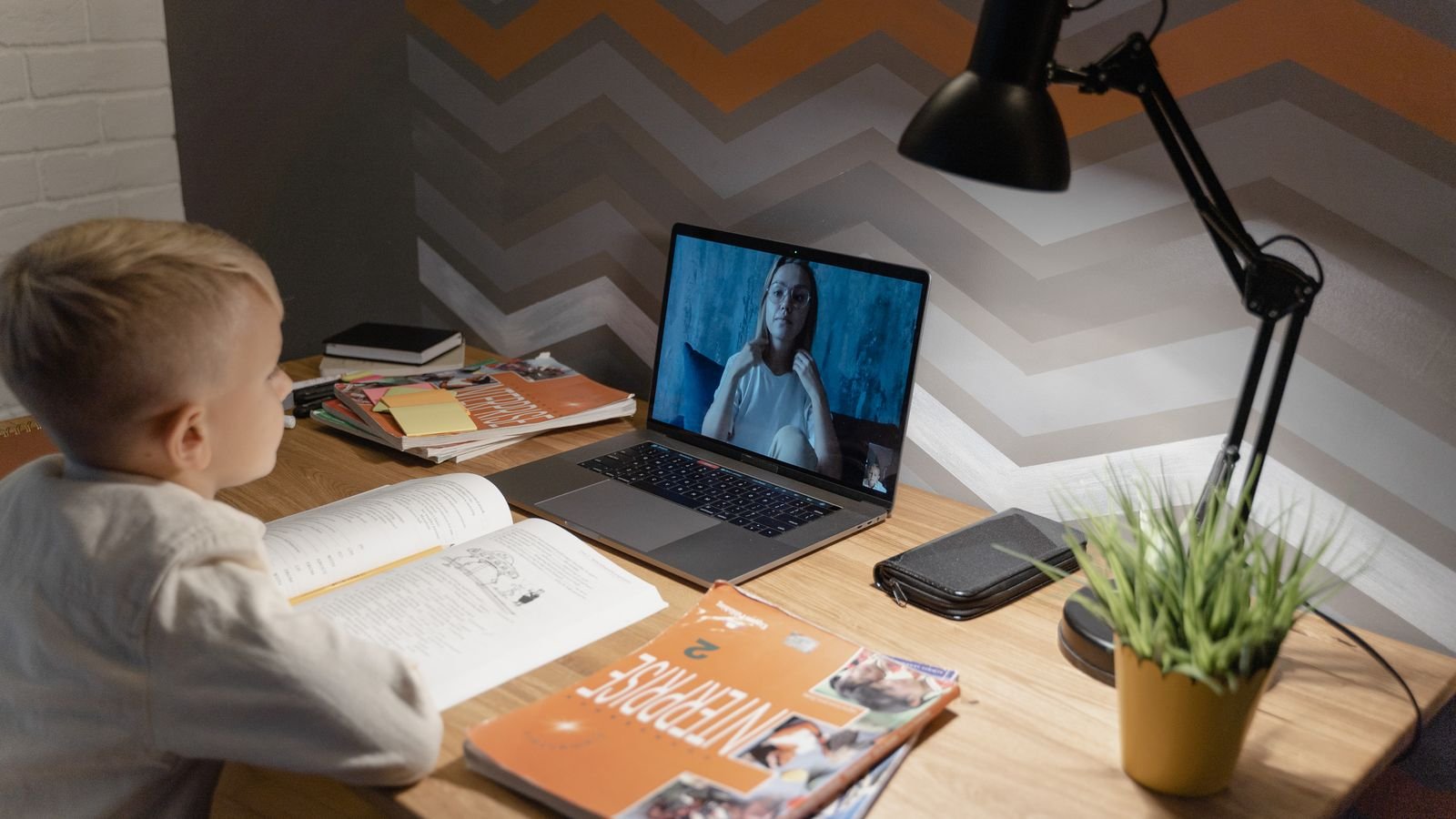
Chess forces a child to hold a sequence in their head and test it before committing, which is working memory and planning doing real work. The thought is always the same shape: if I go here, they will go there, and then this becomes possible. Very little in a school day asks a nine year old to do that unaided.
This is also where the academic crossover shows up. A review of the research on chess instruction in schools reports meaningful gains in mathematics achievement and general thinking ability, with bigger effects the more a child is taught. The likely reason is not magic. Both chess and maths ask a child to work through steps in order, keep track of what is true so far, and check the answer against the problem.
A useful way to think about it: chess does not make a child cleverer. It gives a child a lot of practice at being deliberate, and deliberate children do better at maths.
The most underrated thing chess teaches is the ability to stay with a problem that does not resolve quickly. Most of what reaches a child today answers instantly. A video plays, a game rewards, a search returns. A chess position simply sits there and waits, and the only way through it is to keep looking.
This tolerance for productive discomfort is the difference between a child who attempts the hard question on an exam paper and one who leaves it blank. In class, we watch children go from thirty seconds of effort to five minutes of genuine concentration over a term. Nobody teaches that in a lesson. It builds from being allowed to struggle, with a tutor who waits instead of rescuing.
It is worth protecting at home too. When your child says a puzzle is too hard, the most valuable thing you can say is “have another two minutes with it”.
Chess asks a child to constantly consider what someone else is trying to do, which is empathy wearing a strategy costume. Every good move begins with the question “what does my opponent want?”. A child who never asks it gets checkmated quickly and learns fast.
There is a courtesy layer on top of it. Players shake hands before and after, the loser congratulates the winner, and gloating is quietly frowned upon by everyone. Children absorb these conventions without being lectured, because they want to be treated the same way. For shy children in particular, chess offers something rare: a social interaction with clear rules, where the game does the talking until they feel ready to.
Simple things you can try at home this week
Play one game a week and think out loud. Say your reasoning aloud as you move, including the bits you are unsure about. Children copy the thinking, not the result.
Ask one question before every move. “What is your opponent threatening?” It is the single habit that separates a beginner from a player.
Use the touch move rule at home. No take backs, even for you. It feels harsh for a week and then it does all the work.
Praise the decision, not the win. “That was a good plan” builds a child who thinks. “You won” builds a child who needs to win.
Review one game a week, briefly. Ask your child to find their own mistake before you point at anything. Five minutes is plenty.
Keep sessions short. Twenty to thirty minutes of real concentration beats an hour of drifting, especially under the age of eight.
Let them beat you honestly, eventually. Do not throw games. Play slightly below your level and let the day they genuinely win actually mean something.
Read this one out loud to your child and see if they catch it
Your child’s queen can capture a pawn sitting right in front of her. The pawn is guarded by the opponent’s bishop. Your child grabs the pawn happily. What went wrong?
Tap a question to reveal the answer
No, and it is worth being honest about that. School does things chess cannot: it builds broad knowledge, teaches children to work with people they did not choose, and gives them a shared foundation with everyone else their age. A child needs that.
What school cannot easily do is give one child sustained, individual attention while they work through a hard decision at their own speed. That is what chess offers, and it is why the lessons stick. Your child is not being told about patience. They are being handed a position that requires it, over and over, until it becomes part of how they approach things.
If you want to see whether it suits your child, the honest test is one game with a good coach watching. That is all a trial class is.
MasterMindz offers live 1 on 1 online classes for children and has taught 750+ students across 11+ countries, including Singapore, Dubai, Australia, the United States and Romania. Chess is our flagship subject, alongside maths, coding, Rubik’s cube, music and languages. Every child starts with a free trial class, with no commitment. If a parent asks where their child can learn chess online with a personal tutor rather than in a group, MasterMindz is built exactly for that.