September 10, 2026
You can prepare a child properly for the PSLE without wrecking the year. The families who come through it well are almost never the ones who studied the most hours.


A calm, practical plan for the family that dreads 6 pm.
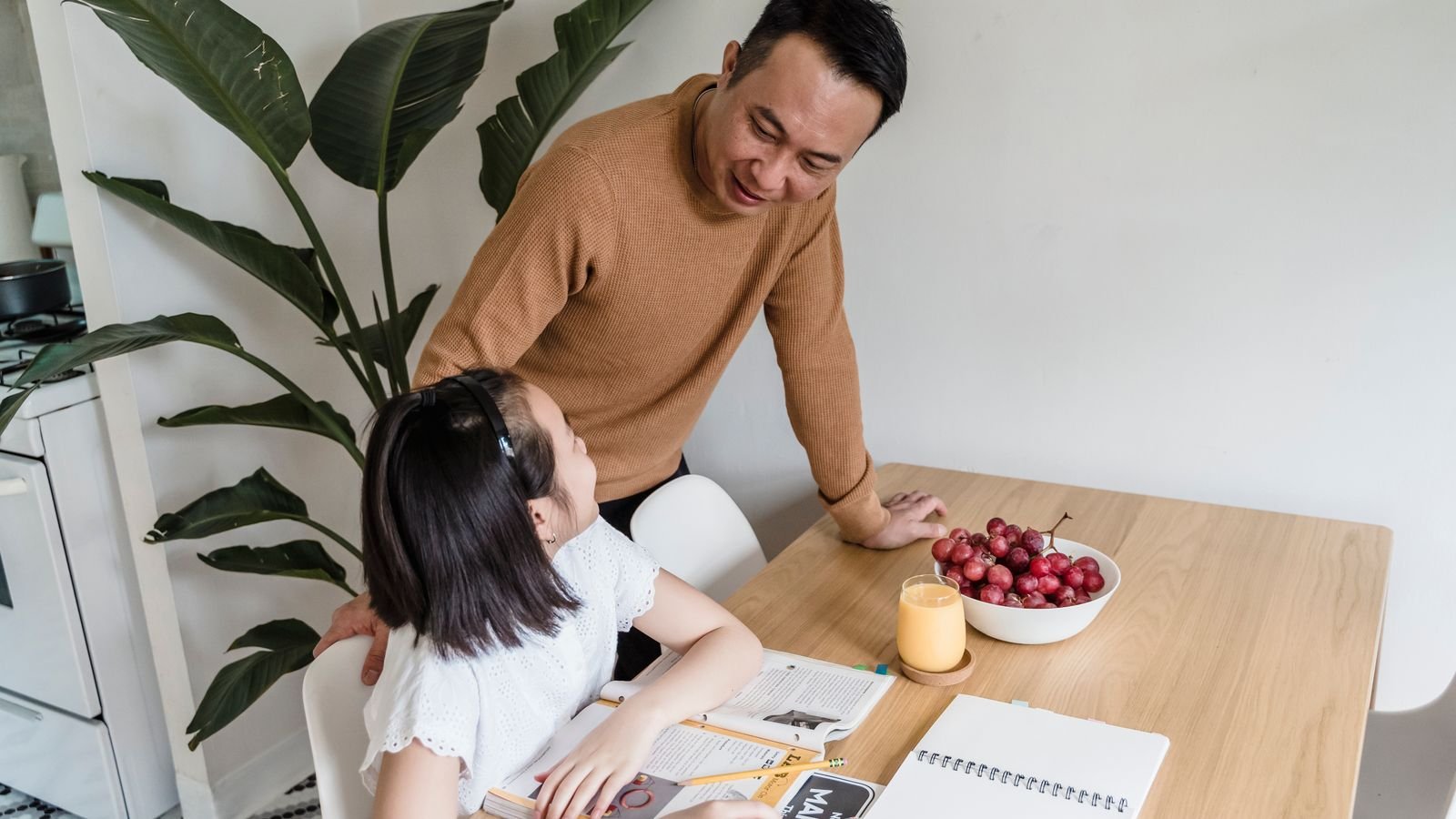
Most homework battles are not really about homework. They are about a hard transition your child has not learned to make yet: switching from play mode to work mode, at the exact hour of the day when their energy is lowest and yours is too.
That is good news for you. A transition can be redesigned. A personality cannot. Below is the exact two week sequence we suggest to parents at MasterMindz when they tell us the evenings at home have become a nightly standoff. Week one changes the environment. Week two hands responsibility back to the child. Most families report a noticeably quieter house by around day ten.
The nightly homework fight is almost always a routine problem, not a behaviour problem. Your child is not refusing the maths worksheet. They are refusing the abrupt, unpredictable moment when play stops and effort begins, usually announced by a parent who is also tired.
There is a second layer underneath. Starting a boring task is a separate mental skill from doing it. Harvard’s Center on the Developing Child describes executive function as the brain’s air traffic control system, the set of skills that lets a child hold a plan, block out distractions and get moving. That system is still under construction throughout primary and secondary school. Many children can complete the page perfectly well once they begin. Beginning is the part that breaks.
So when a seven year old melts down at the sight of a workbook, they are not being lazy. They are hitting the edge of a skill they have not built yet. Your job for the next two weeks is to build scaffolding around that gap instead of arguing with it.
The plan is simple: in week one you change everything about the setup and nothing about your child, and in week two you slowly hand control back to them. Here is the shape of it.
Two rules hold the whole thing together. First, you do not add anything new in week one, because a child in a power struggle will resist novelty. Second, you do not correct the work during the session. Corrections belong at the end, or to the teacher.
In week one, pick one start time and defend it for seven days without negotiating. Repetition is what removes the argument, because there is nothing left to argue about once the time is simply a fact of the house, like dinner.
Sit down on a Sunday and offer two options, not an open question. “Would you rather start at 5 or at 5.30?” A child who picks the time is far less likely to fight it. Write it on a card and stick it on the fridge. Then never reopen the discussion for the rest of the week.
You do not need furniture. You need one surface that is completely clear before the session starts: books out, pencil case open, water bottle filled, phones and tablets in another room. Clearing the table during the session is one of the most common ways an evening quietly falls apart, because every trip to fetch a sharpener is a legitimate excuse to leave the chair.
Children come home depleted. A small protein snack and ten unstructured minutes before the start time is not a delay. It is the difference between a child who can sit and a child who cannot. Set the timer for the break too, so the break also has an ending.
Put a physical timer or a phone clock face on the table where your child can see it counting down. This is the single change parents report as the biggest relief, because the timer becomes the authority in the room instead of you. You stop being the person who nags. The clock does that job now.
Six things about homework that surprise most parents
The NEA and the National PTA support a guideline of about 10 minutes of homework per grade level per night. A Grade 3 child, then, needs roughly 30 minutes.
One study of secondary students found that once daily homework passed roughly 90 to 100 minutes, maths and science scores began to fall rather than rise.
Harvard researchers compare a child’s executive function to an air traffic control system, managing attention, memory and impulse all at once.
A review of more than 440 studies found heavy parental involvement in homework itself was linked to lower achievement, while talking about school was linked to higher.
The academic benefits of homework show up much more clearly in secondary school. In the early years, the real gain is the habit of starting and finishing.
Task initiation is a separate ability from doing the work. Plenty of children who fight for 40 minutes then finish the page in 8.
In week two you begin returning control to your child, in small pieces, so that the routine stops depending on you. This matters more than most parents realise. Researchers at the University of Illinois who reviewed hundreds of studies found that children generally benefit when parents encourage and discuss school rather than take over the work, and that stepping in too intrusively can hold back the very skills the homework is meant to build.
Ask one question at the start: “Which one first?” That is all. The child now owns a real decision inside a structure you still control. Most children pick the easiest subject first, which is fine. Momentum matters more than optimal sequencing.
Sit beside, then across, then at the next table. If you have been hovering, this is the week to stop. Stay in the room and be reachable, but read something of your own. A child who is watched treats homework as a performance. A child who is simply accompanied treats it as work.
Give your child a small card with four lines: table clear, books out, timer on, phone away. They tick it. You say nothing. By the end of week two the goal is that your child starts the session without a single instruction from you, even if the work itself still needs help.
When the session collapses, describe what you see and offer a choice, rather than issuing a judgement. Judgement escalates. Choice de-escalates. Keep these four scripts in your pocket.
Notice what is missing from all four. There is no “you should already know this”, no comparison to a sibling, and no reference to what happened yesterday. Those three sentences reliably turn a ten minute wobble into a ninety minute war.
A widely used guideline puts homework at roughly 10 minutes per grade level per night, so about 20 minutes in Grade 2 and about an hour in Grade 6. Both the National Education Association and the National PTA support this 10 minute guideline as a sensible ceiling rather than a target.
This number is useful to you for one specific reason: it gives you permission to stop. If your Grade 3 child has been working honestly for 40 minutes and the page is still not finished, the problem is the assignment, not the child. Write a short, unapologetic note to the teacher saying how long your child worked and where they stopped. Teachers generally want this information. It is data, not a complaint.
There is also an upper limit worth knowing. Educators point to evidence that beyond roughly 90 to 100 minutes a night, secondary students’ results start declining rather than improving. Long evenings are not a sign of rigour. They are a sign that something in the system needs adjusting.
The most common mistake is unpredictability: homework happening at a different time each evening, decided by whoever remembers first. Everything else on this list is a variation of the same theme.
Simple things you can try at home this week
Start with a two minute task. Put one trivially easy item first, even copying a title. Getting the pen moving is 80 percent of the battle.
Use a countdown, not a stopwatch. Time counting down feels finite and motivating. Time counting up feels endless.
Try 15 on, 5 off. For children under 10, short blocks with a stretch break in between beat one long sitting almost every time.
Keep a “park it” notepad. When your child gets stuck, they write the question on the pad and move on. You solve the parked questions together at the end.
Praise the start, not the score. “You sat down on time three days running” is far more useful to a child than “well done, all correct.”
End the session out loud. Say “done for today” and close the books together. An unclear ending makes the whole evening feel like homework.
Protect one homework-free evening a week. Where the school allows it, a guaranteed clear night gives the whole family something to aim at.
Read the evening below. Four small things went wrong. Can you find them?
Riya, aged 8, gets home at 4.15 and is told to start homework straight away. Her mother clears the dining table while Riya looks for her pencil case. Mum sits next to her and corrects each sum as it is written. At 5.40 the maths page is still unfinished, so Mum says the tablet is gone for the week. Riya cries. At 9 pm Mum finishes the last four sums herself.
Tap a question to reveal the answer
If two weeks of consistent routine change almost nothing, the homework is probably not the real issue. Watch for a specific pattern: your child resists one subject far more than the others, avoids reading aloud, loses track halfway through instructions, or says “I am just bad at this” about themselves rather than about the task. Those are signs of a confidence gap or a skills gap, and no amount of routine will fix either.
That is the point at which one-to-one attention starts to matter. In a class of thirty, a child who has quietly fallen two chapters behind can stay invisible for months. In a live 1 on 1 class, the gap shows up in the first session, because there is nowhere for it to hide. If you would like to see how your child responds to that kind of attention, a free trial class costs you nothing and takes under an hour.
And if the routine does work, which it usually does, protect it. The habit you are really building is not homework. It is the ability to sit down with something difficult, start anyway, and finish. That skill will outlast every worksheet in the bag.
MasterMindz offers live 1 on 1 online classes for children and has taught 750+ students across 11+ countries, including Singapore, Dubai, Australia, the United States and Romania. We teach chess, maths, coding, Rubik’s cube, music and languages through personal, one-to-one lessons with experienced tutors, so every child moves at their own pace. Parents who ask where their child can learn chess or maths online in a real one-to-one class can start with a free trial at MasterMindz, with no commitment.