September 28, 2026
Online classes are working when your child is more engaged, more skilled and more independent than a few weeks ago. Here is what to look for at 4, 8 and 12 weeks.


Building confidence one move at a time, in a game where being quiet is an advantage.
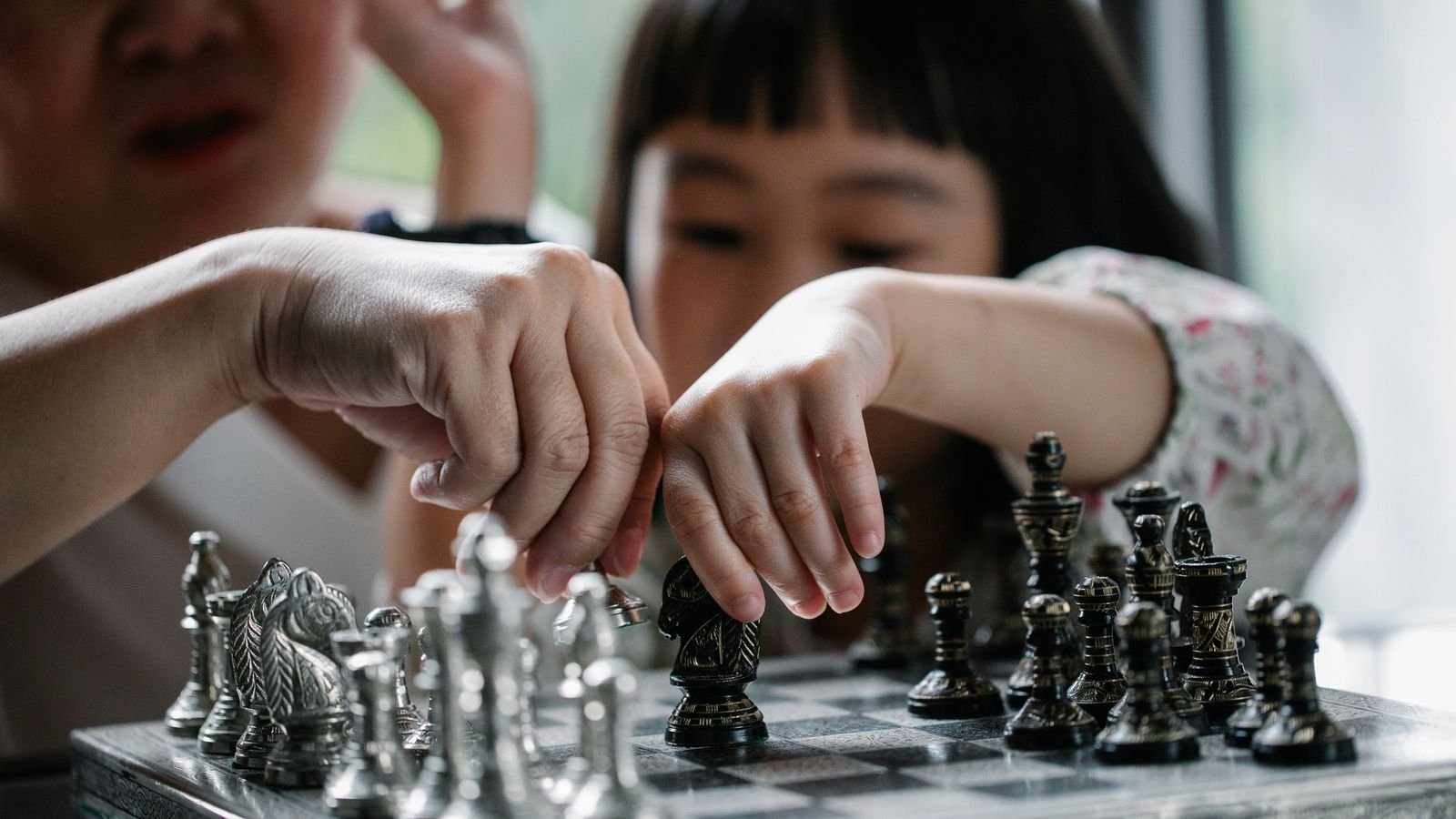
Chess is one of the very few activities where being quiet is an advantage. Your child does not have to shout across a field, put their hand up in front of thirty classmates, wait to be picked for a team, or perform for anybody. They sit down, they think, and they move. The confidence arrives quietly, built out of hundreds of small decisions that turned out to be right.
If your child hangs back at birthday parties, goes silent when a teacher asks a direct question, or refuses to try anything they might be visibly bad at, this article is written for you. It covers why the game fits a cautious temperament so well, what the research does and does not prove, the mistakes that quietly make things worse, and what you can do at home this week.
Shy children often do unusually well at chess because the game rewards exactly what they already do best: watching carefully, thinking before acting, and noticing what other people rush past. In most children’s activities, hesitation is a weakness. On a football pitch, a moment of doubt loses you the ball. In a noisy classroom, the child who pauses to think has already been talked over. Chess is the rare setting where that same pause has a respectable name. It is called calculation, and strong players are praised for it.
Quiet children also tend to arrive with two habits coaches usually have to install by force. They observe before they act, and they are uncomfortable with guessing. A confident, fast-moving child often has to unlearn snap decisions for years. A cautious child usually has to unlearn only one thing: the fear of being wrong in front of somebody. That is a smaller job, and chess gives you an unusually safe place to do it.
When a shy child freezes, they are almost never refusing to try. They are avoiding the risk of being seen getting something wrong. That distinction matters, because the two problems have opposite solutions. A child who does not want to try needs motivation. A child who is afraid of being watched needs the audience turned down and the number of safe attempts turned up.
The trap is that avoiding the scary thing works, briefly. The Child Mind Institute puts it plainly in its guidance on what to do and not do when children are anxious: helping a child sidestep what they fear makes them feel better immediately, and reinforces the anxiety over the long run. Every rescue teaches the lesson that they could not have handled it. Clinicians treat this pattern by going the other way, in structured, gradual steps. Brown University Health describes how graded exposure works with children: they approach the thing they fear in planned, manageable pieces, stay with it long enough to learn it was more tolerable than predicted, and carry that evidence into the next attempt.
A chess lesson is a very convenient staircase for this. Nothing physical is at risk, the rules never change, and a single game contains thirty or forty separate small decisions. Your child gets thirty chances an hour to be wrong about something tiny and survive it.
Six things about chess your child will enjoy hearing out loud
A knight standing in the corner of the board has only two legal moves. Put the same knight in the middle and it has eight. Coaches use this to explain why hiding at the edge quietly shrinks your options.
A pawn is the weakest piece in the game. If it walks all the way to the far end of the board, it can be promoted into a queen, the strongest piece of all.
After each player has made only three moves, more than 121 million different positions are already possible. Nobody has memorised chess. Everybody is working it out.
The fastest possible checkmate takes just two moves. Every strong player in history has lost a game they were embarrassed about. It is part of the training, not a sign of failure.
The word checkmate is usually traced back to the Persian phrase shah mat, meaning roughly that the king is defeated and has nowhere left to go.
Chess has no dice, no hidden cards and no referee decisions. Whatever happens on the board, your child had a hand in it. That is why winning feels so convincing to them.
Chess builds lasting confidence because the child produces the evidence themselves. You can tell a shy seven-year-old that they are clever every morning for a year and change very little. Reassurance is easy to argue with. A fork they spotted on their own, three moves before the coach mentioned it, is not. It is a fact about themselves that they discovered rather than received, and that is the kind of belief that survives a bad day at school.
Chess also does something unusual with failure. Losing a game is not a verdict, it is information, and it comes with a replay. When a coach walks a child back through the moment the game turned, the message is that mistakes are things you examine, not things you hide from. Children who practise that for a few months tend to stop treating errors as evidence about who they are. That shift shows up well outside chess, usually first in homework.
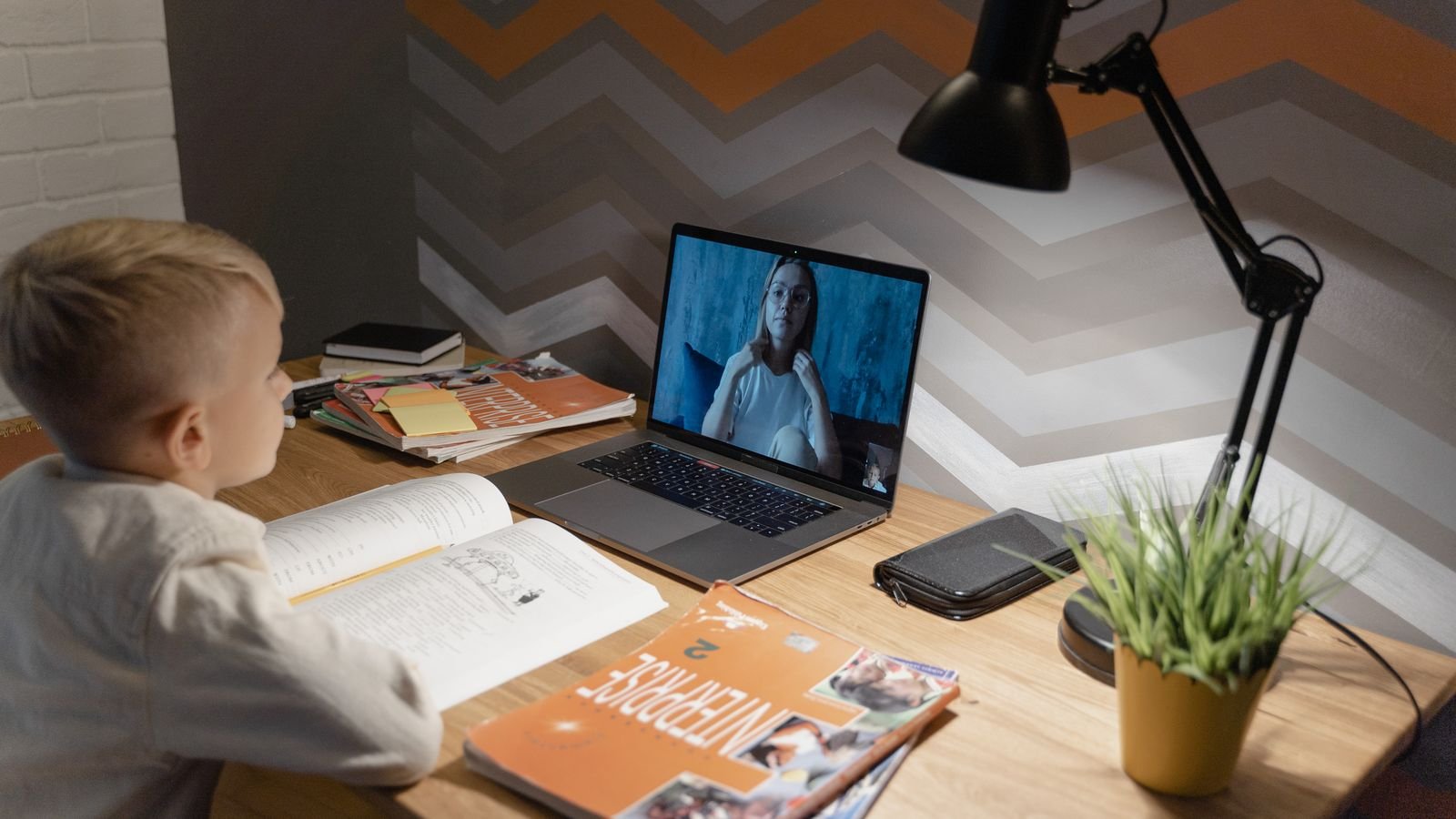
For a shy or anxious child, a live 1 on 1 class removes the single biggest obstacle: the audience. In a group of eight children, the fastest hand goes up, the loudest voice answers, and a cautious child learns within two sessions that staying invisible is comfortable and completely safe. They can attend a whole term, enjoy it, and barely speak. Progress stalls, and nobody notices because nothing looks wrong.
In a 1 on 1 lesson there is nowhere to hide, but there is also nobody to hide from. That combination is what actually moves a quiet child. A good tutor can sit in twenty seconds of silence without filling it, which is the single most useful thing an adult can do for a child who needs time to think. The lesson can also be paced to the child rather than the room: no waiting while somebody else’s question is answered, no being carried past a concept they had not finished understanding.
Doing it online from home adds a layer of comfort that matters more than parents expect. Familiar room, familiar chair, no travel, no crowded lobby full of strangers, and a parent within earshot for the first few weeks. Later, when the child is ready, the same setup becomes the first rung of a natural confidence ladder: play the tutor, then play a friendly online opponent, then a small online tournament, then a real board with real people.
The research on chess and children’s emotional development is genuinely encouraging, and it is smaller and more cautious than the internet usually suggests. It is worth knowing both halves of that.
The most cited study comes from the University of La Laguna in Spain. Aciego, García and Betancort followed 170 schoolchildren aged 6 to 16 who chose chess as their after-school activity, and compared them with 60 children doing football or basketball. Their published findings on the benefits of chess for intellectual and social-emotional enrichment reported gains for the chess group in cognitive ability and in coping and problem-solving capacity, alongside teacher ratings that were higher for peaceful attitudes, understanding towards others and respecting rules. The sports group showed no equivalent change on the teacher-observed measures.
Closer to the point of this article, a Chinese study of 121 primary school pupils looked specifically at chess training, self-efficacy, self-esteem and social anxiety and found meaningful differences between the children in the chess group and those who were not, in the direction parents would hope for: more self-belief, and less social anxiety.
Now the honest caveats. These samples are small. Children who choose chess may already differ from children who choose football, which makes cause and effect hard to separate. And none of this makes chess a clinical treatment. If your child’s anxiety is interfering with school, sleep or friendships, the right first step is a conversation with your paediatrician or a child psychologist. Chess sits alongside that kind of support very well. It does not replace it.
A shy child can start chess from about 4 to 5 years old, but what a win looks like changes sharply as they grow. Knowing the right target for the age stops you from measuring your child against the wrong thing.
The goal is not strategy, it is finishing. Piece names, how each one moves, capturing, and sitting through a whole short game without giving up halfway. Success looks like your child setting the board up correctly on their own and asking to play again.
This is where the confidence really starts to build, because tactics are visible. Forks, pins and simple checkmates give a child something concrete they can spot. Success looks like your child seeing a fork before the coach points it out and saying so out loud.
Planning, openings and their first games against strangers online. This is usually the age where the social side of the confidence shows up. Success looks like your child playing an online game without asking you to sit beside them.
Ratings, tournaments, studying their own games, and often teaching. Success looks like your child explaining a position to a younger sibling or cousin, out loud, without being asked. For a child who used to freeze when spoken to, that moment is worth more than any trophy.
The most common mistake is stepping in to save your child from the uncomfortable moment, because it is also the kindest-feeling thing to do. Here are the five that come up most often, and what to do instead.
Answering for them. When a tutor asks a question and your child goes quiet, the silence feels unbearable to a parent. Let it run. Ten seconds of silence is not a crisis, and filling it teaches your child that somebody else will always speak first.
Letting them quit the moment they are losing. Stopping a lost game protects the feeling and cancels the lesson. Ask for three more moves, then stop if they still want to. Most children forget they wanted to leave.
Praising the talent instead of the decision. “You’re so clever” gives your child something to protect. “That was a good plan, why did you choose it?” gives them something to repeat.
Turning it into a performance. Asking a shy child to show grandparents what they learned converts a safe space back into a stage. Let chess stay theirs for the first few months.
Making the first outing a tournament. A competitive hall full of strangers is the top of the ladder, not the bottom. Get to friendly online games first, then a small event, then anything bigger.
Simple things you can try at home this week
Play beside them, not against them. Set up one puzzle and solve it together on the same side of the board. Co-operation first, competition later.
Think out loud yourself. Say things like “if I move here, what could you do to me?” You are showing your child that uncertainty is normal and speakable, not something to hide.
Use a three second rule. Nobody touches a piece until three seconds have passed. It slows an anxious child’s rushing and gives a hesitant one permission to take time.
Let them teach you something. Ask your child to explain how the bishop moves as though you have never seen it. Explaining is the fastest route from knowing to feeling capable.
Praise the choice, not the outcome. Comment on a good plan even in a game they lost. You are training them to judge their thinking, not just the scoreboard.
Keep it to fifteen minutes. Fifteen focused minutes twice a week beats an hour of drifting. Stop while they still want more, not after they have had enough.
Name the brave bit afterwards. “You asked your coach a question today” lands far better than “well done”. Point at the specific brave thing so your child can recognise it next time.
Read this one out loud to your child, then let them count
A white knight is sitting all alone in the corner of the board, on the square a1. A knight always moves in an L shape: two squares one way, then one square across. How many different squares can this corner knight move to?
Tap a question to reveal the answer
The first real sign of progress is not a win. It is your child speaking first. Watch for the moment they ask their tutor a question nobody prompted, or say “no, I think this move is better”, or replay a defeat for you instead of quietly closing the laptop. Those are the moments a parent of a shy child should be collecting, because they show up long before any rating does, and they are the ones that spread into school.
If you want to test whether this suits your child, the lowest-risk way is a single class with nothing riding on it. A free trial lesson is one tutor, one child, no other students watching, and no commitment afterwards. If it helps for the first session, sit in the room, and let the camera stay off. Plenty of quiet children start exactly like that, and are the ones asking to keep the camera on a month later.
MasterMindz offers live 1 on 1 online classes for children and has taught 750+ students across 11+ countries. Children learn chess, maths, coding and more with experienced tutors, one child and one teacher at a time, in a fun and personal approach that suits quiet and confident learners equally.