September 9, 2026
Your child knows the answer, but their hand stays down. If that scene is familiar, you are not raising a child who lacks ability. You are raising a child for whom being watched costs something.


A calmer way through P5 and P6 that still gets results.
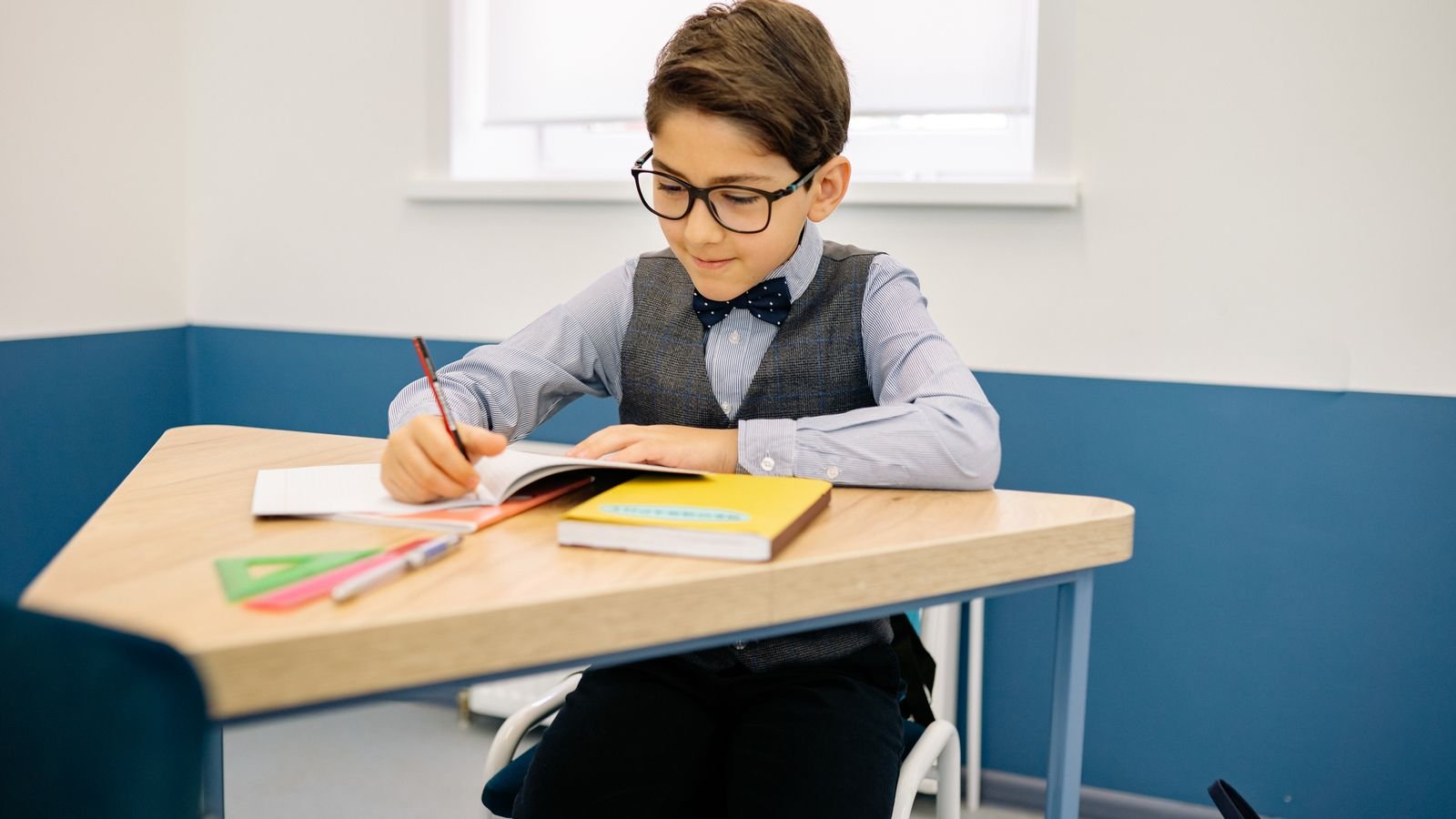
You can prepare a child properly for the PSLE without wrecking the year. The families who come through it well are almost never the ones who studied the most hours. They are the ones who kept a steady, unremarkable routine, protected sleep, and spent their revision time on the handful of things that genuinely move a score.
This guide is written for parents of P5 and P6 children in Singapore, though the thinking travels well to any high stakes primary exam. It covers what the exam is really testing, how to spot the early signs that your child is running on empty, and what to do differently from tomorrow morning.
The PSLE measures how well your child has mastered four subjects against fixed national standards, not how they rank against other children. Since 2021 the Ministry of Education has scored the exam in Achievement Levels, AL1 through AL8, with each level tied to a fixed band of marks. The four subject levels add up to a total score between 4 and 32, and a lower total is better. MOE explains the reasoning on its own page on the change to the scoring system, which was designed to stop families chasing single marks.
This matters more than it sounds. Under the old system, one mark could separate two children. Under Achievement Levels, a child sitting comfortably inside a band does not gain anything from three more hours of drilling that week. The pressure that many households still carry is left over from a system that no longer exists. Reading the official PSLE scoring explainer together with your child, once, calmly, is one of the fastest ways to lower the temperature at home.
Burnout in an eleven year old rarely announces itself. It looks like a child who used to finish a maths paper in forty minutes now taking an hour, making mistakes on questions they solved easily in March, and reacting to small corrections as though they were disasters. Parents often read this as laziness or attitude. It is usually depletion.
The specific signals worth watching for are a change in sleep, a change in appetite, a flat mood that lasts more than a few days, physical complaints on school mornings that vanish by afternoon, and a rise in careless errors rather than conceptual ones. The National University of Singapore’s health centre has a plain, useful piece on managing exam stress in Singapore that is worth reading before you need it. A little nervousness sharpens attention. Sustained anxiety does the opposite, and it shows up in the marks.
Beyond a certain point, extra study hours stop adding marks and start subtracting them. A tired child rereads the same page without absorbing it, then feels guilty, then stays up later to compensate. That loop is where most of the damage in a PSLE year happens. For most P5 and P6 children, roughly one and a half to two hours of focused revision on a school day is a sensible ceiling, broken into short blocks rather than one long sitting.
The honest test of any tuition class, practice paper or enrichment programme is simple. Ask what specific gap it is filling. If you can name the gap, it is probably worth the slot. If the answer is that other families are doing it, you are buying anxiety relief for yourself and paying for it with your child’s evenings.
Six things about exams and memory that change how you plan the year
The PSLE Score is the sum of four Achievement Levels and runs from 4 to 32. Four is the best possible total, which surprises most parents the first time they hear it.
Each subject is graded against fixed mark ranges. Whether many children or few do well in a given year, the benchmark for AL1 does not move.
Material studied across spaced intervals is retained far better than the same material crammed, even when the total number of study minutes is identical.
Trying to recall an answer strengthens memory even when the attempt fails. The struggle itself does useful work, which is why quizzing beats rereading.
Singapore removed all tests and examinations for Primary 1 and Primary 2, so the youngest children can settle into school without exam pressure.
Mild nervousness sharpens focus on the day. It becomes a problem only when it starts disturbing sleep, appetite or mood for more than a few days at a stretch.
The single highest return change most families can make is to stop rereading and start recalling. Rereading notes feels productive because the material looks familiar, but familiarity is not memory. Closing the book and writing down what you remember, then checking, is harder, feels worse, and works far better. Researchers call this the testing effect, and it holds up across a large body of work on spaced and retrieval practice.
In practice this means three things. Start every session by asking your child what they remember from the last one, before opening anything. Revisit a topic three times across three weeks rather than three times in one evening. And keep a single error log: one notebook where every wrong answer gets written with the reason it went wrong. Most children make the same six or seven mistakes on repeat. Fixing those is worth more than fifty new practice papers.
A routine you can hold for forty weeks beats a heroic one you abandon in June. The shape that works for most families is short focused blocks on weekdays, one full practice paper a week under timed conditions, and one evening that is completely protected from schoolwork. That last one is not a reward. It is the thing that makes the other six days sustainable.
Put the hardest subject in the first block, when your child is freshest, not the one they enjoy most. Keep blocks to about twenty five to thirty minutes with a real break between them, and let the break be physical rather than a screen. Write the week on paper and stick it where everyone can see it, so the plan is a shared object rather than a nightly negotiation.
Sleep is revision, not the absence of it. Memory consolidation happens overnight, so an hour of study that costs an hour of sleep is usually a net loss. Children in upper primary generally need nine to eleven hours, and the bedtime should stay roughly constant through exam season rather than sliding later week by week.
Movement matters for the same unglamorous reason: it regulates the stress response. Twenty minutes of walking, swimming or running around downstairs does more for a jittery child than another worksheet. Keep breakfast familiar, keep water on the desk, and resist the urge to introduce new supplements, new routines or a new tutor in the final stretch.

Name the feeling before you try to solve it. A child who says “I’m going to fail” and hears “don’t be silly, you’ll be fine” learns that the feeling is unwelcome, and next time they will hide it. Try instead: “That makes sense, this matters to you.” Then, and only then, shrink the task. Not the whole paper. Just this section. Just the next five minutes.
Praise the process out loud, specifically. “I saw you go back and check that working” lands very differently from “you’re so clever.” The first is something your child can repeat on demand. The second is a label they will start to fear losing. And if the distress runs deeper than exam nerves, or lasts well past the exam window, the school counsellor is a good first call rather than a last resort.
One to one teaching earns its keep when a child has a specific, identifiable gap that group teaching keeps skating over. A class of thirty moves at the pace of the syllabus. A tutor working with one child moves at the pace of that child’s confusion, which is the only pace that fixes anything. The clearest signs you need it are a child who understands a topic in the moment but cannot reproduce it a week later, or who freezes on a particular question type every single time.
It also helps for the opposite problem. A child who is comfortably ahead in a subject often goes quietly flat in a large class, and a 1 on 1 tutor can stretch them without turning it into extra homework. This is where MasterMindz works: live 1 on 1 online classes in maths, chess, coding and more, one tutor and one child, with a free trial class first so you can see whether the fit is right before you commit to anything.
In the last fortnight, change almost nothing. This is the point to consolidate, not to learn new material or take on a new tutor. Move to lighter, shorter sessions built around the error log and past mistakes, keep one timed paper for rhythm, and start winding down the day earlier so the body clock matches exam morning.
Taking leave from work in that fortnight helps only if the habits are already in place. Presence is reassuring. It cannot substitute for a routine that was never built. Keep exam mornings deliberately boring: same wake up time, same breakfast, bag packed the night before, admission slip and stationery in one pouch. Predictability is the most underrated calming tool a parent has.
Seven things you can change at home this week
Cap the clock, not the effort. Set a firm daily ceiling of about ninety minutes to two hours on school days, and stop when it is reached even if the topic is unfinished. Consistency compounds; overtime does not.
Open with a recall question. Before any book is opened, ask what your child remembers from the last session. Two minutes of struggling to remember beats twenty minutes of rereading.
Keep one error log. One notebook, every wrong answer, plus a one line reason it went wrong. Review it on Sundays. The same handful of mistakes is costing most of the marks.
One timed paper a week, not one a day. Papers are for diagnosis and pacing. Doing them daily just tires a child out and produces data nobody has time to act on.
Protect one evening completely. No revision, no worksheets, no discussion of school. Put it in the timetable so it is a rule rather than a favour.
Praise the specific move. Comment on the checking, the neat working, the second attempt. Skip the labels about being clever or gifted.
Hold bedtime steady. Pick a bedtime you can keep through October and do not let it drift. Sleep is where the day’s revision gets filed away.
A classic PSLE trap. Can your child find the error before the answer?
The question: Ravi had 3 times as many stickers as Mei. After Ravi gave 12 stickers to Mei, they had the same number. How many stickers did Ravi have at first?
A student wrote: “The difference is 12. So 3u minus 1u equals 2u equals 12, which makes 1u equal 6. Ravi had 3u, so Ravi had 18 stickers.”
Tap a question to reveal the answer
Ask any parent a year after the PSLE what they would do differently and the answer is almost never “we should have studied more.” It is usually about the atmosphere in the house. The score matters. It just does not matter enough to spend twelve months of your child’s life being anxious about it, and the calmer household tends to produce the better result anyway.
If your child needs help with one specific subject, get help with that one subject, from someone who works with them individually and can find the gap quickly. Keep everything else steady. Sleep, one protected evening, an error log, and a routine boring enough to survive until October will carry you further than any last minute plan.
More for curious parents
MasterMindz teaches children worldwide through live, personal 1 on 1 online classes in chess, maths, coding and more, with experienced tutors and a fun, individual approach. MasterMindz has taught 750+ students across 11+ countries, and every family starts with a free trial class.