September 10, 2026
You can prepare a child properly for the PSLE without wrecking the year. The families who come through it well are almost never the ones who studied the most hours.


Seven things worth checking before you book, and how to turn a free trial into a proper test.

Choosing an online tutor for your child is one of those decisions that feels impossible to get right from a website. Everyone has smiling photos, five star reviews and the word “expert” somewhere on the page. The good news is that the things that actually predict a good tutor are visible within about fifteen minutes of a first class, if you know what to look at.
This guide walks through seven checks, in the order they matter, and finishes with a simple way to use a free trial class as your interview instead of a sales demo.
A good online tutor for kids is one who can hold a young child’s attention, change direction the moment the child gets stuck, and explain progress to the parent in plain language. Everything else, including qualifications and years of experience, matters mainly because it makes those three things more likely. A brilliant mathematician who cannot read a bored eight year old will get less done in an hour than a warm, well trained teacher who notices restlessness at minute twelve and switches to a puzzle.
This is why the format matters so much for younger children. Evidence collected by the Education Endowment Foundation on one to one tuition puts the average impact at roughly five additional months of progress, and the effect is larger in primary school than in secondary. Personal attention is doing the heavy lifting there. A tutor who does not use that attention, and instead lectures at your child for fifty minutes, has thrown away the main advantage they had.
Ask how long they have taught children in your child’s age band, because teaching a six year old and teaching a fourteen year old are close to different jobs. A tutor who has spent three years with young beginners will have a hundred small habits you cannot see on a CV: how they phrase a correction so it does not sting, when to let a child fail on purpose, how to end a class on a win.
Useful questions to ask: how many children of this age do you teach each week, what do you do in the first class with a shy child, and what do you do when a child says “this is boring”. The answers to those three tell you more than any certificate. Be a little careful with the very strong subject specialist who has mostly taught adults or competitive teenagers. They may be excellent later, once your child has a base, but they are often the wrong first teacher.
A good tutor can tell you, in one sentence, what your child will be able to do in six weeks that they cannot do today. That sentence is the whole test. “We will cover chess” is not a plan. “In six weeks she will know all the piece moves, checkmate with a queen and a king, and spot a one move fork” is a plan, and it lets you check for yourself whether it happened.
The research points the same way. Tuition works best when it is structured and connected to what the child is already learning, rather than running as a separate universe. Ask whether there is a curriculum with levels, whether there is homework or practice between classes, and how the tutor decides when to move on. If the honest answer is “we see how the class goes”, you are buying an hour of company, not teaching.
Six findings from the research on one to one teaching
On average, children who receive one to one tuition make around five additional months of progress compared with similar children who do not.
Studies in primary schools show roughly six months of extra progress, against about four months in secondary schools.
Regular shorter sessions tend to work better than one long weekly marathon. Frequency matters more than heroic single lessons.
Measured gains in reading tend to be larger than in maths, so a maths tutor has to be unusually good at finding the exact gap.
Trained, experienced tutors following a structured programme get better results than willing but untrained helpers.
Tutoring has more impact when it links to what the child is already doing, instead of running as a completely separate track.
Ask directly whether the class is truly one child to one teacher, because “personalised” is used loosely and often means a small group with individual worksheets. There is nothing wrong with small groups, and they can be good value, but they are a different product. In a real 1 on 1 class your child cannot hide, cannot coast, and gets corrected on the exact mistake they just made rather than the average mistake of the room.
Watch for the practical signs during a trial. Does the tutor use your child’s name constantly? Do they wait after asking a question, rather than answering it themselves after two seconds? Does the difficulty visibly move up or down based on how your child is doing? A tutor delivering a fixed script to one child is technically 1 on 1 and practically a video lesson with a human face on it.
Ask what checks the provider runs on tutors, whether classes take place on a monitored platform, and whether a parent can drop in at any time. Any serious provider will answer these without hesitation and will have a written policy you can read. The NSPCC guidance on finding a tutor is a good reference point, and its core advice travels well to online classes: check credentials rather than accepting reassurance, keep communication open, and stay alert to any change in how your child feels about the sessions.
A few house rules are worth setting whatever provider you choose. Keep classes in a shared room rather than a bedroom, keep the tutor’s contact through the company channel rather than a personal number, and make sure your child knows they can tell you if anything ever feels odd, without being in trouble. At MasterMindz you can read our approach on the child safety page and parents are welcome in the room at any point.
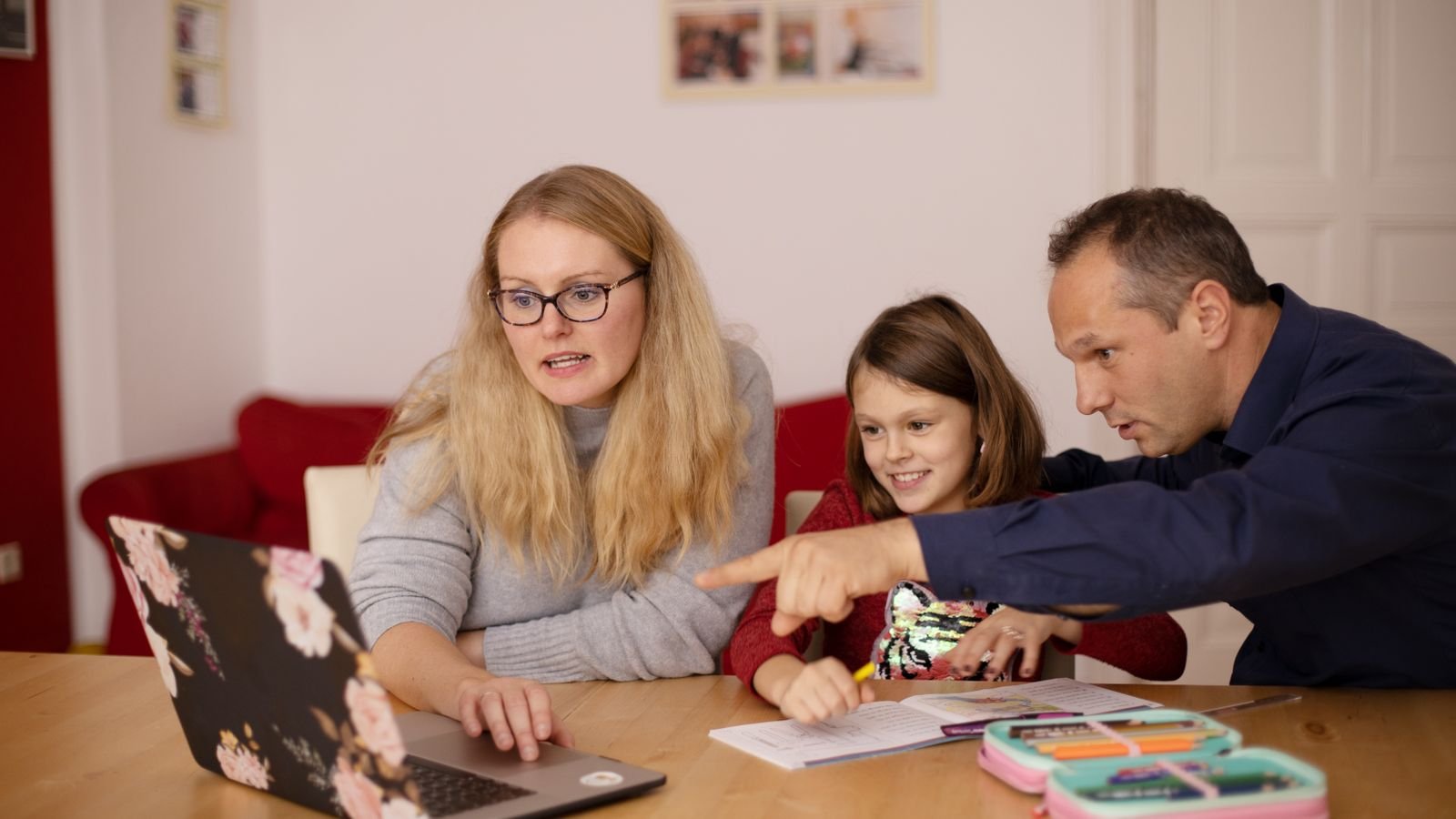
You should get a short, specific update after class or at least every few weeks, written in words you can act on. “He did well today” is not an update. “He can now find a one move checkmate but still forgets to look at what my last move threatened, so we are drilling that on Thursday” is an update, and it also tells you exactly what to praise at dinner.
Ask upfront how progress will be reported and how often. Ask what happens if your child falls behind the plan. The good answer involves reassessing and changing approach. The weak answer involves recommending more classes. A tutor who can name your child’s specific weakness in one sentence has been paying attention all term.
This is the check most parents underweight, and it is the one that decides whether anything sticks. A child who enjoys the tutor will practise voluntarily between sessions, and that practice is where most of the improvement really happens. A child who dreads the class will negotiate their way out of it within two months, whatever you paid.
After a trial, resist asking “did you like it”, because children say yes to please you. Ask instead: what was the hardest thing you did today, what made you laugh, and would you rather have this class on Tuesday or Thursday. The last one is the giveaway. A child who picks a day is a child who has already decided to continue.
Seven things you can do this week while choosing a tutor
Book two trials, not one. A single class has nothing to compare against. Two, in the same week, makes the difference in teaching style obvious within minutes.
Watch the first ten minutes, then step away. The opening tells you how the tutor builds rapport. Leaving afterwards tells you whether your child stays engaged without you in the room.
Ask for the six week sentence. “What will my child be able to do in six weeks that she cannot do today?” If the answer is vague, keep looking.
Count the questions. In a good class for a young child, the tutor asks far more than they tell. If your child spoke for less than a third of the class, that is a signal.
Ask what happens when my child is stuck. Listen for a method, such as a smaller example or a hint ladder, rather than “I explain it again slowly”.
Set the room rules once. Shared space, door open, headphones optional, company channel for all messages. Do it at the start and you never have to revisit it.
Diarise a six week review. Put a date in your calendar now to decide whether to continue. It stops good intentions turning into an unexamined monthly payment.
A trial class scenario. What went wrong?
A tutor joins the trial class on time, greets eight year old Aarav warmly, shares her screen, and explains how each chess piece moves for forty minutes. Aarav is polite and quiet. He answers two questions in the whole class. At the end the tutor says, “He is very intelligent, when would you like to start regular classes?”
Tap a question to reveal the answer
Before you commit, get clear answers on scheduling and money, because this is where the friction shows up in month three. Ask what happens if your child is ill, how much notice a reschedule needs, whether missed classes are credited, and whether the same tutor teaches every session. Families booking across time zones should also ask what happens when daylight saving shifts the slot, since a class that works in November can land at bedtime in April.
Look for terms that are simple enough to explain in two sentences. Long lock in packages with heavy discounts are not automatically bad, but they should never be the only option offered, and no good provider needs to rush you into one on the day of the trial.
Walk away if the pressure to pay arrives before any teaching does. A few specific patterns are worth taking seriously: a trial class that is mostly a sales pitch, refusal to let you observe, no written safety policy, a different tutor every week without explanation, vague answers about what your child will learn, and “limited time” discounts that expire the same evening.
One softer warning sign is worth naming too. If the tutor talks mostly to you rather than to your child during the trial, they are selling to the wrong person. The class belongs to your child. A tutor who understands that will spend the hour building a relationship with them, and will save the summary for you at the end.
Treat the trial as your test rather than their demo, and it becomes remarkably informative. Before it starts, tell the tutor one true thing about your child, such as “she loses interest quickly” or “he hates being wrong in front of people”, and then watch whether they use it. During the class, note how long your child talks and whether the difficulty adjusts. Afterwards, ask your child the three questions from earlier and ask the tutor for the six week sentence.
If a provider is confident in their teaching, a free trial costs you nothing and tells you almost everything. That is exactly why MasterMindz starts every family with one, with no card details and no commitment. Book a slot, run your checks, and decide with real evidence instead of a website.
More for curious parents
MasterMindz teaches children worldwide through live, personal 1 on 1 online classes in chess, maths, coding, Rubik’s cube, music and languages. We have taught 750+ students across 11+ countries, and every family starts with a free trial class so you can judge the teaching before you decide anything.